What Is a Straw Purchase? Buying a Gun for Someone Else, Explained

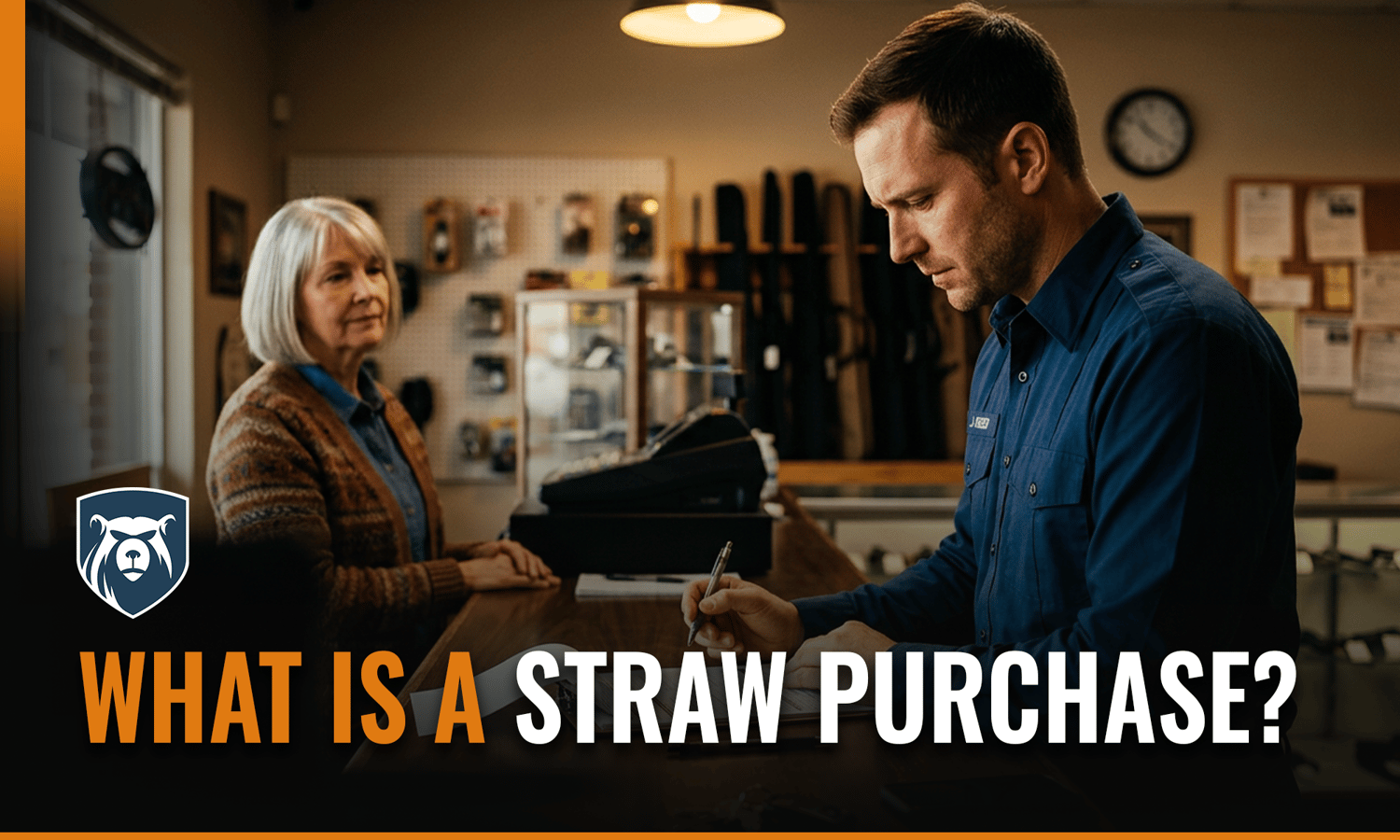
Is it illegal to buy a gun for someone else? In most cases, yes, especially if one of the valid reasons for buying someone else a firearm is not declared. Federal gun law treats a lawful gift very differently from a straw purchase, and the difference isn't always obvious until you understand exactly what the law is actually checking for.
Last updated September 2026. This article is a general legal explainer, not legal advice. Federal law is described below; your state may have its own straw purchase statute on top of it, so confirm your state's specific rules before making any decision about buying, gifting, or transferring a firearm.
What Is a Straw Purchase?
A straw purchase is when someone buys a firearm from a licensed dealer while telling the dealer, on ATF Form 4473, that the gun is for them, when it's actually being bought on behalf of someone else. It's a federal felony.
Under 18 U.S.C. § 932, a straw purchase carries a fine, up to 15 years in prison, or both, and up to 25 years where the buyer knows the firearm will be used in a felony, a federal crime of terrorism, or a drug trafficking crime.
The recipient doesn't need to be a prohibited person for this to be a crime; the act of misrepresenting who the actual buyer is on a federal form is itself the offense.
What the Law Actually Says
Two separate federal statutes cover straw purchases, and most explanations online blur them together. They're not the same offense.
18 U.S.C. § 932 was added by the Bipartisan Safer Communities Act, signed into law on June 25, 2022. It makes it unlawful to knowingly purchase, or conspire to purchase, a firearm "for, on behalf of, or at the request or demand of any other person," where certain conditions involving the recipient are met, such as the recipient being prohibited from possessing a firearm or intending to use it to commit a crime.
The penalty is a fine, up to 15 years in prison, or both, rising to up to 25 years where the buyer knew the firearm would be used in a felony, an act of terrorism, or drug trafficking.
18 U.S.C. § 922(a)(6) is the older and broader route. It criminalizes making a false statement that is material to the lawfulness of a firearm sale, full stop. This is the statute that catches a lie on Form 4473 regardless of who the firearm ultimately ends up with, which matters more than it might sound, as the next section explains.
ATF Form 4473 and the Actual Buyer Question
Every firearm purchase from a licensed dealer requires the buyer to complete ATF Form 4473. Among the questions on that form is one asking whether you are the actual buyer or transferee of the firearm. Answering "yes" when you are not the actual buyer is the false statement that triggers § 922(a)(6), independent of anything else about the transaction.
Dealers are required to refuse the sale if they believe the person in front of them is not the actual buyer, which is exactly why the decades-long "Don't Lie for the Other Guy" campaign, run jointly by ATF and the National Shooting Sports Foundation for more than 25 years, exists in the first place. The campaign's entire message is aimed at this one question on the form: if you're buying the firearm for someone else and it wasn't a genuine gift you chose and paid for, you are not the actual buyer, and saying otherwise is a felony.
ATF's own consumer-facing definition of a straw purchase, found on its "Don't Lie for the Other Guy" page, describes it as buying a firearm "for a person who is not legally allowed to purchase or own one." That's a narrower definition than what the law actually enforces, and the next section explains exactly why that gap matters.
Abramski v. United States: Why "He Could Have Bought It Himself" Is Not a Defense
In 2014, the Supreme Court decided Abramski v. United States, a 5-4 decision written by Justice Kagan, and it remains the single most misunderstood case on this topic. A former police officer bought a handgun for his uncle, who was legally allowed to own a firearm himself, and checked "yes" on the actual-buyer question on Form 4473. The Court held that the false statement was material to the lawfulness of the sale anyway, and upheld his conviction.
The fact that the person receiving the firearm could have legally bought it themselves does not make a straw purchase legal. If you buy a firearm and check "yes" to being the actual buyer when the purchase was actually being made at someone else's request or with someone else's money, it doesn't matter whether that other person is a completely lawful, eligible gun owner. The false statement itself is the crime.
What Is Not a Straw Purchase
There are lawful ways to end up buying a firearm with someone else in mind.
A bona fide gift. Form 4473's instructions state that you are the actual buyer if you are legitimately purchasing the firearm as a gift for a third party. Tt has to be your money, your decision, and there can't be a prior arrangement where the recipient told you which firearm to buy or handed you the funds to buy it.
A private sale between two residents of the same state, where your state's law permits private transfers and you have no reason to believe the buyer is a prohibited person.
Buying a firearm with your own funds and later deciding to sell or give it away, with no pre-existing agreement in place at the time of purchase.
Now the facts that flip a lawful purchase into a straw purchase: the money came from someone else, there was a request or instruction made before you bought the firearm, or you had reason to believe the recipient was prohibited from owning one.
A few quick scenarios to keep in mind:
- You want to buy your spouse a pistol as a surprise, using your own money, choosing the model yourself. That's a lawful gift.
- Your spouse hands you cash and asks you to buy a specific pistol for her because she'd rather you fill out the paperwork. That's a straw purchase, even though she could legally buy the exact same gun herself.
- A friend in the parking lot outside the gun store hands you cash and asks you to go buy a rifle for him. That's a straw purchase, regardless of whether he's otherwise a law-abiding, eligible buyer.
Penalties, and Who Gets Charged
Both sides of a straw purchase are exposed to federal charges: the person who bought the firearm, and, in many cases, the person who asked them to.
Under § 932, penalties run up to 15 years in prison and fines of up to $250,000, with the enhanced 25-year maximum applying where the buyer knew the firearm would be used in a felony, terrorism, or drug trafficking.
Many states also carry their own straw purchase statutes layered on top of federal law, so checking your state's specific rules matters as much as understanding the federal side.
What to Do If You're Unsure
If you're not sure whether a purchase you're planning crosses the line, ask the dealer before you fill out the form. That's exactly what they're there for, and dealers deal with these questions regularly. If your goal is for a firearm to end up with a family member, the two clean paths are simple: either they buy it themselves, or you buy it as a genuine gift, with your own money and your own choice of firearm, no strings attached. If someone has already asked you to buy a firearm for them and you're worried about what that means for you, that's a conversation for a firearms attorney, not a forum thread or a Reddit search.
Understanding gun laws in your state matters here too, since state-level straw purchase statutes and private sale rules vary. Protecting yourself from the legal exposure running afoul of gun law can subject you to by staying informed of your own states statutes and regulations. We are living in an era of rapidly changing gun law, and law in general. Stay informed, stay safe, and stay out of trouble.
FAQ
What is a straw purchase on a firearm?
A straw purchase is when someone buys a firearm from a licensed dealer while falsely stating on ATF Form 4473 that they are the actual buyer, when the firearm is actually intended for someone else.
Why is straw purchasing illegal?
Straw purchasing is illegal because it circumvents the background check and recordkeeping system built into federal firearms sales, making it possible for prohibited persons or those intending criminal misuse to obtain firearms without appearing as the buyer of record.
Is it illegal to buy a gun for someone else?
Not always. A genuine gift, purchased with your own money and your own choice, is legal. It becomes illegal when the recipient's money, request, or instructions are behind the purchase and you misrepresent yourself as the actual buyer.
Can I buy a gun for my wife or husband?
Yes, if it's a genuine gift you pay for and choose yourself. It's illegal if your spouse gives you the money or asks you to buy a specific firearm on their behalf and you check "yes" to being the actual buyer.
Is a straw purchase a felony?
Yes. Under 18 U.S.C. § 932, a straw purchase carries a fine, up to 15 years in prison, or both, with penalties rising to up to 25 years in cases involving intended use in a felony, terrorism, or drug trafficking.
ONE WRONG MOMENT SHOULDN'T COST YOU EVERYTHING
Carry with confidence. Right To Bear backs you with 24/7 attorney-answered support and full legal defense — no caps, no deductibles. Become a member today.