
Key Takeaways
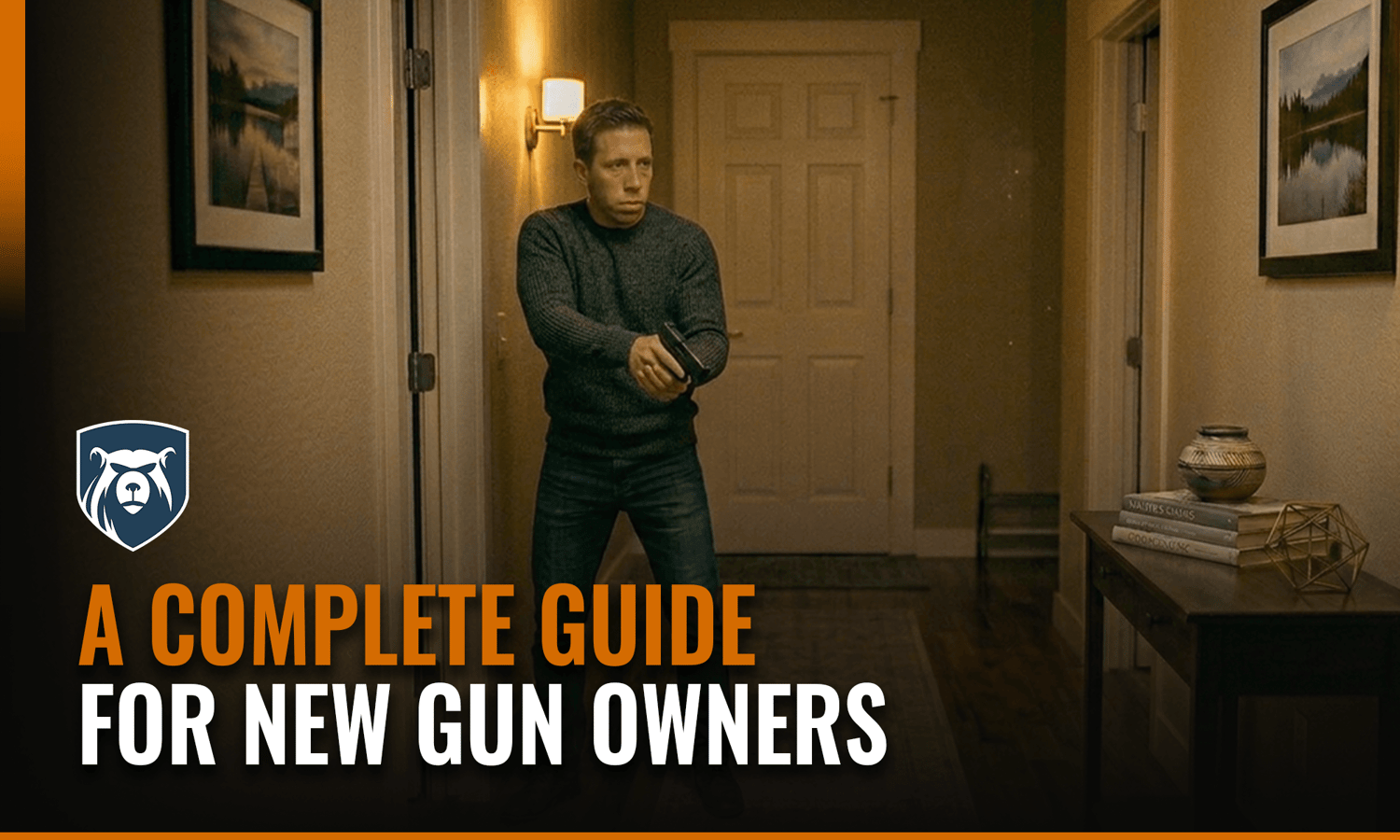
Gun ownership is surging in America—and not just among the usual suspects. Millions of first-time buyers are realizing that when the world gets chaotic, the most reliable emergency response is the one staring back in the mirror. But for every patriotic, liberty-loving new owner, there’s a tidal wave of confusion, bad YouTube advice, and overpriced gear marketing.
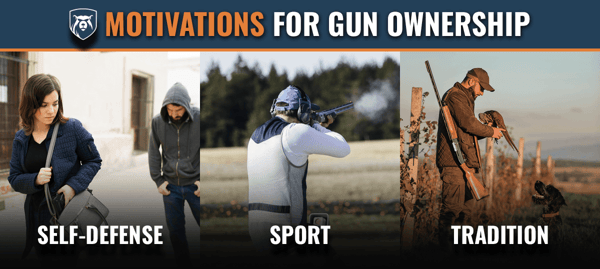
This guide is for those ready to take gun ownership seriously—not as a fashion statement or panic buy, but as a practical tool for defense, responsibility, and freedom. Whether you're a hunter, homeowner, or self-defense-minded citizen, these are the foundational truths every beginner needs to internalize. No fluff. No tactical cosplay. Just what works.
Gun Safety: The Habit That Saves Lives
You’ve heard the Four Rules of Gun Safety, right? Cool. Now tattoo them on your brain. Because nothing destroys your future—legally, financially, morally—faster than negligence with a loaded firearm. The rules aren’t just guidelines. They’re gospel.
But here's the catch: once you get comfortable, that’s when you get careless. It’s like driving. You start off cautious, checking every mirror. Six months in, you're sipping coffee while merging across three lanes. Guns demand you never drop your guard.
Every time you touch a gun—verify it’s unloaded. Every single time. Even if you "just checked it." Even if you “know.” Assume it's hot until proven cold.
Fact: Over 500 accidental gun deaths happen annually in the U.S. per CDC data, the majority due to negligence and mishandling—not malfunctions.
Takeaways:
- Verify every gun is unloaded the moment you pick it up.
- Keep your finger off the trigger until you’re ready to shoot.
- Never point a gun at anything you aren’t prepared to destroy.
- Be religious about safe habits—even when you’re home alone.
TL;DR: Safety isn’t a checklist. It’s muscle memory. Break the habit once, and you may not get a second chance.
Why Range Time Beats YouTube Training
Yes, online videos are useful. Yes, reading the manual is responsible. But none of it replaces actual trigger time. You can watch 100 tutorials on swimming—you’ll still sink like a brick until you hit the water.
New gun owners often fall into the “armchair operator” trap. They dry-fire at home, memorize parts, maybe even disassemble their gun. But when adrenaline spikes? When targets move? When your heart’s racing? That’s when only real-world practice pays off.
Want to carry a concealed firearm confidently? You better know how it draws from your holster under pressure.
Stat: According to Pew Research, 39% of gun owners rarely or never practice. That’s not just negligent—it’s dangerous.
Takeaways:
- Go to the range monthly, quarterly at minimum.
- Practice reloads, malfunction drills, and movement—not just slow bench shooting.
- Use your actual carry gear—not range toys or fantasy rigs.
Range time is where you become competent. You can’t train for chaos by watching content from your couch.
See Also: What to Expect from a Concealed Carry Class
Secure but Accessible: Responsible Firearm Storage
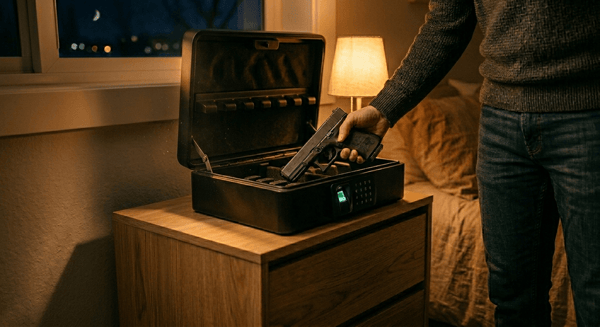
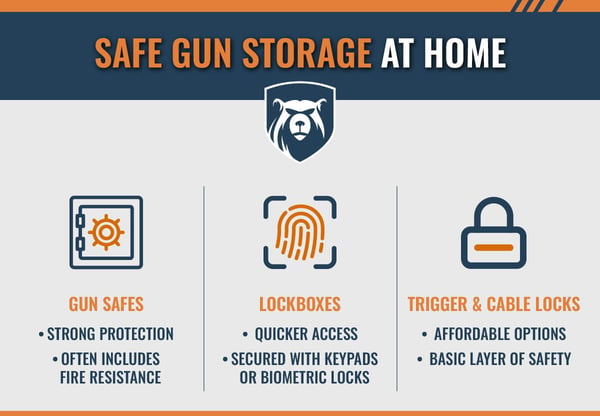
Here’s the lie you’ve been told: that safe storage means locking your gun away forever. That’s nonsense. Responsible gun owners can—and should—keep firearms secure and instantly accessible. You just need the right gear.
Quick-access safes are your best friend. Biometric, keypad, RFID—doesn’t matter, as long as you can open it fast and reliably. No gun should sit unsecured in a drawer. Especially if kids, guests, or burglars are in your orbit.
And if you don’t bolt that safe down? Congrats, you just handed a thief a handle.
Fact: Roughly 60% of gun thefts happen from vehicles or homes where the firearm wasn’t secured, per ATF crime stats.
Takeaways:
- Use quick-access safes, not soft cases or nightstand drawers.
- Bolt or mount your safe to prevent grab-and-go thefts.
- Store ammo separately unless your use-case demands instant deployment.
You can store guns safely and access them fast. Choose gear that lets you do both—or risk losing everything in a crisis.
See Also: Home Defense Gun Storage
Bullet Basics: Understanding Ammunition Types
All bullets are not created equal. That shiny brass box you just picked up at Walmart? Might be perfect for plinking—or a liability in self-defense.
Here’s what beginners need to grasp: FMJ (Full Metal Jacket) rounds are for the range. They’re cheaper, punch through targets, and keep going. Hollow points? They’re designed to expand and stop threats fast. Use FMJs for training, JHPs for real-world protection.
Hunters have it worse. Choosing the wrong ammo can mean wounded game and unethical kills. Bullet design matters. Cup-and-core, bonded, monolithic—all have different expansion profiles and use cases.
Fact: Using FMJ for self-defense can increase over-penetration risk—endangering bystanders. Hollow point rounds reduce that risk while maximizing stopping power.
Takeaways:
- Train with FMJ. Defend with JHP.
- Read the box—manufacturers usually label intended use.
- For hunting, match your load to your game (varmint vs. deer vs. elk).
Don’t assume bullets are one-size-fits-all. The wrong round can cost you a lawsuit, a missed hunt—or worse.
Rifle Accuracy: Stop Obsessing Over Sub-MOA
Gun forums love one thing more than gear flexing: arguing over groups. “My rifle hits .3 MOA with handloads and fairy dust!” Good for you, Timmy. Meanwhile, your average deer hunter just needs to hit a 10-inch vital zone at 200 yards.
A new gun owner doesn’t need a precision rifle that shoots cloverleafs. They need a gun that functions, holds zero, and hits center mass at realistic distances. Most factory bolt guns today are far more accurate than your skills—especially under pressure.
Let’s stop pretending you need sniper-grade hardware for whitetail season.
Stat: The average modern hunting rifle groups 1.0 to 1.5 MOA with factory ammo. That’s plenty for ethical kills inside 300 yards.
Takeaways:
- Sub-MOA rifles are nice—but rarely necessary for beginners.
- Practice matters more than paper performance.
- Focus on consistency and clean shooting—not quarter-inch groups.
Stop chasing precision unicorns. Most new shooters are limited by technique, not technology.
Final Thoughts
Owning a gun isn’t about status. It’s about responsibility. It’s about protecting what matters—your home, your family, your freedom. But that protection means nothing if you don’t know how to use the tool properly. Take the time to train, store responsibly, shoot often, and ignore the noise.
Whether you’re walking into your first gun shop or your first deer blind, remember: confidence comes from competence. And that’s something you build—one round at a time.
FAQs: Straight Answers for New Gun Owners
What should every new gun owner know before heading to the range?
A new gun owner should focus on developing safe handling habits, understanding their firearm’s operation, and building basic proficiency through live-fire training. Safety should become automatic—muscle memory, not just theory.
How do I choose the right gun for my needs?
The best gun for you is the one that fits your hand, your purpose, and your willingness to train. Don’t get distracted by tactical marketing. Simplicity, reliability, and controllability should lead the decision.
Is there a difference between a gun owner and someone who carries daily?
Absolutely. A gun owner may simply store a firearm for emergencies or sport. Carrying daily means committing to continuous training, legal awareness, and the burden of responsibility every time you walk out the door.
What’s one mistake new gun owners often make?
New gun owners frequently overlook secure storage. A gun left in a drawer isn’t just unsecured—it’s a liability. A mounted quick-access safe balances security with readiness, especially in homes with children or guests.
Do gun owners need legal protection or insurance?
More gun owners are opting for legal coverage in self-defense scenarios. It’s not mandatory, but if you ever have to use your firearm to protect yourself or others, that legal backup could be a game-changer.
What are the most common myths about gun purchases?
One of the biggest myths is that gun purchases can be made without any checks or rules. Federal law requires background checks from licensed dealers—yes, even at gun shows. State laws may add even more steps.
What’s the best way to get comfortable with a first-time gun?
With a first-time gun, repetition is key. Start with unloaded drills to build confidence in draw, stance, and trigger control. Then reinforce with live fire. Confidence isn’t bought—it’s built.
What kind of training should a new firearm owner prioritize?
A new firearm owner should start with safety, then move into practical handling: drawing, reloading, malfunction clearing, and stress inoculation. Don’t just learn to shoot—learn to think with a gun in your hand.
How much ammo should a beginner really keep on hand?
You don’t need a bunker full of ammo, but you do need enough to train regularly. A few hundred rounds of your practice caliber—and a box or two of your carry/duty load—is a smart baseline for beginners.
How do I know if a firearm is the right fit?
A firearm that fits you will feel natural, point instinctively, and not punish you with recoil. If you’re fighting the gun, it’s the wrong gun. Trust your hands—not the Internet.