
Protecting your home is not just about owning a firearm. It is about preparation, training, safety, and understanding the law. A proper home defense plan uses layered security. That includes everything from cameras and reinforced entry points to safe rooms and clearly assigned family roles.
This guide provides a structured overview of what gun owners should know to defend their homes responsibly.
Why Home Defense Matters
A strong home defense plan is about more than reacting to a threat. It is about reducing risk before a threat ever reaches your door. When homeowners prepare, they create a safer environment for themselves and their families.
A complete strategy combines deterrence, firearms, safety practices, and legal awareness. The goal is not just to defend your home, but to do so responsibly and with a clear plan.
Choosing the Right Firearm for Home Defense
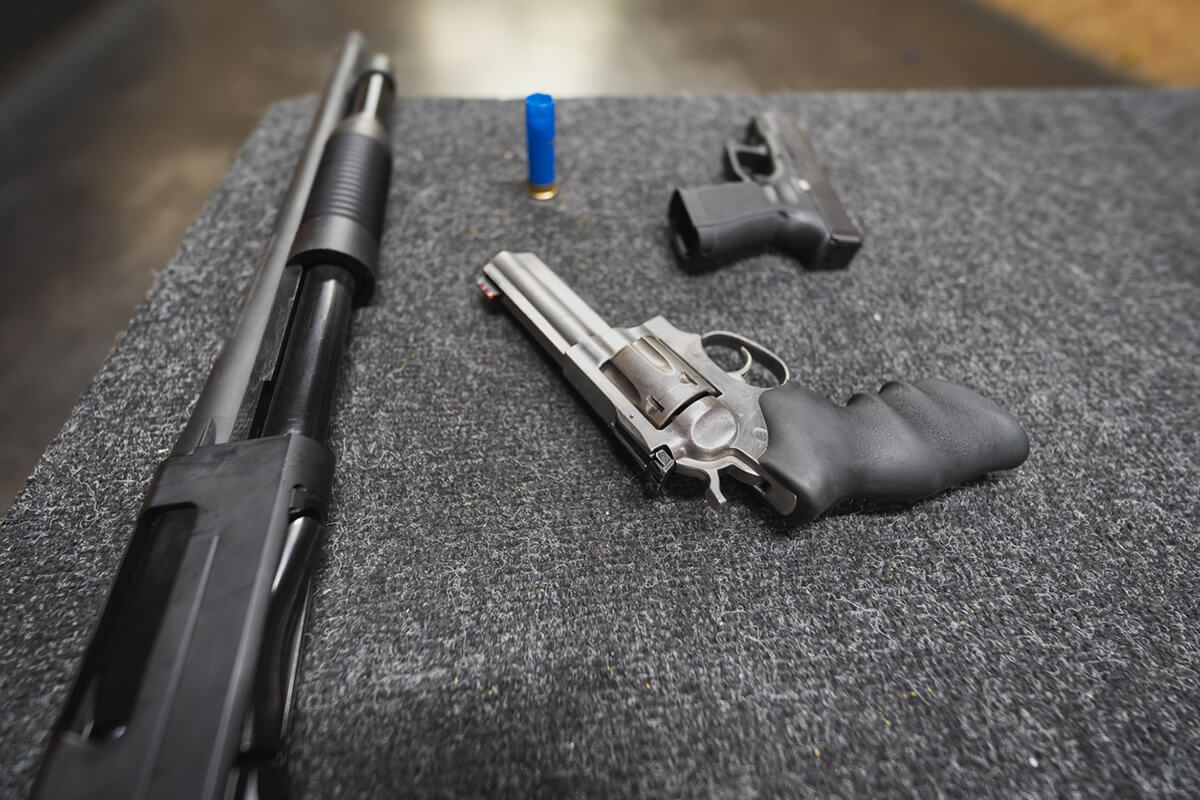
Your firearm choice is one of the foundations of home protection. The best option depends on your experience level, home layout, and comfort with the platform. Most homeowners look for something that is easy to control, simple to maneuver indoors, and less likely to create excessive risk through overpenetration.
For most people, the right choice will come down to a handgun, shotgun, or rifle.
See also: BEST GUNS FOR HOME DEFENSE
Handguns for Home Defense
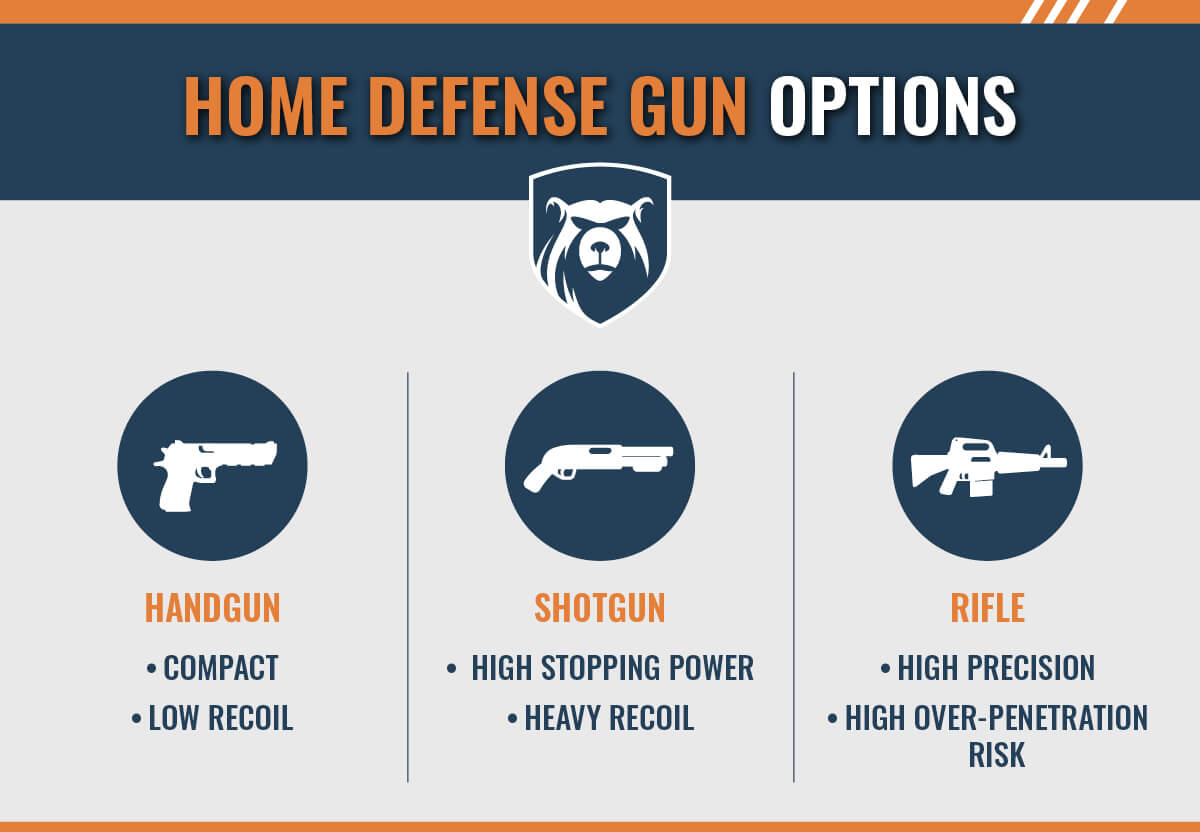
Handguns are popular for home defense because they are compact and easy to maneuver in tight spaces.
Common benefits include:
- Easy to move with indoors
- Available in semi-automatic pistols or revolvers
- Often easier to store in a quick-access safe
Popular examples include the Glock 19 and Smith & Wesson revolvers.
Pros:
- Compact
- Easier to handle in smaller rooms
Cons:
- Require more accuracy under stress
Shotguns for Close-Range Defense
Shotguns are often chosen for their stopping power at close range.
Common models include the Mossberg 500 and Remington 870. Many are chambered in 12 gauge and loaded with buckshot for defensive use.
Pros:
- High stopping power
Cons:
- Heavy recoil
- May be harder for smaller or less experienced shooters to control
Rifles and Carbines for Home Defense
Semi-automatic carbines such as the AR-15 or Mini-14 are also common home defense choices. They offer strong accuracy and higher magazine capacity.
Pros:
- Excellent precision
- Easier sighting and control for many shooters
Cons:
- Higher risk of overpenetration through walls, depending on ammunition and home layout
See also: THE ESSENTIAL GUIDE TO CONCEALED CARRY GUNS
Building a Home Defense Plan
A firearm is only one layer of home defense, and ideally it is the last one you need to rely on. A complete defense plan should also include physical security, communication, and clearly defined safe areas.
See Also: New Gun Owner Guide: What Every Gun Owner Needs to Know About Gun Ownership
Securing Entry Points
Start by making it harder for an intruder to get inside.
Important steps include:
- Using reinforced doors and quality deadbolts
- Adding security film to windows
- Installing motion-activated exterior lighting
These measures can deter intruders and give your family more time to react.
Family Communication and Emergency Roles
Everyone in the home should know what to do during an emergency.
Your plan should include:
- A designated safe room where everyone gathers
- A family code word for emergencies
- Emergency drills practiced at least twice a year
Each person should understand their role so confusion does not take over during a high-stress situation.
See Also: HOW TO CREATE A HOME DEFENSE PLAN
Firearm Training for Home Defense
Owning a firearm without training can be dangerous for you and others. Buying a gun and locking it away is not enough. In a home defense emergency, you need the ability to make sound decisions under pressure.
Training helps build confidence, discipline, and situational awareness. It also prepares you to think clearly and act responsibly if you ever need to defend your home.
Range Drills and Dry-Fire Practice
Practice should include both live-fire and dry-fire work.
Useful training methods include:
- Defensive shooting drills at the range
- Dry-fire practice to improve trigger discipline and firearm handling
Consistent practice builds familiarity and makes safe gun handling more automatic.
Stress Response and Situational Awareness
High-stress situations can trigger fight-or-flight responses that affect judgment and performance. Training helps you recognize threats more quickly and respond with discipline instead of panic.
Many new gun owners feel hesitation when handling a firearm for the first time. Ongoing training helps remove that uncertainty and replace it with good habits, safety awareness, and confidence.
See also: WHAT TO EXPECT FROM A CONCEALED CARRY CLASS
Safe Storage and Quick Access
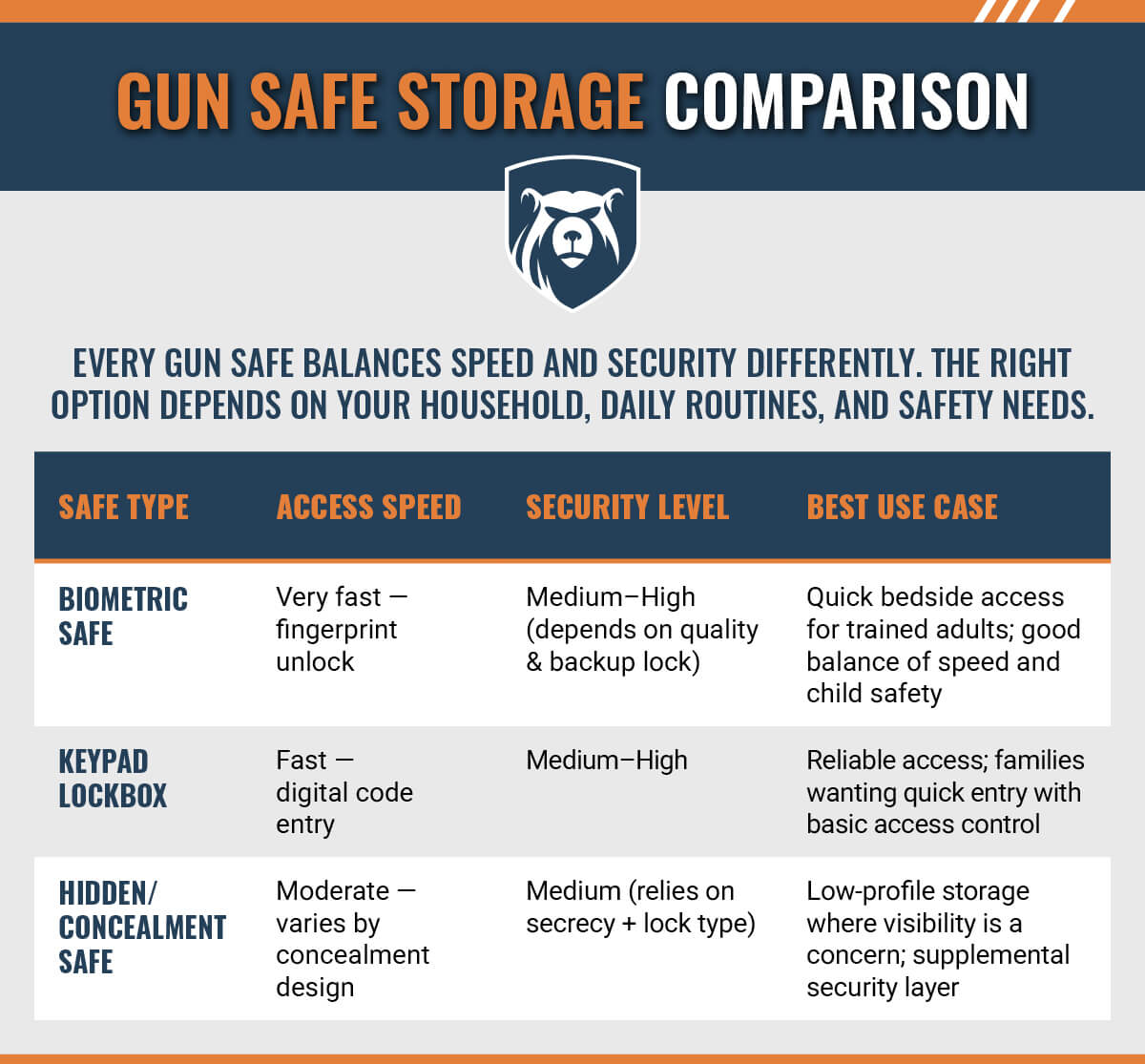
A defensive firearm must be secured, but it also needs to be accessible in an emergency. Balancing safety and speed is critical.
Homes with small children, vulnerable individuals, or someone experiencing a mental health crisis require even tighter control over firearm access. That is different from a home of trained, responsible adults who understand firearm safety and storage protocols.
Types of Gun Safes for Homeowners
Homeowners have several storage options depending on their needs.
Common choices include:
Biometric Safes
These use fingerprint access for quick entry while keeping the firearm secured.
Keypad Lockboxes
These allow fast digital access and are a common choice for bedside defensive storage.
Hidden Safes
These are designed to blend into furniture or other areas of the home for added concealment.
Balancing Access Speed and Family Safety
Quick access should never come at the expense of safety.
Best practices include:
- Using childproof measures if children are in the home
- Keeping one defensive firearm in a ready-access safe
- Storing all other firearms securely
The right setup depends on who lives in the home and how quickly you may need access in an emergency.
See Also: Home Defense Gun Storage
Legal Considerations in Home Defense
Knowing the law is just as important as knowing how to use your firearm. Federal law provides the baseline for firearm regulation, but state laws often determine how home defense incidents are evaluated.
Always review the laws in your state before purchasing or using a firearm for defense.
Federal vs. State Laws on Firearms
Federal laws often address issues such as:
- Background checks
- Prohibited persons
- Certain firearm restrictions
State laws may govern:
- Concealed carry rules
- Waiting periods
- Castle doctrine and home defense statutes
Because these laws vary, gun owners should understand the specific rules that apply where they live.
See also: Understanding Home Defense Laws: Legal Issues Every Gun Owner Must Know
Liability After Defensive Shootings
After a defensive shooting, law enforcement will investigate what happened. A prosecutor may then decide whether the use of force was legally justified.
Even if no criminal charges are filed, you may still face civil lawsuits.
A membership service like the one provided by Right To Bear includes 100% attorney fee coverage. That can help you defend yourself after a home-related self-defense incident without facing the full financial burden of hiring an experienced legal team.
Common Mistakes Gun Owners Make in Home Defense
Many home defense mistakes come from overconfidence, poor preparation, or lack of training. The good news is that bad habits can be corrected. The best time to start building good habits is as soon as you purchase your firearm.
Good habits are easier to establish than bad habits are to break.
Negligent Discharges from Poor Storage
Improperly stored firearms create unnecessary risk, especially in homes with children or untrained adults. Safe storage is one of the most basic and most important parts of responsible gun ownership.
Overpenetration in Apartments or Shared Walls
In apartments, townhomes, or homes with closely spaced rooms, overpenetration is a serious concern. Your firearm and ammunition choice should take your living environment into account.
Failure to Train Under Stress Conditions
Static range practice is useful, but it is not enough by itself. Home defense situations are chaotic and stressful. Training should prepare you to think, move, and respond under pressure.
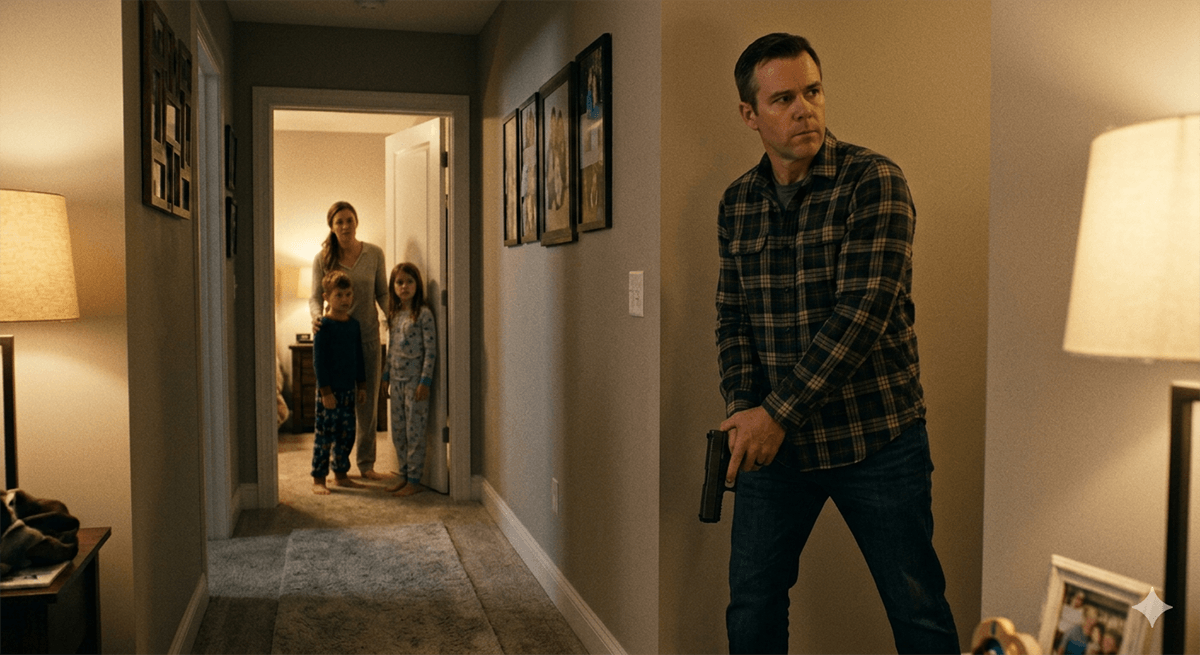
Teaching Home Defense Awareness to Your Family
Family preparedness can save lives. Everyone in the home should know their role in an emergency.
One adult may be responsible for gathering family members in a safe area or leading an escape, while another may be responsible for confronting a threat if all other layers of defense have failed.
Teaching Children Firearm Safety
Children should be taught never to touch firearms without direct adult supervision. Even if guns are stored securely, clear rules and education matter.
Running Emergency Drills
Families should practice for likely emergencies, including:
- Break-ins
- Fires
- Evacuation scenarios
Practice makes the response more automatic and reduces panic.
Using Communication Codes
Simple communication codes can help family members coordinate quickly without confusion. A code word can signal danger, direct family members to the safe room, or tell them to call emergency services.
Final Thoughts on Responsible Home Defense
Responsible home defense means:
- Choosing the right firearm
- Training regularly
- Storing firearms safely
- Following the law
- Preparing your family
When all of these layers work together, you improve both your family’s safety and your ability to respond responsibly as a gun owner.
Defending yourself and your family is a right, but doing so safely, lawfully, and with proper training is a responsibility. If you are concerned about protecting your loved ones at home, you owe it to yourself to create a home defense plan that is thorough, effective, and understood by everyone in the household.
Put in the work, build the plan, and live with greater confidence knowing you have done everything you reasonably can to protect your home and the people inside it.
Frequently Asked Questions
What Is Home Protection?
Home protection involves using physical security tools, smart devices, and preventive habits to safeguard your home from intruders, accidents, and environmental hazards. It can include alarm systems, security cameras, reinforced doors, outdoor lighting, and emergency planning.
What Are Safe Locations in a Home?
Safe locations are areas within your home that provide the highest level of protection during emergencies. Examples include a basement during severe storms, an interior hallway during certain natural disasters, or a lockable room during a break-in.
What Is a Safe Space in Home Safety?
A safe space is a designated area intended to provide security and stability during a crisis. It should ideally include essentials such as water, first aid supplies, lighting, and a reliable way to contact emergency services.
What Is Considered Home Defense Gear?
Home defense gear includes equipment intended to improve personal and property safety. This can include motion detectors, reinforced locks, pepper spray, stun devices where legal, alarm systems, flashlights, security cameras, and legally owned firearms used for defensive readiness.
Protect What Matters Most
Teaching your family home defense awareness is about more than drills and locked doors. It’s about making sure the people you love are prepared, protected, and supported if the unthinkable ever happens. That’s exactly why families across the country trust Right To Bear Family Protection Plans for real-world legal protection, 24/7 attorney access, and peace of mind that extends beyond the firearm itself. Whether you keep a firearm at home or simply want to be prepared, Right To Bear helps your family stay ready when seconds matter most.