
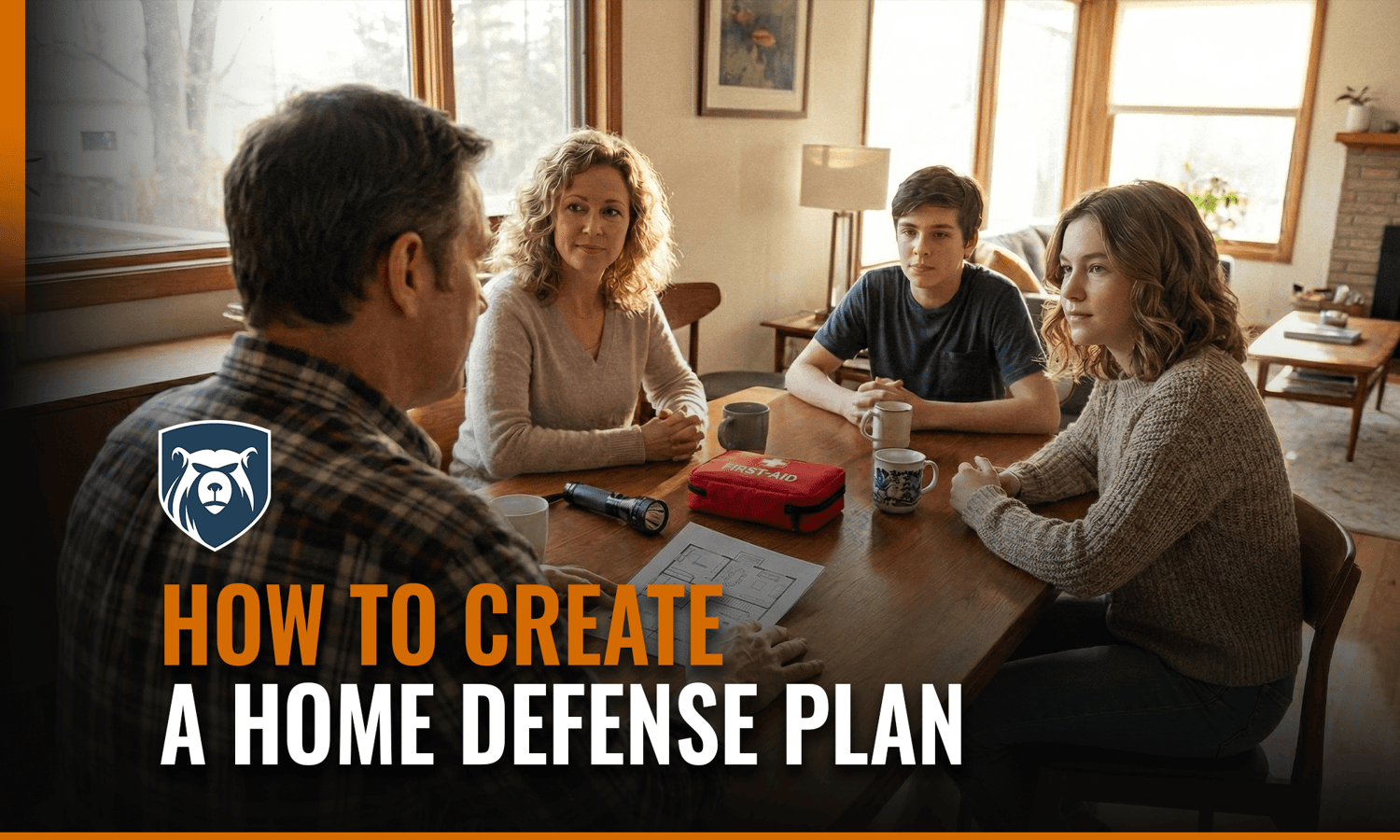
A home defense plan is the foundation of protecting your family in emergencies. It is not just about firearms; but instead combines layered security, family communication, and responsible storage practices.
With burglaries occurring about every 30 seconds in the United States, preparation reduces chaos and increases safety.
See also: HOME DEFENSE: A COMPLETE GUIDE FOR GUN OWNERS
What is a Home Defense Plan?
A home defense plan is a system of preparation that outlines how your household should respond to a break-in or emergency. Unlike reactive defense, proactive planning reduces panic and improves safety outcomes. Homeowners who plan ahead create clarity for themselves and their families.
A good home defense plan will include everything from exterior security and deterrents such as cameras, lights, even alarms, to a plan of action should a perpetrator actually break in. You should have a safe place to go, foreknowledge of defensive weapon placement, and interior security options.
Building a Layered Security Strategy
Layered security means building multiple barriers between your family and a threat. Each layer buys time, deters intruders, and directs your family toward safety.
Exterior Security
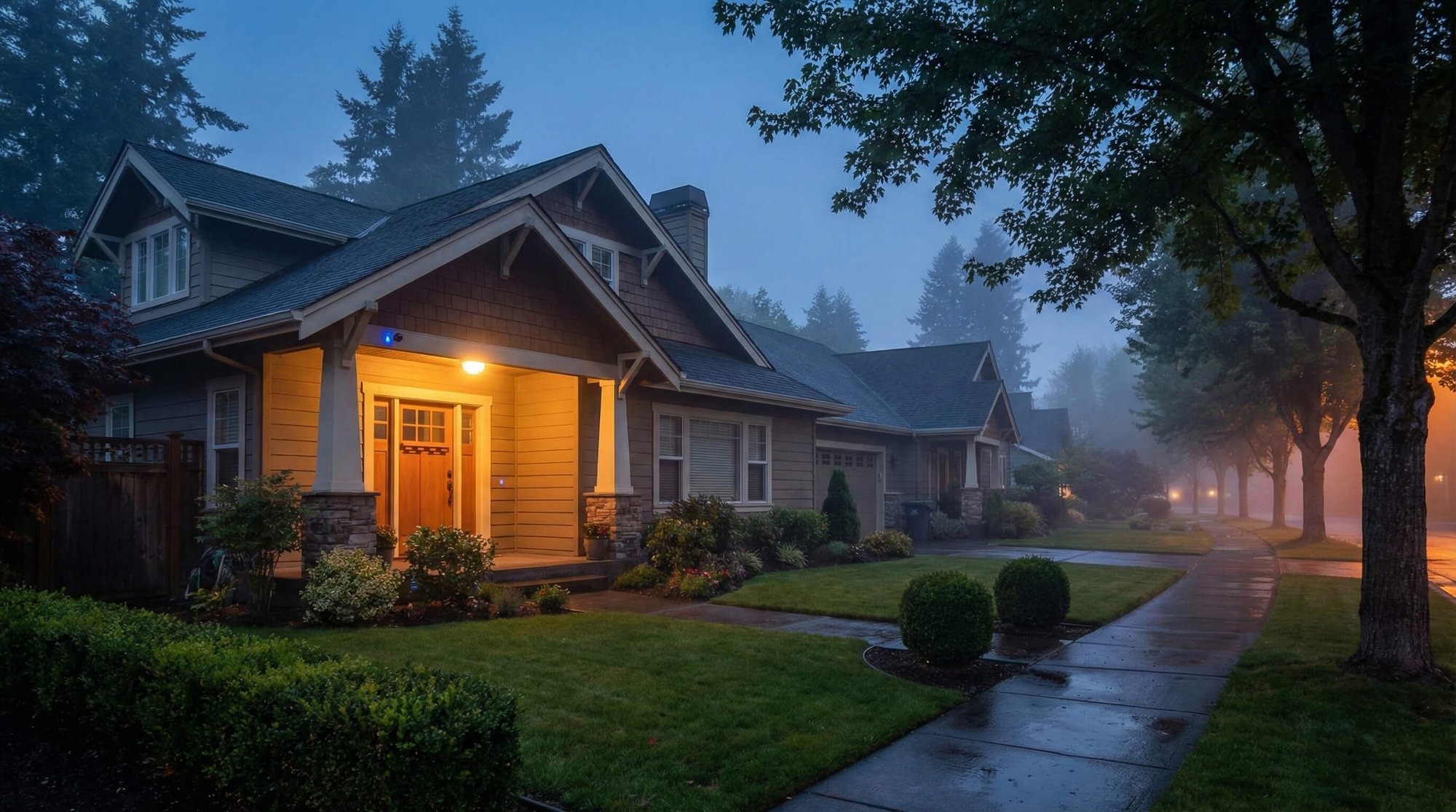
Motion sensor lights deter intruders outside the home. When used in combination with visible cameras and trimmed landscaping, you can reduce hiding spots for burglars.
Exterior measures include:
- Motion-activated lighting
- Security cameras (CCTV or smart systems)
- Clear sightlines around the property
- Bright panic lighting to startle any trespassers
Entry Point Reinforcement
It is important to keep in mind that there is no way to truly keep a determined burglar out, only delay them. Reinforced doors strengthen entry point security. Security film on windows delays forced entry attempts. Longer screws in door strike plates can reinforce kick-in attempts.
Homeowners have access to a variety of upgrades that work in tandem to keep out intruders long enough for a police response.
Entry point upgrades include:
- Solid doors with deadbolts
- Reinforced strike plates
- Window locks and shatter-resistant film
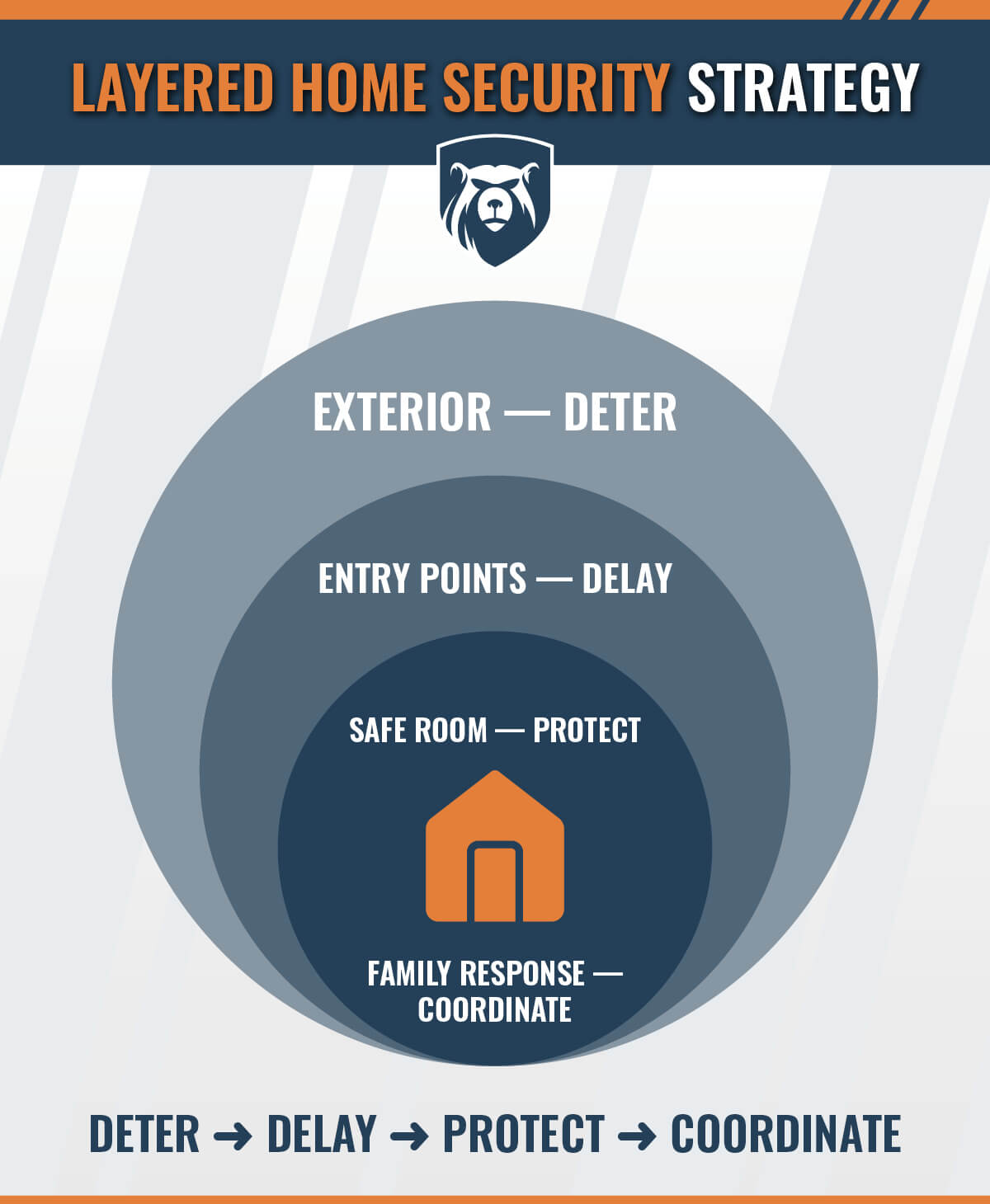
Creating a Safe Room
A safe room provides your family with a secure retreat if an intruder enters the home. Its purpose is not confrontation but survival. A good safe room provides family protection until police arrive.
Checklist for a safe room:
- Solid-core or reinforced door
- Interior lock or deadbolt
- Landline, cell phone, or two-way radio
- Flashlight and first-aid kit
Families who designate and prepare a safe room improve emergency survival rates, especially against teams of armed intruders that have the means to overwhelm you.
Integrating Firearms into Your Plan
Firearms are a final layer, not the only ones. Their role is to protect your family if all other barriers fail. The majority of thieves are not hardened criminal soldiers who won’t balk in the face of a firearm. Even career criminals respect what a firearm can do and will flee.
While the “scare-factor” of a firearm in use will send most criminals who have not been actively engaged fleeing, it is important to never underestimate your perpetrator. If they’re in your house with malicious intent, they’re a threat.
Best practices:
- Keep firearms in quick-access safes
- Train regularly in safe handling
- Store unused firearms securely away from children
- If you need to engage a burglar, make sure your family won’t be in the line of fire
By integrating firearms responsibly, homeowners balance readiness and safety.
See Also: BEST GUNS FOR HOME DEFENSE
Family Communication and Emergency Roles
Communication keeps everyone coordinated in moments of stress. Assign roles so each family member knows what to do. An older child might be responsible for getting younger members of the family out. Your spouse might be responsible for getting everyone else out of the house, or if they are properly trained, assisting in defending your home.
Assigning Roles
- Parents: communicator or defender
- Older children: guide siblings to safe room
- Younger children: trained to follow instructions
Emergency Drills
Emergency drills improve preparedness during real incidents. It may seem silly to your family members, or even yourself, in the moment, but these drills instill confidence and set up a good framework that will be appreciated after a self-defense incident.
It is good practice to also run drills on other emergencies like fires or natural disasters in tandem with home defense drills. Preparation is the key to safety, and safety means survival.
Drill ideas:
- Practice safe word communication
- Run mock intruder scenarios
- Walk through escape routes

Common Mistakes in Home Defense Planning
Poor planning results in preventable risks. Identifying and practicing avoiding specific mistakes many untrained homeowners make is just important as practicing good procedures.
Frequent mistakes include:
- Overconfidence in firearms without training
- Poor firearm storage leading to accidents
- No communication plan for family members
- Failure to run drills
Personalized Home Defense Checklist
A checklist reinforces prevention, readiness, and safety. Do a walkthrough of your home with your family members and create a personalized checklist of everything that you need to reinforce your home defense.
Sample Home Defense Checklist:
- Reinforce doors and windows
- Install outdoor motion lights and cameras
- Prepare a safe room with locks and communication tools
- Assign roles and rehearse drills
- Secure firearms in quick-access safes
- Review and update every 6–12 months
Homeowners who follow a checklist and update it regularly maintain long-term readiness.
Final Thoughts on Responsible Home Defense
Responsible home defense is about more than reacting to threats. It is about preparation, safety, and communication. When families prepare layered defenses, designate safe rooms, and train regularly, they reduce risks dramatically.
Safety first, force last should guide every homeowner’s defense strategy. It doesn’t matter if you successfully defend your home if a member of your family is hurt along the way.
Prepare for every possible scenario, from initial deterrence to what happens if intruders get aside and you have no choice but to engage, and you will be ready for anything.
Frequently Asked Questions
What should a home defense plan include?
A solid home defense plan includes escape routes, safe zones, family communication steps, and how to respond if an intruder enters.
What is a rally point in home safety?
A rally point is a pre-decided safe meeting spot where everyone gathers after leaving the house during an emergency.
What does “fall back” mean in a home defense context?
“Fall back” means retreating to a safer, more defensible position inside your home if your first defense area is compromised.
How can I improve my home security fast?
Boost home security by adding smart locks, motion lights, door cameras, and by keeping entry points well-lit and locked.
How can I make my home safer for my family?
Keep your home safe with layered security: alarms, surveillance, a defense plan, and clear emergency communication steps.