
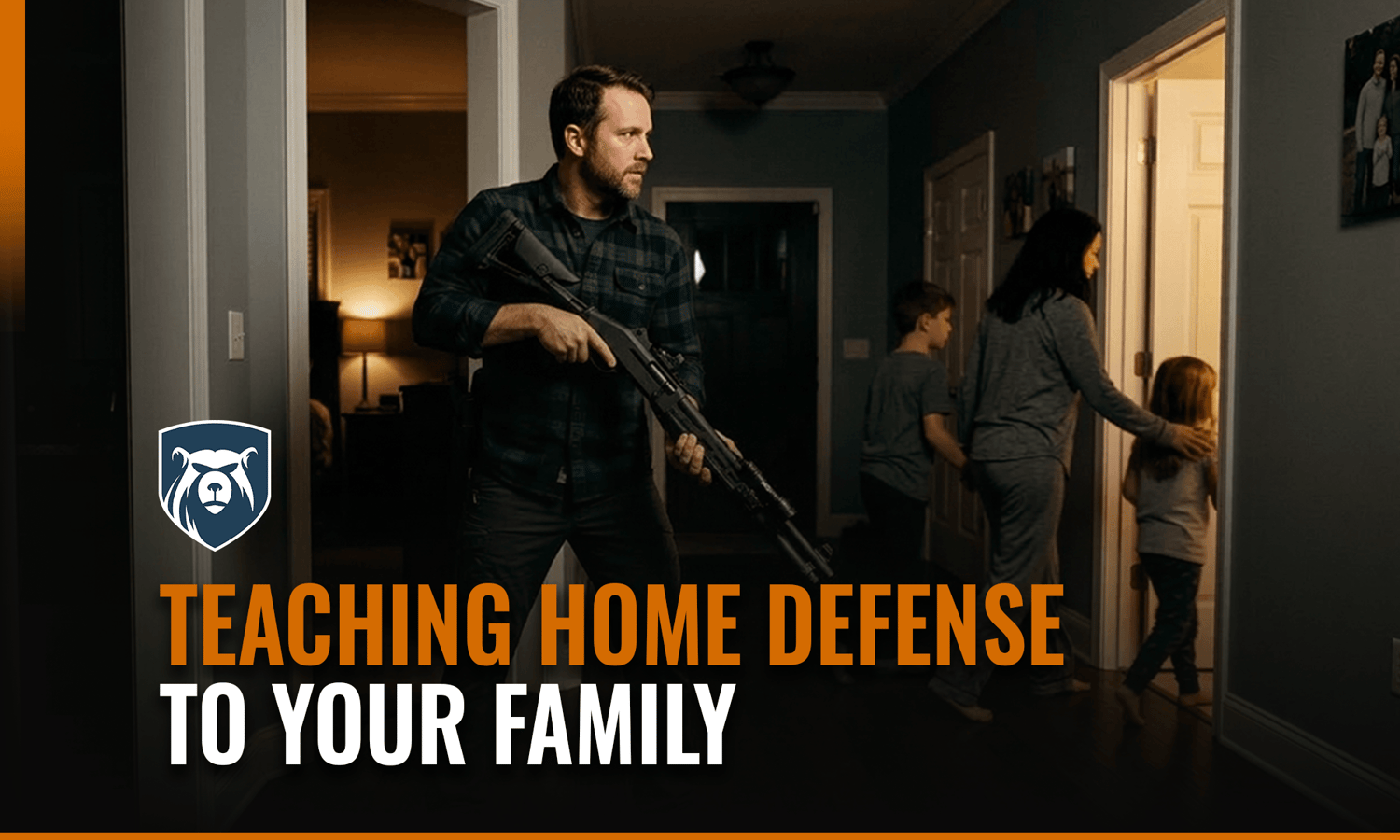
Locks, alarms, and firearms are important in a home defense plan, but the human element matters just as much. Every family member should know what to do during an emergency. When everyone understands their role, panic is reduced, and safety improves. Family awareness improves emergency readiness and safety.
See Also: HOME DEFENSE: A COMPLETE GUIDE FOR GUN OWNERS
This guide explains how to teach your family safe room awareness, create communication roles, run emergency drills, and introduce children to gun safety responsibly.
Why Family Awareness Matters in Home Defense
Emergencies are chaotic. Without preparation, families may freeze, scatter, or act in ways that increase danger. Family preparation prevents chaos and accidents.
Awareness ensures that:
- Everyone knows where to go.
- Roles are clearly defined.
- Children understand safety boundaries.
Prepared families respond faster and with greater confidence.
Teaching Safe Room Awareness
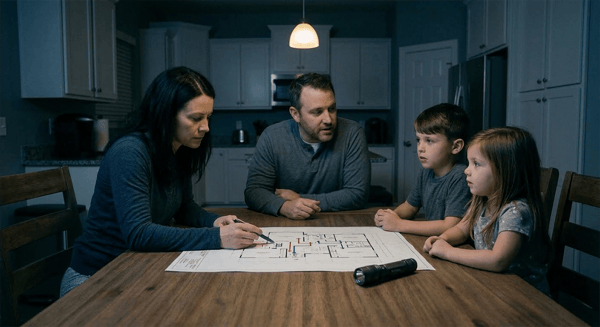
Safe rooms provide a secure retreat for families during intrusions. A safe room is a designated space for protection during a break-in and can be reinforced or supplied in a number of ways to ensure extra protection. Families should know exactly where it is and how to get there.
Key features of a safe room:
- Reinforced door with lock
- Emergency supplies (flashlight, water, first aid)
- Communication tools (landline, cell, or radio)
- Parents: call 911 and secure safe room
- Older children: help younger siblings
- Younger children: go directly to safe room
Practice moving quickly and calmly to this space during drills. Integration with correct gun storage practices ensures firearms are secure but accessible to adults if needed.
See Also: HOW TO CREATE A HOME DEFENSE PLAN
Establishing Communication Roles
Communication prevents confusion. Assign each family member a role. Consider instituting a safe word that signals immediate emergency action.
- Parents: call 911 and secure safe room
- Older children: help younger siblings
- Younger children: go directly to safe room
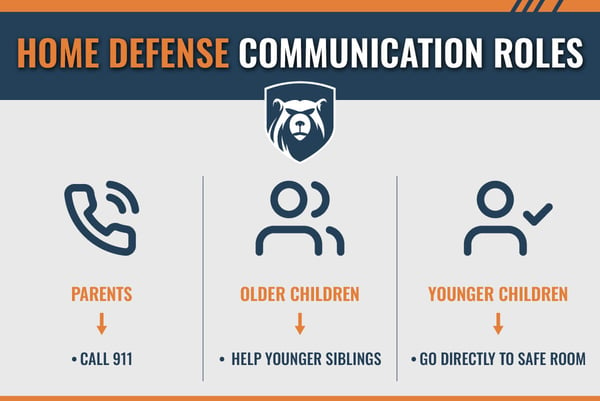
Clear roles and a family safe word reduce hesitation and keep everyone coordinated. These roles may evolve as your family does, so always be prepared to reevaluate the family dynamic as children grow older and more responsible.
Running Family Emergency Drills
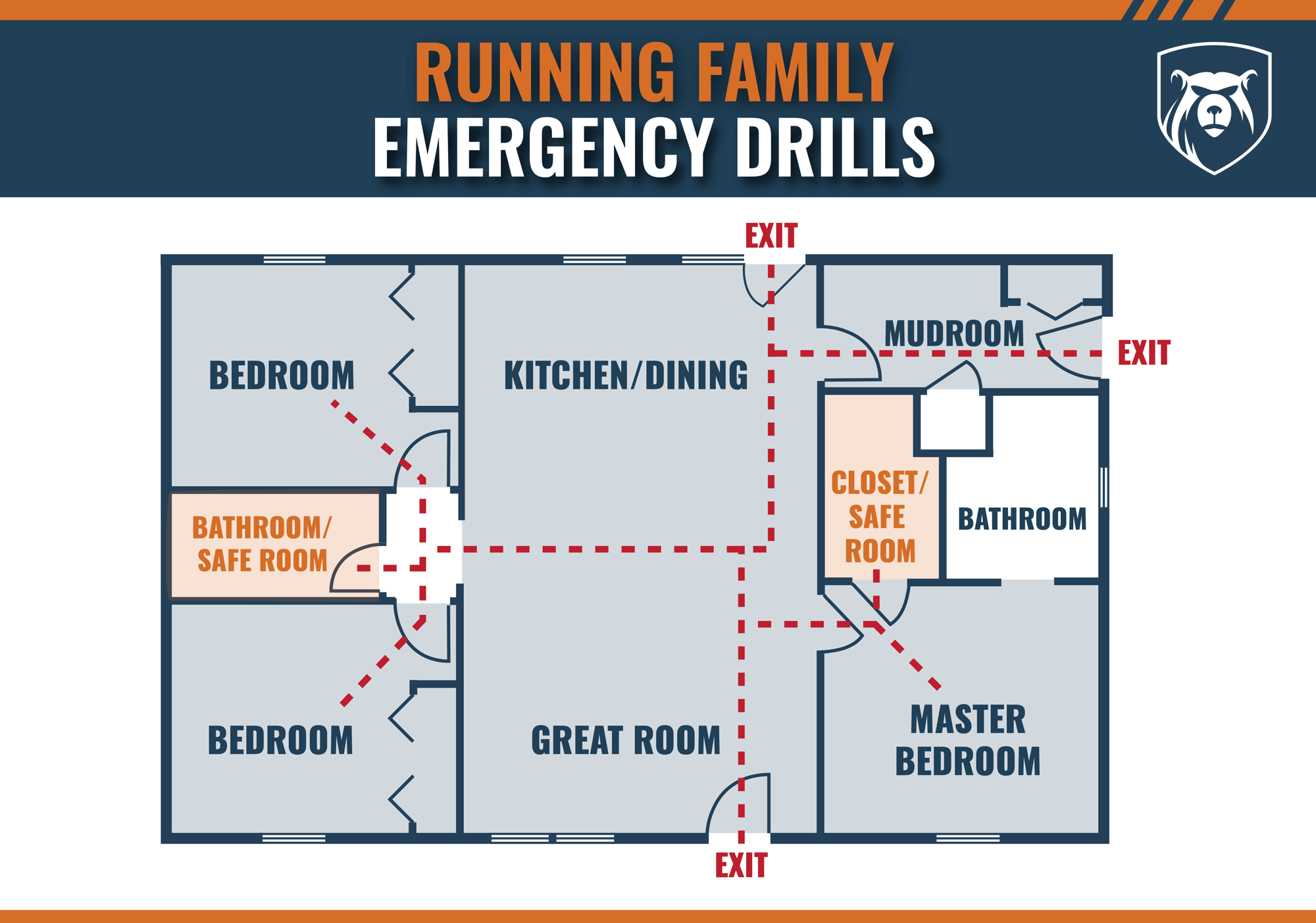
Drills turn plans into action. Families should practice realistic scenarios like an intruder entering at night. This can be practiced in tandem with other drills, like for tornadoes, fire, or other dangerous situation scenario practice. Emergency drills reduce panic and response time.
Tips for drills:
- Practice reaching the safe room in under 30 seconds
- Run mock intruder scenarios at different times of day
- Include both safe room retreats and evacuation routes
Regular practice builds confidence and ensures everyone remembers their role.
Teaching Kids Gun Safety and Awareness
Children must learn clear rules about firearms. Education prevents curiosity from turning into danger. Firearm safety rules teach children to avoid negligent handling while safe storage prevents child accidents with firearms.
- Teach children to never touch a firearm without an adult
- Explain the basics of firearm safety in simple language
- Show them that guns are always stored in safes or lockboxes
This builds trust and reinforces that firearms are tools for defense, not toys. You know your children best, and with a finely tuned sense of parental intuition you will know at what stage of development you can introduce more elements of responsible gun ownership.
At first they will learn about the dangers of firearms, then how to handle them, range practice, and so on until they become responsible law abiding gun owners themselves.
Avoiding Common Mistakes in Family Awareness Training

Even well-meaning families can make mistakes. Lack of preparation leads to confusion and risk during emergencies.
Common errors include:
- Skipping drills and assuming kids know what to do
- Using no safe word or clear communication plan
- Leaving firearms unsecured where children can find them
Final Thoughts on Family Preparedness in Home Defense
Home defense isn’t just about firearms. It’s about family unity, clear communication, and responsible planning. Responsible gun owning families combine communication, drills, and storage practices.
By teaching awareness, practicing drills, and following safety rules, you give your family confidence and security during emergencies. That is the very essence of a good home defense plan, and one of the many way families can become responsible gun owners.