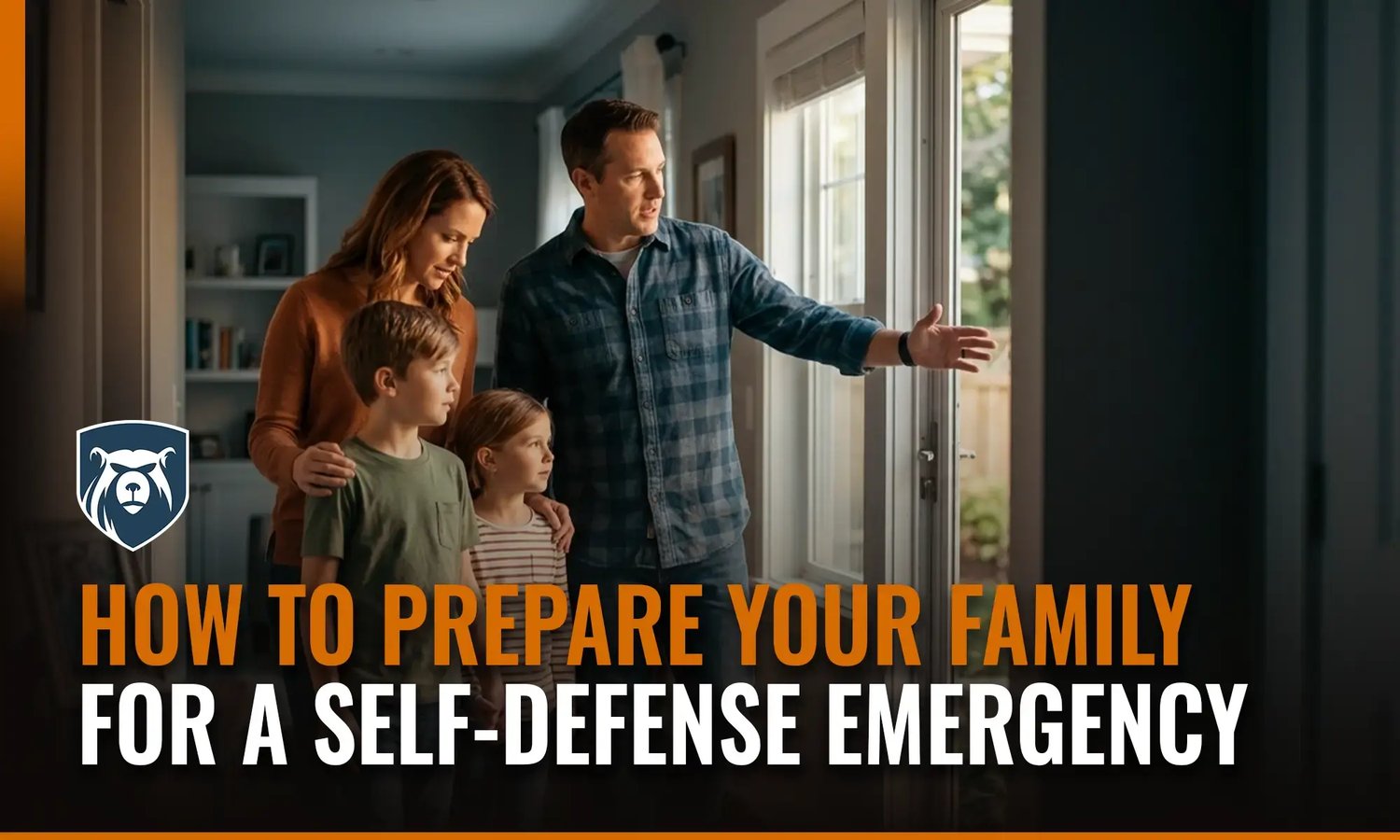
Most home defense conversations stop at locks, cameras, alarm systems, and where the firearm is stored. Those things matter, but they only address what happens during a threat. The legal and emotional consequences of a defensive incident can last months or years, and almost no family thinks through that part until they are already living it.
A real family self-defense plan covers three things: legal readiness, communication protocols, and emotional recovery. At Right To Bear, we help families build all three layers before they ever need them. The strongest protection plan prepares your household for what comes before, during, and long after a crisis.
Explore: Right To Bear Family Plan
Preparation Beyond Alarms and Locks
Physical security measures are designed to deter or delay a threat. Legal protection is designed to handle what comes after one. These are not the same thing, and one does not substitute for the other.
Preparing your family for home defense means thinking through both layers. When a crisis unfolds, panic reduces decision quality. People say things they should not say, make calls they should not make, and miss steps that matter enormously later. Families who have talked through the aftermath in advance make better decisions under pressure. Children who have seen calm, prepared adults are less destabilized by chaos.
Early mistakes in the hours after a defensive incident can create real legal risk. Preparation is what prevents them.
Household Legal Readiness Basics
Before anything happens, every adult in your household should have a basic working knowledge of the following:
Your state's self-defense laws: The legal framework governing defensive force varies significantly by state. Key doctrines to understand include:
- Castle Doctrine, which generally protects your right to use force inside your home
- Stand Your Ground laws, which remove the duty to retreat in states that have adopted them
- Duty to Retreat requirements, which still exist in a number of states and can affect how your actions are evaluated
Your rights after defensive force is used: You have the right to remain silent. You have the right to an attorney. Statements made in the immediate aftermath of an incident, even well-intentioned ones, can complicate an investigation or prosecution. Knowing this in advance changes how you respond in the moment.
Pre-arranged attorney access: Self-defense legal protection for families ensures you are not scrambling for help after an incident. Having a 24/7 attorney hotline already in place means the first call after 911 is to someone who knows the law and can guide you through the first critical hours.
When to Call 911 and What to Say
Your 911 call is the beginning of the official record. Keep it simple and factual:
- State your location clearly
- Report that there was an intruder and that you used force in defense
- Request police and medical assistance
- Stay on the line as directed
What you should avoid is over-explanation. Do not speculate about the intruder's intentions. Do not walk through your reasoning. Do not try to justify your actions on the call. Provide essential facts and let investigators do their job.
This is also something to prepare your spouse and older children for. Decide in advance who makes the 911 call, who moves younger children to a safe area of the home, and who stays with the scene. Having a clear chain of action prevents everyone from freezing or talking over each other in a high-stress moment.
See also: What To Do After a Self-Defense Incident: First 15 Minutes and First 24 Hours
Teaching Family Communication Protocols
A strong family self-defense plan includes communication boundaries not just during an incident but after one. Consider establishing:
- A designated safe room where children go if they hear a threat
- Simple code words or phrases that signal immediate movement to that room
- Role assignments so everyone knows their job without being told in the moment
After an incident, communication discipline becomes just as important. In the hours and days that follow:
- Do not post anything on social media about what happened
- Do not give statements to neighbors, media, or anyone outside your legal team
- Avoid discussing details of the incident with anyone who is not your attorney
What gets said publicly in the days after a defensive shooting can surface in both criminal proceedings and civil litigation. Preparing your family to stay quiet is not about hiding anything. It is about protecting everyone.

Understanding Legal Rights After Defensive Force
Even when your actions were completely justified, the legal process that follows can feel alarming if you are not prepared for it. Here is what families should understand in advance:
- Temporary detainment is common and does not mean you are under arrest
- Your firearm will almost certainly be seized as evidence and may not be returned for weeks or months
- A full investigation is standard procedure regardless of how clear the circumstances appear
- Arrest is possible in some jurisdictions even before a prosecutor has reviewed the case
None of these outcomes mean you did something wrong. Preparation does not prevent these steps from happening, but it dramatically reduces the fear response when they do.
Emotional Impact on Spouses and Children
Families rarely plan for what to do after a defensive shooting emotionally, yet this is often the longest-lasting consequence of the entire experience. The person who used force is not the only one who carries it.
In the immediate aftermath, the adults and children in the home may experience:
- Shock and an adrenaline crash in the hours following the incident
- Guilt, second-guessing, or replaying the event
- Sleeplessness and difficulty returning to normal routines
- Fear that the threat is not truly over
Children respond to these events differently depending on age, but confusion, behavioral changes, and increased anxiety are common across the board. What children need most in this period is calm, present adults who are not visibly falling apart. That is another reason adult preparation matters so much.
Counseling and Recovery Timeline
Recovery from a defensive incident is not a single moment. It unfolds over time and looks different for every family.
In the first 72 hours, the priorities are emotional stabilization, sleep, and getting legal clarity on what happens next. Avoid major decisions, limit media consumption about the incident, and lean on your legal support team for guidance.
In the first 30 days, begin a counseling evaluation for everyone in the household who was present, not just the person who used force. Rebuilding daily routine as quickly as possible helps reestablish a sense of normalcy, particularly for children.
Over the longer term, stay aware of PTSD symptoms in yourself and your family members. These can surface weeks after the event and may require ongoing family therapy. Community reintegration, especially if the incident received local attention, can also be a process that benefits from professional support.
Tthe emotional weight that follows is real and it deserves real support. Right To Bear members have access to up to 40 counseling sessions to work through the stress and trauma that can result from a covered incident. Sign up today so that support is already in place if your family ever needs it.
Financial Planning Considerations
The financial impact of a defensive incident begins almost immediately and can be severe without the right coverage in place. Families should plan for:
- Criminal defense attorney retainers, which are often required within days
- Civil lawsuit exposure from wrongful death or personal injury claims
- Lost income from mandatory court appearances and emotional leave from work
- Expert witness costs, psychological support expenses, and other litigation-related fees
The families who weather this financial pressure best are the ones who had dedicated legal protection in place before anything happened. Coverage decisions from standard insurance policies can take weeks. Purpose-built self-defense legal protection activates immediately.
Building a Layered Preparedness Plan
True preparedness for home defense means stacking three layers of protection on top of each other:
Layer 1: Physical Safety Secure firearm storage, regular training, and situational awareness at home form the foundation. These are the tools that help you respond to a threat in the moment.
Layer 2: Legal Readiness Understanding your state's self-defense laws, knowing your rights, having pre-arranged attorney access, and carrying dedicated legal coverage form the second layer. This is what protects you after the moment.
Layer 3: Emotional Recovery Counseling resources, family communication structure, and community support form the third layer. This is what sustains your family through the months that follow.
Preparing your family for home defense means building all three, not just the first one.
See also: How to Create a Home Defense Plan
Protect Your Family Before You Ever Need It
A Right To Bear membership gives your household a 24/7/365 emergency attorney hotline answered by real attorneys, 100% coverage of attorney fees for criminal and civil defense on covered incidents, protection that extends to your spouse and children, non-emergency legal guidance year-round, and up to 40 counseling sessions for post-incident psychological support.
Your family deserves a membership that prepares them for the realities of defending themselves in the real world. Right To Bear was created for everyday Americans who needed the proper support to utilize the rights enshrined to them. With the resources to prepare for the possibility of self-defense, the legal protection if it happens, and the guidance to navigate the aftermath, Right To Bear is here for you when you need us. Sign up today and give every member of your household the protection they deserve.
Frequently Asked Questions
How do I create a family self-defense plan?
Start by addressing three layers: physical security, legal readiness, and emotional recovery. Assign roles for emergency situations, make sure adults understand their state's self-defense laws, and have attorney access pre-arranged before anything happens.
What should I teach my family about home defense emergencies?
Focus on what to do during a threat, what to say on a 911 call, and what not to say in the aftermath. Older children should understand basic communication protocols, including staying off social media after an incident.
What should we do emotionally after a defensive shooting?
Normalize the trauma response, seek counseling early for everyone in the household, and maintain open family communication. Do not try to resume normalcy too quickly. Professional support in the first 30 days makes a significant difference in long-term recovery.
How can families prepare legally before a self-defense incident?
Learn your state's self-defense laws, understand your right to remain silent and your right to counsel, and secure dedicated legal protection with 24/7 attorney access before you ever need it.
Does legal protection cover my spouse and children?
Right To Bear membership extends coverage to household members, including your spouse and children, so your entire family is protected under a single plan.
The best defense? Be informed, stay calm, and don’t assume Hollywood logic applies in real life.
If you’re serious about self-defense, your first weapon should be knowledge—not just a trigger.