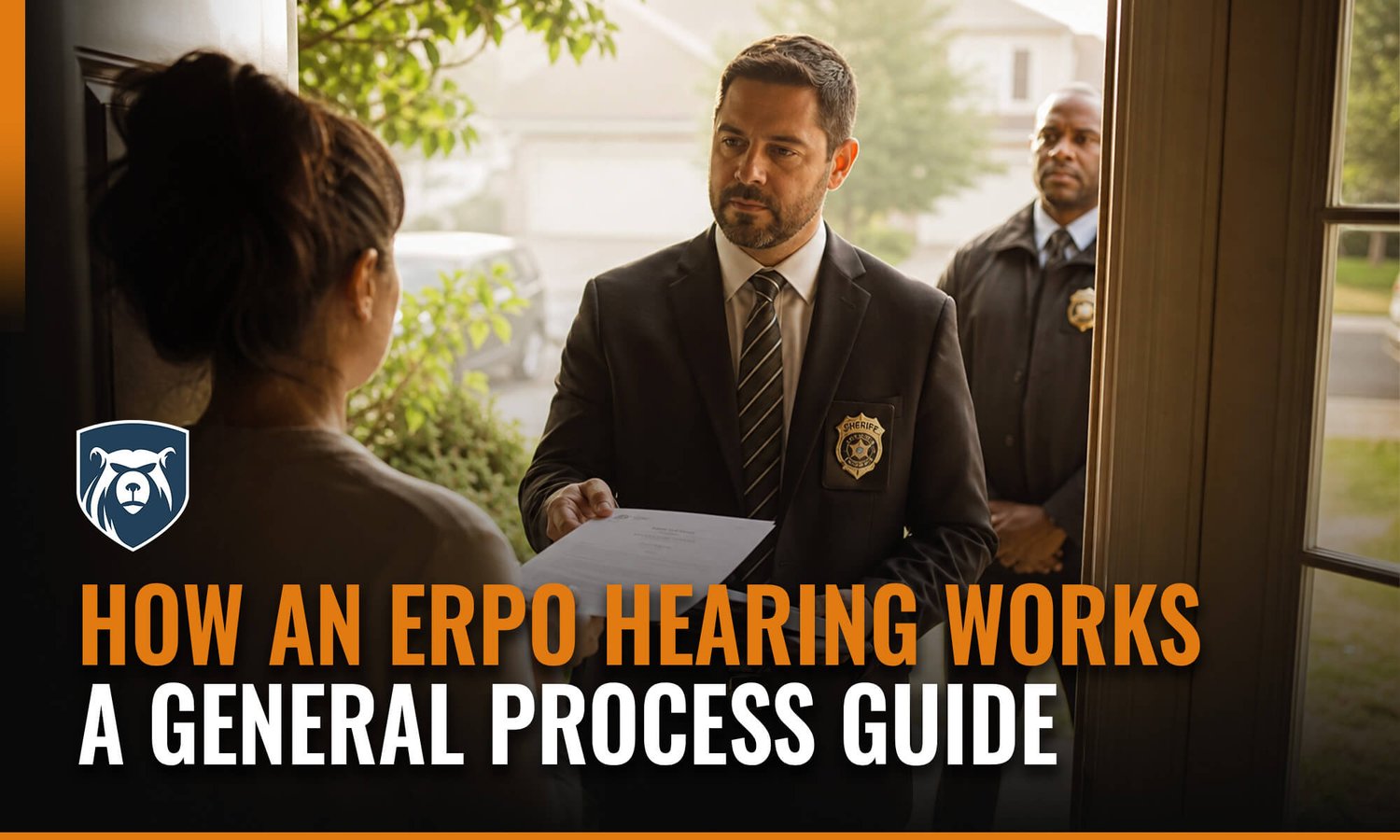
Being served with an Extreme Risk Protection Order (ERPO) means that for whatever reason a judge has ordered law enforcement to seize your weapon pending sometimes factitious allegations. This guide from Right To Bear walks through the process step by step. An ERPO is a civil court order, not a criminal conviction, but it can temporarily restrict your ability to possess firearms and the process moves faster than most people expect.
At Right To Bear, we provide up to $25,000 in legal fee protection for members who are served with a Red Flag Law action or ERPO, because we understand that legal costs begin almost immediately and hearings are scheduled quickly.
What Is an ERPO?
An Extreme Risk Protection Order is a civil court order that allows for the temporary restriction of firearm possession based on allegations that an individual poses a risk to themselves or others. It does not require a criminal conviction or even a criminal charge. A judge issues the order based on a civil standard of proof, and the primary consequence is the requirement to surrender firearms for a defined period.
Many states have their own version of an ERPO law, but there is also a federal ERPO act currently pending action in the House.
Key characteristics of an ERPO:
- It is a civil proceeding, not a criminal one
- It is preventive in nature, not punitive
- It is issued by a judge based on a petition
- Duration and specific procedures vary significantly by state
Step 1: How an ERPO Petition Is Filed
The process begins when an eligible party files a petition with the court. Depending on the state, petitions can be filed by law enforcement, family members, or household members. Some states have expanded eligibility further to include employers or coworkers.
The petition itself includes a sworn affidavit laying out the allegations of risk along with any supporting evidence the petitioner can provide. A judge then reviews that petition to determine whether the allegations warrant immediate action. The respondent, meaning the person the petition is filed against, is typically not present at this stage and may not even know the petition has been filed.
Step 2: The Temporary Ex Parte Order
If the judge determines the petition warrants immediate action, they may issue a temporary ERPO on an ex parte basis. Ex parte means the order is issued with only one side present, based solely on the petitioner's affidavit, without the respondent having any opportunity to respond.
If a temporary order is granted:
- Law enforcement may be dispatched to serve the order and collect firearms
- A compliance deadline is set, typically short
- A full hearing is scheduled within days or weeks depending on the state
The temporary order phase is where many people are caught completely off guard. Firearms can be confiscated before you have had any opportunity to speak to a judge, challenge the allegations, or present your own evidence. This is the phase where having an attorney already accessible makes the biggest practical difference, because the window between service of the order and the hearing can be narrow.

Step 3: The ERPO Hearing Timeline
After a temporary order is issued, a full hearing is scheduled to determine whether the order should be extended, modified, or dissolved. Notice is provided to the respondent, and both parties have the opportunity to appear before the judge.
At the hearing, the petitioner presents their evidence and the basis for the alleged risk. The respondent has the opportunity to respond, challenge the petitioner's account, present their own evidence, and call witnesses. The judge evaluates the credibility of the evidence, the seriousness of the alleged risk, and the applicable legal standard in that jurisdiction.
Burden of proof at an ERPO hearing varies by state. Temporary orders often require a lower threshold, sometimes preponderance of the evidence. Final orders in many states require clear and convincing evidence, a higher standard than preponderance but still below the criminal standard of beyond a reasonable doubt. Understanding the specific standard in your state is an essential part of preparing your defense.
Possible Outcomes of an ERPO Hearing
A hearing can end in several ways:
- The order is dismissed, your firearms are returned, and no further restrictions apply
- The order is extended for a defined duration, often six months to one year, with possible renewal
- Firearm possession restrictions are maintained for the duration of the order
If an order is extended, the respondent will face an ongoing restriction on firearm possession for that period. In states that allow renewal, the petitioner may seek to extend the order again when it expires, meaning the legal process may not end at the initial hearing.
Defense Considerations at an ERPO Hearing
If you are served with an ERPO, the immediate priorities are straightforward:
- Do not ignore the order under any circumstances
- Comply with any firearm surrender requirements to avoid criminal penalties for non-compliance
- Contact an attorney immediately, before the hearing date
Strategically, your defense preparation should focus on gathering documentation that contradicts the petitioner's allegations, identifying witnesses who can speak credibly to your character and behavior, reviewing whether the petition itself meets the procedural requirements of your state's law, and challenging any unsupported or exaggerated claims in the affidavit.
One of the most common mistakes respondents make is underestimating the seriousness of an ERPO hearing because it is a civil proceeding rather than a criminal one. The absence of a criminal standard does not mean the stakes are low. An extended ERPO can restrict firearm possession for a year or more, carry reputational consequences, and create legal costs that accumulate through any renewal proceedings that follow.

Why Legal Representation Matters in ERPO Court
ERPO hearings are civil proceedings, but they operate with real procedural complexity. Rules of evidence may apply. Cross-examination of the petitioner and their witnesses may occur. Legal standards must be identified and argued correctly for your jurisdiction. And appeal rights may exist if the outcome is unfavorable.
Professional legal representation can affect whether the order is extended or dissolved, how evidence is presented and challenged, and whether your constitutional rights are properly protected throughout the proceeding. An attorney who understands ERPO proceedings in your state is not a luxury in this situation. The outcome of a hearing that takes place without qualified counsel is far less predictable than one where your side of the story is presented clearly, strategically, and with proper evidentiary support.
Red Flag Law Protection Through Right To Bear
Right To Bear has acquired a self-defense liability insurance policy that specifically covers members facing Red Flag Law or ERPO actions. If you are served with an Extreme Risk Protection Order or a Red Flag Law petition, your membership provides up to $25,000 toward attorney's fees and legal costs for defending against that action.
This coverage matters precisely because of the timeline involved. Hearings are scheduled quickly after a temporary order is issued. Legal fees begin accumulating almost immediately. And the burden of challenging the allegations falls on you, not the petitioner. Having that financial protection already in place means you can engage qualified counsel right away rather than weighing legal costs against your ability to mount an effective defense.
Legal protection must exist before a petition is filed. Once a temporary order has been issued and your firearms have been confiscated, it is too late to activate coverage you do not already have.
Explore: Red Flag Law Protection
Prepare Before an ERPO Is Filed
An ERPO can be issued with very little warning, and once it arrives, every timeline becomes compressed. Deadlines apply immediately. Firearm surrender may be required within hours or days. Court hearings follow quickly and the need for legal representation becomes urgent at exactly the moment when you have the least time to find it.
Right To Bear provides up to $25,000 in legal fee protection specifically for defending against ERPO and Red Flag Law actions, as part of a broader membership that includes criminal and civil defense coverage, 24/7/365 emergency attorney-answered hotline access, and more protections and benefits built around responsible firearm ownership.
Want to bring in your own attorney but still want legal protection? We encourage it. If you seek your own legal counsel, your membership will still provide legal fee protection.
Sign up today and make sure that protection is already in place before a court order ever arrives at your door.
Frequently Asked Questions
What is an ERPO?
An Extreme Risk Protection Order is a civil court order that can temporarily restrict firearm possession based on allegations that an individual poses a risk to themselves or others. It is not a criminal charge or conviction.
What is an ERPO court order?
It is a judge-issued order requiring the temporary surrender of firearms and restricting possession for a defined period. It can be issued on a temporary basis without the respondent's presence before a full hearing is scheduled.
Is an ERPO a criminal conviction?
No. An ERPO is a civil proceeding. However, violating a valid ERPO by refusing to surrender firearms or by possessing firearms during the restriction period can result in criminal penalties.
How long does an ERPO last?
Duration varies by state but often ranges from six months to one year. Some states allow petitioners to seek renewal when the initial order expires.
Does Right To Bear cover ERPO defense?
Yes. A Right To Bear membership provides up to $25,000 toward attorney's fees and legal costs for defending against actions taken under a Red Flag Law or Extreme Risk Protection Order. Members can choose to work with an experienced gun law attorney with Right To Bear or choose their own legal counsel and still get the same great legal fee protection.