
Red flag laws, also referred to as risk-based gun removal laws, allow courts to temporarily remove firearms from individuals who are considered a potential risk to themselves or others. These laws are intended to serve as a proactive measure aimed at enhancing public safety. This guide examines the origins, implementation, and various perspectives on red flag laws in the United States.
What Are Red Flag Laws?
Red flag laws permit a state court to order the temporary seizure of firearms from individuals who may present a danger to themselves or others. These laws are triggered based on statements, behaviors, or actions indicating potential risks. Key features include:
- Court-Ordered Firearm Seizure: A judge determines whether to issue an order based on presented evidence.
- Temporary Nature: Seizures are time-limited, often requiring a subsequent court hearing to extend the order.
- Legal Consequences: Non-compliance with an order is a criminal offense.
How Do Red Flag Laws Work?
The process generally involves the following steps:
- Petition Filing: Eligible individuals (e.g., family members, law enforcement, educators) file a petition.
- Preliminary Hearing: A judge evaluates the evidence and decides whether to issue a temporary order.
- Firearm Removal: If granted, law enforcement removes the firearms.
- Full Hearing: A second hearing determines whether to extend the order, typically for up to one year.
- Restoration: Firearms are returned if the order is not extended or the individual is deemed no longer a threat.
What Are the Origins of Red Flag Laws?
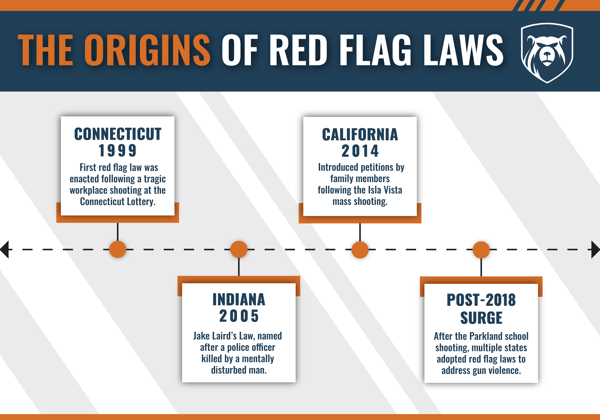
The first red flag law was enacted in Connecticut in 1999 following a tragic workplace shooting at the Connecticut Lottery. Other milestones include:
- Indiana (2005): Jake Laird’s Law, named after a police officer killed by a mentally disturbed man.
- California (2014): Introduced petitions by family members following the Isla Vista mass shooting.
- Post-2018 Surge: After the Parkland school shooting, multiple states adopted red flag laws to address gun violence.
Which States Have Red Flag Laws?
As of 2023, 21 states and Washington, D.C., have enacted red flag laws. These include:
- Extreme Risk Protection Orders (ERPOs): Used in states like Colorado, Maryland, and Washington.
- Gun Violence Restraining Orders (GVROs): Used in California.
- Risk Protection Orders (RPOs): Used in Florida.
Each state’s law varies in terminology, eligible petitioners, and procedural details.
What Is the Purpose of Red Flag Laws?
Red flag laws aim to:
- Prevent Violence: Reduce the risk of mass shootings, suicides, and domestic violence.
- Provide Crisis Intervention: Offer a legal mechanism to intervene in acute situations.
- Empower Families and Law Enforcement: Allow those closest to individuals in crisis to take proactive steps.

How Effective Are Red Flag Laws?
Research on the effectiveness of red flag laws includes:
- Suicide Prevention: Studies show significant reductions in firearm suicides in states like Connecticut and Indiana after implementing these laws.
- Mass Shooting Prevention: Preliminary data suggests that ERPOs have been used effectively to prevent potential mass shootings.
- Usage Rates: States like Florida and California report high numbers of red flag petitions, indicating widespread utilization.
Who Can File a Petition Under Red Flag Laws?
Eligibility varies by state but often includes:
- Law Enforcement: Permitted in all states with red flag laws.
- Family Members: Allowed in most states.
- Educators: Permitted in New York and a few other states.
- Healthcare Providers: Allowed in states like California.
Some states, like Indiana and New Mexico, limit petitions to law enforcement, while others, like Oregon, allow cohabitants to file.
What Are the Limitations of Red Flag Laws?
Despite their benefits, red flag laws face several challenges:
- Awareness: Lack of public education about the laws can lead to underutilization.
- Enforcement Disparities: Use of red flag laws varies widely across jurisdictions.
- Potential Misuse: Critics argue that the laws could be exploited to harass individuals or infringe on constitutional rights.
How Do Red Flag Laws Differ from Other Gun Laws?
Unlike universal background checks or waiting periods, red flag laws are crisis-specific. They address immediate risks posed by individuals and are not designed for long-term firearm regulation.
What Are Common Criticisms of Red Flag Laws?
Opposition to red flag laws includes:
- Second Amendment Concerns: Critics argue that the laws infringe on the right to bear arms.
- Due Process Issues: Some opponents highlight the ex parte nature of initial hearings, which occur without the respondent present.
- Effectiveness Debates: Skeptics question whether the laws significantly reduce gun violence.
What Is the Federal Government’s Role in Red Flag Laws?
The Bipartisan Safer Communities Act, signed into law in 2022, allocates $750 million in federal grants to support state-level crisis intervention programs, including red flag laws. Efforts to establish a federal red flag law have been proposed but have not passed.
Frequently Asked Questions About Red Flag Laws
What Is a Red Flag Law and How Does It Address Risk?
A red flag law is a legal mechanism designed to temporarily remove firearms from individuals who pose a risk to themselves or others. These laws aim to prevent gun violence by allowing courts to intervene based on credible evidence of potential danger.
How Do Red Flag Laws and Flag Law Protections Work?
Red flag laws and flag law protections enable courts to issue orders for temporary firearm confiscation. Eligible individuals, such as law enforcement or family members, can petition the court, which evaluates the evidence before issuing a protective order.
What Role Does the Committee Play in Red Flag Laws?
A committee, such as a legislative or judicial body, often oversees the creation or refinement of red flag laws. Their role is to ensure these laws balance public safety with constitutional protections, including due process rights.
How Do Red Flag Laws Compare to Other Laws?
Unlike universal background checks or waiting periods, red flag laws are tailored to address specific, immediate threats. These laws focus on individuals deemed a risk and provide a crisis-specific intervention rather than broad firearm regulations.
What Are the Implications of Red Flag Laws Under UC Law?
Under UC law (Uniform Code law or laws based on standardized state legislation), red flag laws are implemented to ensure consistency across jurisdictions. These frameworks aim to streamline the legal process for firearm seizure while adhering to constitutional standards.
How Effective Are Red Flag Laws at Reducing Risk?
Research suggests that red flag laws effectively mitigate risk by preventing firearm suicides and potential mass shootings. Their success depends on public awareness, proper enforcement, and consistent application by courts and law enforcement.
Who Can File a Petition Under Red Flag Laws?
Petitioners eligible under red flag laws often include law enforcement officers, family members, and healthcare providers. Their ability to identify and address risk ensures that individuals in crisis receive timely intervention.
What Are Common Criticisms of Red Flag Laws?
Critics of red flag laws raise concerns about potential misuse, constitutional issues, and perceived violations of due process. Ensuring these laws are applied fairly and transparently is essential to addressing these criticisms while maintaining public trust.
Membership starts at only $19 month or $185/year. You don’t need to max out your credit card to get a premium service that includes an experienced attorney and 100% attorney fees for criminal defense and civil defense.