
Key Takeaways:
- Know firearm laws – Research federal, state, and local regulations before purchasing a handgun.
- Choose the right handgun – Compare revolvers and semi-automatics based on reliability, capacity, and ease of use.
- Select an appropriate caliber – Balance stopping power with recoil control; 9mm is a popular beginner choice.
- Test before buying – Visit a gun range to handle and shoot different models for comfort and accuracy.
- Invest in safety and training – Secure storage, regular practice, and professional instruction ensure responsible gun ownership.
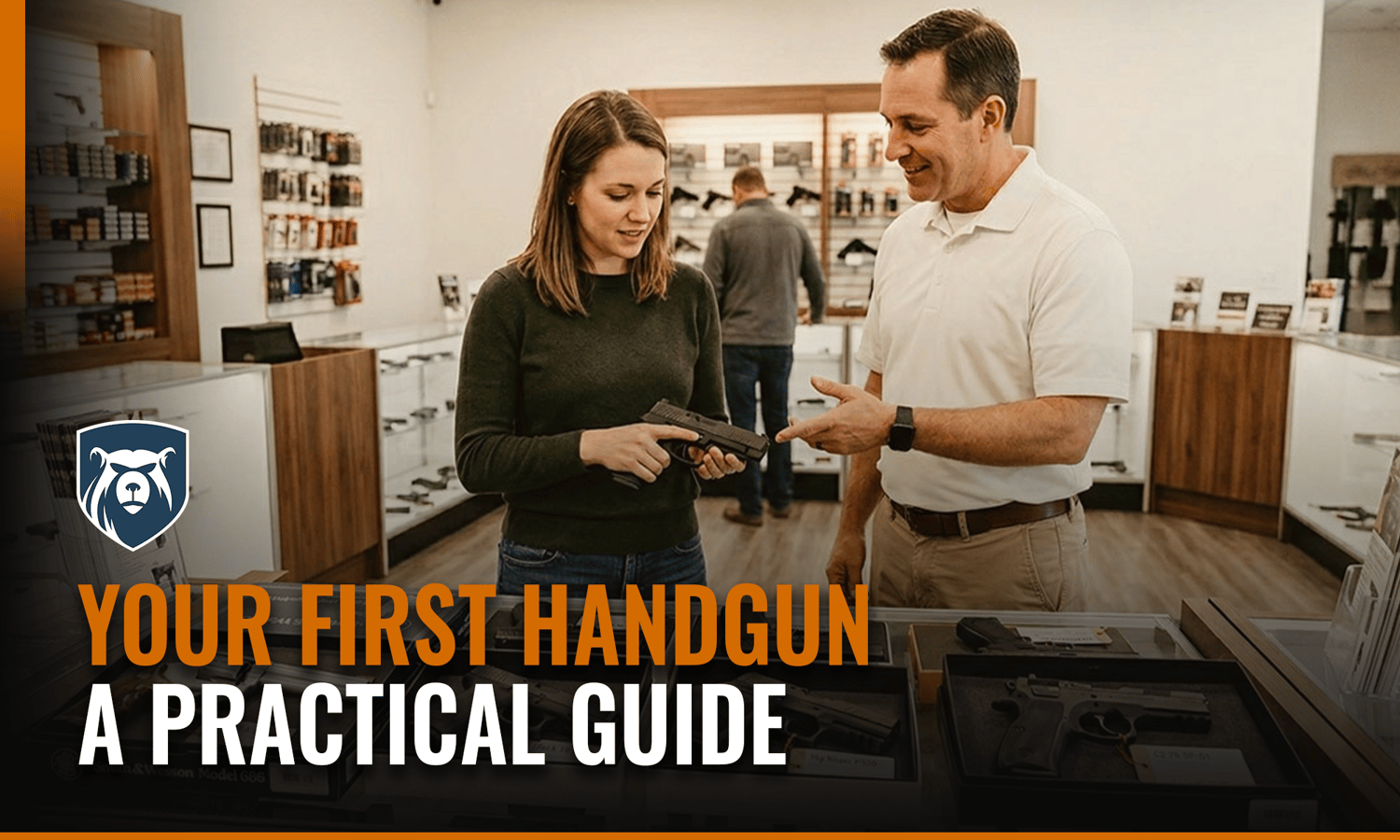
Buying your first handgun is an exciting journey, but it’s also a responsibility that requires thought and preparation. Whether you’re purchasing a firearm for self-defense, recreational shooting, or hunting, understanding the process and making informed decisions will set you up for a positive experience.
This guide will walk you through everything you need to know, from defining your purpose to selecting the right firearm and essential accessories.
Understanding Your Purpose: Why Do You Want a Handgun?
The first question every prospective gun owner must answer is why they want a handgun. This decision shapes the type of firearm you’ll need. Are you looking for a reliable weapon for self-defense? Or are you more interested in recreational shooting or hunting? Each purpose requires a different set of features.
- Self-defense: Prioritize stopping power, ease of use, and either concealability or capacity, depending on whether you’ll carry it or keep it at home.
- Recreational shooting: Look for affordability, simplicity, and small-caliber options that minimize recoil and cost.
- Hunting: Focus on heavy-caliber revolvers or specialty semi-automatics designed to handle large game.
Taking the time to define your purpose ensures you won’t waste money on a firearm that doesn’t meet your needs.
Know the Law: Federal, State, and Local Regulations
Owning a handgun comes with legal responsibilities. In the U.S., gun ownership is regulated by federal, state, and sometimes local laws, and it’s your job to comply with all of them. Federal law applies universally, while state and local laws can vary widely.
Some federal requirements for purchasing a handgun include:
- Passing a background check (for purchases from licensed dealers).
- Being at least 21 years old for dealer purchases or 18 for private sales.
- Having no disqualifying criminal convictions or mental health conditions.
Research your state and local laws to ensure compliance. Some states require permits, training, or licenses to own or carry a firearm. Check with your local law enforcement agency or gun shops for accurate information. Being well-informed protects you legally and ensures responsible ownership.
Choosing the Right Handgun: Revolver or Semi-Automatic?
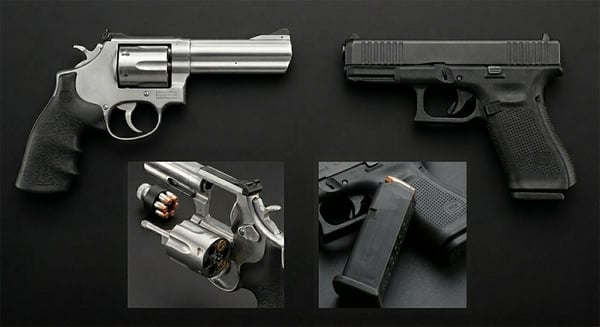
The decision between a revolver and a semi-automatic handgun is one of the first choices you’ll face. Neither is objectively better—it’s about what suits your needs and comfort level.
- Revolvers: Ideal for beginners due to their simplicity. They have fewer moving parts, are easier to maintain, and are highly reliable. However, they generally have lower ammunition capacity and slower reload times.
- Semi-automatics: Offer higher capacity, quicker reloads, and more ergonomic designs. They are a great choice for self-defense or frequent use but require regular maintenance and practice to handle confidently.
Try handling both types at a gun shop or range to determine what feels most natural.
Finding the Right Caliber
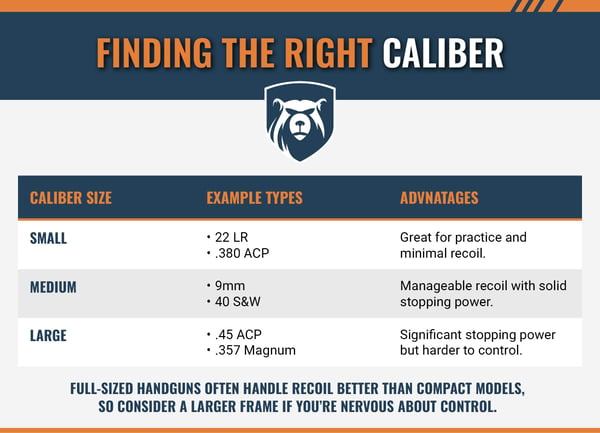
Handgun calibers range from small and manageable to large and powerful. The best caliber for a beginner balances stopping power with ease of handling. Some popular choices include:
- Small calibers: .22 LR and .380 ACP are great for practice and minimal recoil.
- Medium calibers: 9mm is a versatile choice, offering manageable recoil with solid stopping power.
- Large calibers: .45 ACP or .357 Magnum provide significant stopping power but are harder to control for new shooters.
Full-sized handguns often handle recoil better than compact models, so consider a larger frame if you’re nervous about control.
Test Before You Buy: Visit a Range
The best way to know if a handgun suits you is to try it out. Many gun ranges offer rental options, allowing you to test different models. Focus on how the gun feels in your hands, the weight, and the recoil. This hands-on experience is invaluable and prevents buyer’s remorse.
If you’re not ready to visit a range alone, take a friend or enroll in a beginner’s shooting class. Experienced shooters are often happy to share advice and guidance.
Essential Accessories for First-Time Gun Owners
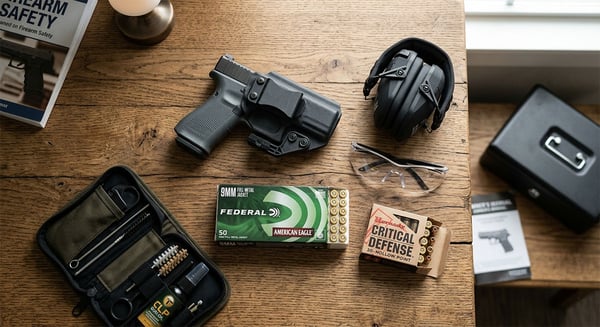
Owning a handgun involves more than just buying the firearm. You’ll need a few essential items to ensure safety, proper maintenance, and effective use:
- Holster: A secure, well-fitting holster protects the gun and prevents accidental discharges.
- Gun safe: A secure storage solution is critical, especially in homes with children or visitors.
- Eye and ear protection: Shooting glasses and earmuffs protect you from debris and noise at the range.
- Cleaning kit: Regular maintenance extends your gun’s lifespan and ensures reliable performance.
- Ammunition: Start with a mix of practice rounds and a small quantity of defensive ammunition.
Avoid overloading on accessories at first. Stick to the essentials and upgrade as you become more familiar with your firearm.
Training and Practice: The Key to Confidence
Owning a handgun is a commitment to continuous learning. Enroll in a firearm safety course to build foundational skills. Professional instructors can teach you proper handling, shooting techniques, and emergency response scenarios.
Regular practice at the range helps you develop muscle memory and accuracy. Shooting is a perishable skill, so make a habit of practicing consistently.
Frequently Asked Questions About Buying a Handgun
Do I need a permit to own a handgun?
It depends on your state and local laws. While federal law doesn’t require a permit for ownership, many states do for carrying or purchasing a firearm.
Should I buy a new or used handgun?
Both options are viable. New guns come with warranties, while used guns are often more affordable. Just ensure used firearms are inspected by a professional before purchase.
Can I buy a gun online?
Yes, but it must be shipped to a licensed dealer who will conduct a background check and follow legal procedures.
How often should I clean my handgun?
Clean your firearm after every use or at least once a month if stored. Regular maintenance prevents malfunctions.
What’s the best handgun for beginners?
The best handgun depends on your needs, but many beginners find full-sized 9mm semi-automatics or revolvers to be manageable and effective.
Becoming a Responsible Gun Owner
Buying your first handgun is a significant decision, but with the right preparation, it can be a rewarding and empowering experience. By understanding your needs, researching thoroughly, and seeking professional guidance, you’ll choose a firearm that suits you perfectly. Remember, responsible ownership goes beyond the purchase—commit to safety, training, and regular practice. With these principles in mind, your first handgun will be a reliable tool for years to come.