

Key Takeaways:
- Unload the firearm before cleaning – Always remove the magazine and check the chamber to ensure it's empty.
- Clean the barrel and moving parts – Use a bore cleaner, brushes, and patches to remove residue and fouling.
- Apply minimal lubrication – Focus on friction points but avoid over-lubricating to prevent debris buildup.
- Inspect for wear or damage – Check all components during reassembly to ensure proper function.
- Regular maintenance prevents malfunctions – Clean after each use or periodically to maintain reliability and longevity.
Keeping your handgun clean and well-maintained is vital for its performance, reliability, and longevity. Whether you’re a seasoned shooter or new to firearms, regular maintenance ensures your weapon operates safely and effectively when you need it most. Proper cleaning not only prevents malfunctions but also preserves the value of your firearm. This guide walks you through the essential steps of cleaning and caring for your handgun, offering practical tips and insights along the way.
See also: what every new gun owner needs to know
Step 1: Ensure Your Handgun Is Completely Unloaded
Safety should always be your first priority. Before beginning the cleaning process, unload your handgun thoroughly. Remove the magazine and ensure there is no ammunition in the chamber. Visually inspect the firearm and physically check the chamber to confirm it is empty. Never rely solely on the safety mechanism, as accidents can happen. Always keep the gun pointed in a safe direction throughout the cleaning process.
Step 2: Clean the Handgun Thoroughly
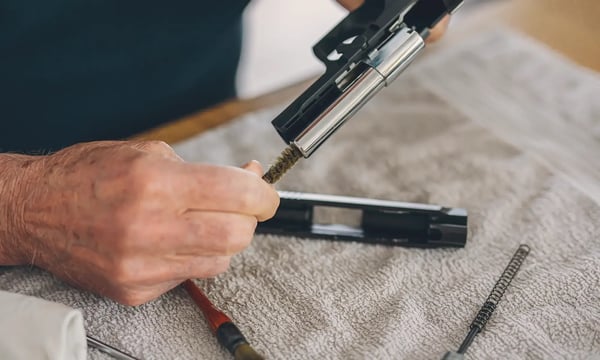
Proper cleaning starts with field stripping the firearm according to the manufacturer’s instructions. For semi-automatic pistols, remove the slide, barrel, and guide rod assembly. Revolvers require extra attention to the cylinder and chambers. Use a utility brush, cleaning swabs, or patches to remove debris, lint, and fouling from all parts of the firearm.
When cleaning the barrel, apply bore cleaner to a patch and use a cleaning rod with a jag or brush tip to remove buildup. Push the cleaning tool completely through the barrel before reversing to avoid damage. Follow up with dry patches until the barrel is clean and dry. For heavily fouled firearms, stronger solvents may be necessary. Pay extra attention to hard-to-reach areas, such as the slide and chamber, to ensure no residue remains.
Step 3: Lubricate Moving Parts
Lubrication is key to maintaining the smooth operation of your firearm. Focus on areas where metal components move against each other, such as the slide, rails, and barrel exterior. Use only the recommended amount of lubricant—too much can attract debris and cause malfunctions. Avoid applying oil to the inside of the barrel or chamber unless the firearm is being prepared for long-term storage.
Worn areas on the slide or frame rails indicate where lubrication is most needed. A light application of oil or a lubricating cloth is sufficient to reduce friction and wear. Be cautious with lubrication near ammunition, as it can lead to misfires or squib rounds.
Step 4: Wipe Down and Protect
After cleaning and lubricating, wipe down all components with a clean, dry cloth to remove excess oil and residue. Use wax-treated gun cloths to add a protective layer that guards against moisture and fingerprints. This step not only preserves the firearm's finish but also ensures it's ready for use or storage.
Step 5: Reassemble and Inspect
Reassemble your firearm carefully, following the manufacturer’s instructions. During this process, inspect each component for irregularities, such as excessive wear, dents, or damage. Minor scratches are normal, but significant issues may require attention from a qualified gunsmith. Once reassembled, perform a function check to ensure all parts are operating correctly.
If you plan to store the firearm for an extended period, apply preservative oil and use a protective storage system to prevent corrosion. Wipe down your work surfaces and hands after cleaning to remove any lead or heavy metal residues.

Frequently Asked Questions About Handgun Cleaning
How often should I clean my handgun?
Cleaning frequency depends on usage. Clean your firearm after each range session or every few months if stored. For concealed carry firearms, inspect and clean them regularly to remove lint and debris.
Can I use household cleaning products on my firearm?
No, household cleaners can damage the firearm’s finish and internal components. Always use products specifically designed for firearms.
Do I need to clean a new firearm before using it?
Yes, cleaning removes factory oils and ensures proper lubrication before the first use.
What happens if I don’t clean my handgun regularly?
Neglecting regular cleaning can lead to fouling buildup, malfunctions, and reduced accuracy. Over time, it can also cause rust and corrosion.
Should I completely disassemble my firearm every time I clean it?
No, field stripping is sufficient for routine cleaning. Complete disassembly is only necessary for deep cleaning or repairs and should be done by a qualified professional if you're unfamiliar with the process.
The Importance of Regular Maintenance
Proper cleaning and maintenance of your handgun are about more than just aesthetics—it’s about safety, reliability, and extending the life of your firearm. A well-maintained handgun performs better, is more enjoyable to shoot, and ensures confidence in critical moments. By following these steps and making cleaning a consistent habit, you’ll protect your investment and ensure your firearm is always ready when you need it most.