
Key Takeaways:
- Brandishing a firearm means intentionally displaying it to intimidate, even without pointing or firing.
- The legal definition of brandishing depends on intent, not just whether the gun is visible.
- Threats, gestures, or referencing a gun in conflict can lead to criminal brandishing charges.
- Self-defense may justify displaying a firearm, but only if the threat is immediate and serious.
- Brandishing can result in felony or misdemeanor charges depending on state law and context.
- Open carry is legal in many states but can become brandishing if used to threaten or provoke.
Brandishing a firearm is a complex topic that varies greatly depending on state laws and specific circumstances. Understanding what constitutes brandishing, the legal implications, and how to avoid unintentional violations is essential for anyone who carries a firearm for self-defense.

What Is Brandishing?
Brandishing generally refers to the unlawful display of a firearm with the intent to intimidate, threaten, or coerce another person. The term is defined differently across legal contexts, but the federal definition under 18 U.S.C. § 924(c)(4) states:
The term "brandish" means, with respect to a firearm, to display all or part of the firearm, or otherwise make the presence of the firearm known to another person, in order to intimidate that person, regardless of whether the firearm is directly visible.
This broad definition highlights that brandishing doesn’t require aggression or visible exposure of the firearm—intent is key. Understanding this nuance is critical for those who carry firearms, as what you believe to be a defensive action could be interpreted differently under the law.
What Constitutes Brandishing a Firearm?
Brandishing a firearm involves actions such as:
- Displaying a Firearm Menacingly: Waving or holding a firearm in a threatening manner that implies harm.
- Verbal Threats: Saying you have a firearm to intimidate someone, even if the firearm is not shown.
- Aggressive Behavior: Drawing attention to your firearm during a heated argument or confrontation.
Factors that may contribute to a charge of brandishing include:
- Body Language: Aggressive stances or gestures while exposing the firearm.
- Context: Situations where words or actions are perceived as coercive or threatening.
- Witness Testimony: Statements from others that interpret your behavior as threatening.
It’s important to remember that even indirect references to a firearm can be interpreted as brandishing if the intent to intimidate is present.
When Is Displaying a Firearm Justifiable?
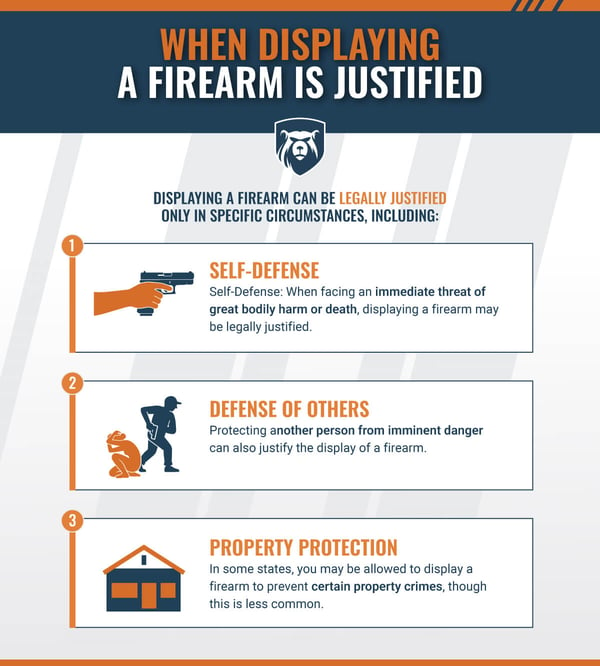
Displaying a firearm can be justified in specific circumstances, including:
- Self-Defense: When facing an immediate threat of great bodily harm or death, displaying a firearm may be legally justified.
- Defense of Others: Protecting another person from imminent danger can also justify the display of a firearm.
- Property Protection: In some states, you may be allowed to display a firearm to prevent certain property crimes, though this is less common.
To ensure your actions are legally defensible:
- Assess the Threat: Ensure the threat is imminent and serious.
- Proportional Response: Only display a firearm if no other reasonable option is available to defuse the situation.
- Document the Incident: Record details of the event as soon as possible to provide context if questioned by law enforcement.
See also: What To Do After a Self-Defense Incident: First 15 Minutes and First 24 Hours
Is Brandishing a Weapon a Felony?
Whether brandishing is a felony or misdemeanor depends on the state and the circumstances:
- Felony: Often applies when brandishing involves aggression, threats, or results in harm. Felony convictions can lead to prison sentences, fines, and loss of firearm rights.
- Misdemeanor: May apply for less severe cases, such as improper display without malicious intent. Misdemeanors typically result in shorter jail time and smaller fines but can still affect your criminal record.
- Wobbler Offense: In states like California, brandishing can be charged as either a felony or misdemeanor based on the specifics of the case.
Knowing your state’s laws and consulting with legal experts can clarify the potential consequences of brandishing charges.
Can You Brandish a Gun on Your Property?
While property ownership generally grants certain self-defense rights, displaying a firearm on your property must still meet legal criteria for justification:
- Imminent Threat: There must be a clear and immediate danger to justify displaying a firearm.
- Proportional Response: Displaying the firearm must be a reasonable response to the threat.
Simply owning property does not exempt you from brandishing laws. Inappropriate display of a firearm on your property can still lead to legal consequences if it is deemed unreasonable or aggressive.
See Also: DEFENDING PROPERTY DURING CIVIL UNREST: WHAT THE LAW SAYS

Is Open Carry Considered Brandishing?
Open carry, where legally permitted, is not inherently considered brandishing. However, certain actions can escalate open carry to brandishing:
- Intimidation: Using the firearm to coerce or threaten someone.
- Aggressive Behavior: Acting in a hostile manner while openly carrying.
To avoid potential issues:
- Follow Legal Guidelines: Adhere strictly to local, state, and federal laws governing open carry.
- Remain Non-Confrontational: Avoid behaviors that could be perceived as threatening or aggressive.
Open carry laws vary widely across the U.S., so understanding your jurisdiction’s specific rules is essential.
How Can You Avoid Brandishing Charges?
To avoid brandishing charges:
- Understand State Laws: Familiarize yourself with local regulations on firearm display.
- Use Firearms as a Last Resort: Only display a firearm when there is no other viable option.
- Avoid Provocation: Do not escalate situations or make unnecessary references to your firearm.
- Seek De-Escalation: Whenever possible, resolve conflicts through non-violent means.
- Document Incidents: If involved in a defensive situation, write down all details immediately to provide context if questioned.
What Should You Do If Accused of Brandishing?
If accused of brandishing, follow these steps:
- Cooperate with Authorities: Remain calm and comply with law enforcement requests.
- Seek Legal Counsel: Contact an experienced attorney immediately.
- Document Events: Record a detailed account of the incident while it is fresh in your memory.
Frequently Asked Questions About Brandishing
What Is Brandishing a Firearm?
Brandishing a firearm refers to the intentional display of a firearm with the purpose of intimidating, threatening, or coercing someone. This act is defined under various laws and can include actions like waving, pointing, or exposing a gun in a way that suggests harm.
What Does It Mean to Brandish a Gun?
To brandish a gun means making its presence known to others, often in a way that is perceived as threatening or aggressive. The term encompasses visible displays as well as verbal threats that suggest the presence of a firearm.
When Is Brandishing a Firearm Illegal?
Brandishing is illegal when the intent is to intimidate or threaten another person without a justifiable reason. Acts such as waving a firearm during an argument or exposing it to provoke fear can lead to criminal charges. Each state’s code defines specific circumstances where brandishing constitutes an offense.
Are There Laws That Justify Brandishing a Firearm?
Yes, some laws permit displaying a firearm under specific circumstances, such as self-defense or defense of others when facing an immediate threat. The act must meet criteria like proportionality and imminent danger to be considered lawful.
How Does Open Carry Differ From Brandishing?
While carry laws allow individuals to openly wear or display firearms in certain states, brandishing involves an intent to intimidate or threaten. Simply carrying a firearm in a non-aggressive manner in compliance with open carry laws does not constitute brandishing.
What Are the Consequences of Brandishing a Firearm?
Penalties for brandishing vary by jurisdiction and can include fines, imprisonment, or loss of firearm rights. Severe cases, such as those involving threats of violence or harm, may result in felony charges under state laws or federal statutes.
What Can You Do to Avoid Brandishing Charges?
To avoid brandishing charges:
- Understand state-specific laws regarding firearm display.
- Use a firearm only as a last resort for self-defense.
- Avoid gestures or verbal statements that could be perceived as threatening.
- Follow legal requirements for open carry and concealed firearm usage.