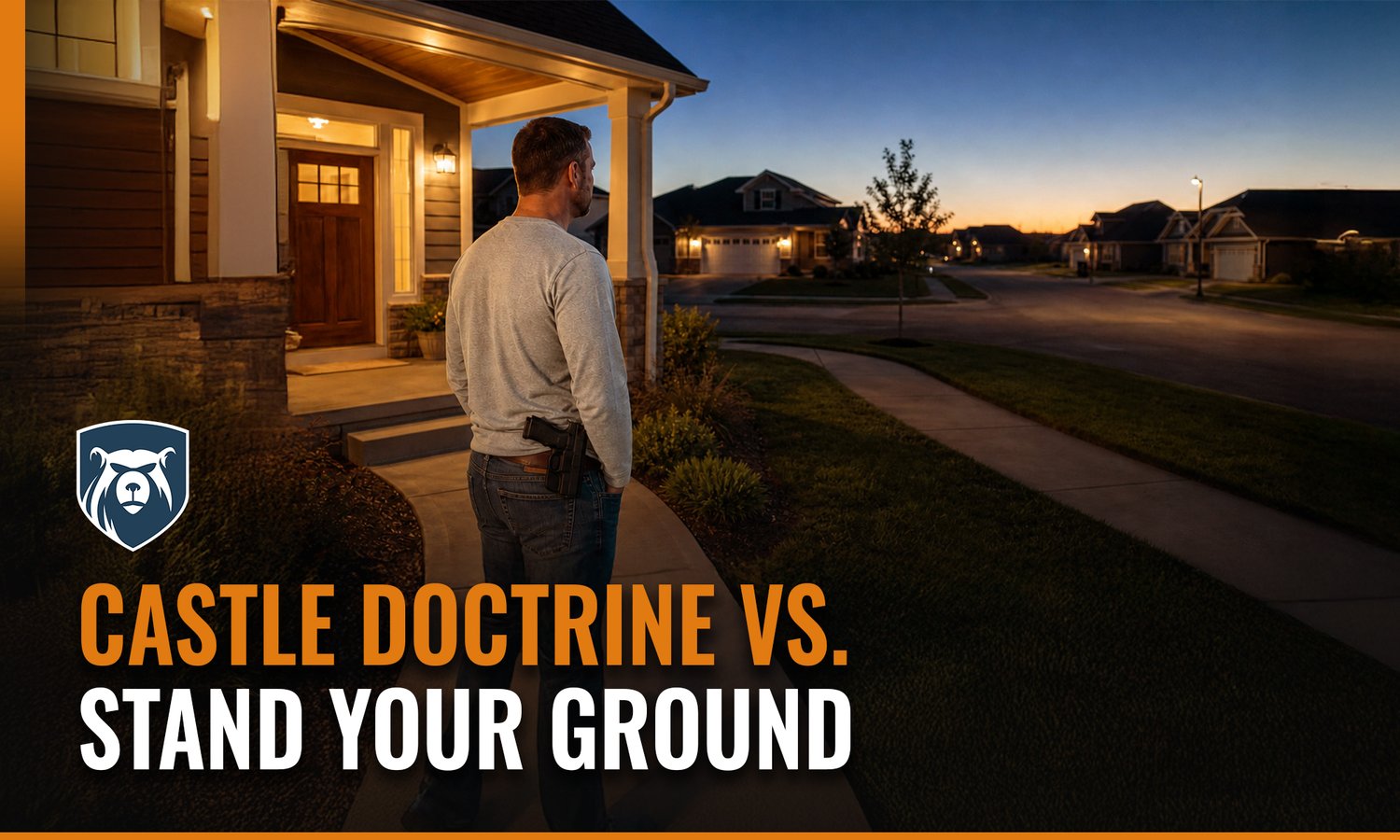
The Short Answer
Castle doctrine only protects you inside your home, and in some states, your vehicle or workplace. Stand your ground removes the duty to retreat anywhere you're lawfully present, whether that's a parking lot, a sidewalk, or a store.
The two overlap in many states, but they're not the same protection, and knowing which one applies to your situation can decide whether a case gets dismissed early or goes to a jury.
Side-by-Side
|
Castle Doctrine |
Stand Your Ground |
|
|
Where it applies |
Home, and in some states vehicle or workplace |
Anywhere you're lawfully present |
|
Duty to retreat |
Removed inside the covered location |
Removed generally, not location-specific |
|
Presumption of reasonableness |
Common; shifts burden to prosecution |
Varies by state; not automatic |
|
Civil immunity |
Sometimes included, state-dependent |
Sometimes included, state-dependent |
|
Burden of proof |
Often on prosecution once elements are met |
Often on defendant to show justification first |
The practical difference in that last row matters more than it looks. Where castle doctrine includes a presumption of reasonableness, the state has to disprove your fear was reasonable. Under a pure stand your ground analysis outside the home, you're more often the one establishing that your response was justified in the first place.
The Line Between Them
The two doctrines are drawn at physical boundaries, and those boundaries are where most real disputes happen.
Your driveway and porch typically fall under castle doctrine's curtilage, treated as an extension of the home. Step past that, onto a public sidewalk in front of your house, and you've generally left castle doctrine territory. From that point on, if you're lawfully present and threatened, it's stand your ground doing the work, not castle doctrine.
A parking lot outside a store is stand your ground territory in states that recognize it, since it's neither your home nor, in most cases, your vehicle. If your state extends castle doctrine to vehicles, though, the moment you're back inside your own occupied car, you're covered by castle doctrine again, even if the vehicle happens to be sitting in that same parking lot.
The line isn't always obvious from the outside, and it's exactly why courts spend real time on where an incident physically occurred.
Four Scenarios
The same set of facts can lead to very different legal footing depending on where they happen.
Scenario 1: Inside your home. Someone forces entry through your front door. You're covered by castle doctrine. In most states with a presumption of reasonableness, the burden shifts to the prosecution to show your fear wasn't reasonable.
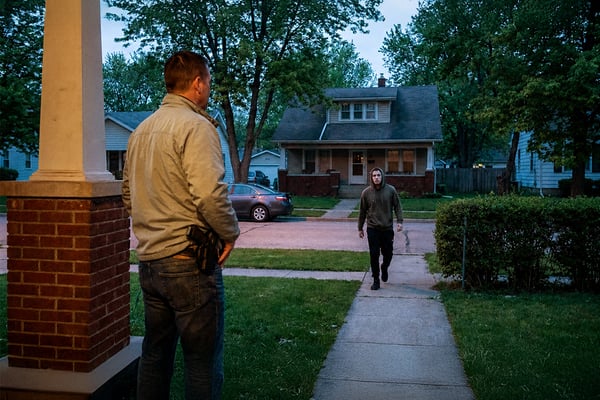
Scenario 2: On your porch. The same confrontation happens on your porch instead of inside the house. In states where curtilage is included in castle doctrine, you're still covered the same way. In states where it isn't, you may be relying on stand your ground instead, without the presumption.
Scenario 3: In a store parking lot. You're confronted by the same aggressor, but you're standing in a parking lot two miles from home. Castle doctrine doesn't apply at all here. Your protection now depends entirely on whether your state has a stand your ground law, and if the state instead imposes a duty to retreat outside the home, your legal position looks very different.
Scenario 4: In your car in that same parking lot. Same location, but now you're inside your vehicle when the confrontation happens. In a state that extends castle doctrine to occupied vehicles, you're back under castle doctrine's presumption, in the same parking lot where, standing outside the car, you'd have only stand your ground protection, if your state has it at all.
Four nearly identical incidents, four different legal starting points, based entirely on a few feet of physical position.

States With One, Both, or Neither
Most states with a stand your ground law also have some form of castle doctrine, since the former usually builds on the latter by extending the no-retreat principle beyond the home. The problem is, it's not universal: some states have castle doctrine without a broader stand your ground provision, meaning the no-retreat protection stops at your property line, while a smaller number have neither, leaving self-defense law to general reasonableness standards regardless of location. For the full list of what your state has, see our breakdowns of castle doctrine states and stand your ground laws.
Which Matters More for You?
If you're rarely away from home and keep a firearm strictly for home defense, castle doctrine is the protection you actually need to understand well. It's where the presumption of reasonableness is strongest and most consistently applied across states.
If you carry outside the home, at work, running errands, traveling, stand your ground is where your legal footing actually lives most of the time. Castle doctrine simply won't be in play for the vast majority of situations you might realistically face outside your own house or car.
Knowing your state's stand your ground status, not just its castle doctrine law, is the more relevant homework for anyone who carries regularly, but any responsible gun owner stays up to date to their states laws and regulations so they don’t get caught flat footed in an important legal situation.

FAQ
Does castle doctrine apply outside of your home?
Castle doctrine primarily applies to your home, but some states extend it to vehicles or workplaces. Protections vary by state.
How do self-defense laws change if you have a duty to retreat?
A duty to retreat may require you to safely withdraw before using deadly force. Exceptions vary by state.
What does reasonable fear mean in a stand-your-ground case?
Reasonable fear means believing, based on the circumstances, that you face an imminent threat of death or serious bodily harm.
What self-defense rights does castle doctrine provide homeowners?
Castle doctrine may allow homeowners to defend themselves without retreating and, in some states, presume their fear was reasonable when facing an unlawful intruder.
Can stand your ground be used as a defense in a workplace?
In some states, yes. Stand-your-ground protections may apply when you are lawfully present and meet the state's self-defense requirements.
Why was stand your ground law created?
Stand-your-ground laws were created to remove or limit the duty to retreat before using legally justified force.
Which states have stand your ground laws versus castle doctrine only?
Many states recognize castle doctrine, while others also have broader stand-your-ground protections. Rules and exceptions vary by state.
What are common misconceptions about stand your ground laws and deadly force?
Stand your ground does not mean you can use deadly force whenever you feel threatened. You must still meet your state's self-defense requirements.
What should concealed carry permit holders know about stand your ground?
A concealed carry permit does not automatically justify using force. Permit holders should understand their state's rules on retreat, self-defense, and deadly force.