
Duty to inform laws require people carrying firearms to tell law enforcement they are armed in certain situations. States generally require immediate disclosure, disclosure only when asked, or no disclosure. Violations can lead to fines, firearm confiscation, or criminal charges. Constitutional carry does not always eliminate the duty to inform.
Picture This: You're Pulled Over—Now What?
It’s 10:43 PM. You’re driving home, responsibly carrying concealed. A flashing light fills your rearview mirror. You pull over. You’re calm—but your heart rate spikes. Not because you did anything wrong. But because you know the question is coming: Do I have to tell the officer I’m carrying?
If you live in a duty to inform state, the answer is likely yes—sometimes immediately, sometimes only when asked. If you don’t? Voluntary disclosure could help—or hurt—depending on the context.
Either way, not knowing the law isn’t just a bad idea. It could be the reason a routine stop turns into a legal headache (or worse).
What Are Duty to Inform Laws?
Duty to inform laws are legal requirements that compel you to disclose to law enforcement officers that you are carrying a firearm during an encounter. This often applies during traffic stops, but can include any lawful interaction between a civilian and a peace officer.
The key point? Your obligation to speak up depends on your state. Some require it up front. Others only if the officer asks. And a few say nothing at all—leaving it up to you to decide.
When Does It Apply?
- Traffic stops
- Field interviews
- Routine law enforcement encounters
If you’re armed and the officer initiates contact, you may be legally required to speak up. Whether or not you want to.
Three Types of Duty to Inform Laws
1. Immediate Duty to Inform
In these states, you must notify law enforcement immediately that you are carrying a firearm. “Immediately” means without waiting to be asked—usually right after handing over your license.
Failing to do so? Expect legal consequences, including fines, permit suspension, or charges depending on the situation.
2. Inform Only If Asked
In this more flexible model, you’re only obligated to disclose if the officer asks directly. If they don’t ask, you don’t have to bring it up.
That said, answering dishonestly if asked—or acting evasive—can still land you in trouble.
3. No Legal Duty to Inform
Some states have no law requiring you to inform an officer that you’re carrying. That doesn’t mean it’s illegal to tell them—it just means the choice is yours.
In these states, many responsible carriers still opt to disclose voluntarily. Why? It builds trust and shows you're not hiding anything.
But disclosure in no-duty states isn't always risk-free—especially if the officer doesn’t react well. Which brings us to…
Which States Require Immediate Disclosure?
As of the latest data, these states require immediate notification to law enforcement during an encounter:
- Alaska
- Arkansas
- Illinois
- Louisiana
- Michigan
- Nebraska
- Nevada
- North Carolina
- Oklahoma
- South Carolina
- Texas
- Ohio (before law change in 2022)
- Washington, D.C.
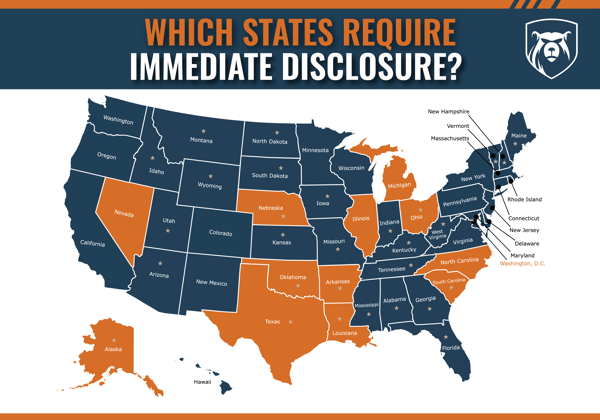
In these jurisdictions, saying nothing can land you in legal hot water—even if you have a valid permit.
States Where Disclosure Is Required Only If Asked
If you live in one of these states, you only need to inform law enforcement about your firearm if they ask you directly:
- California
- New York
- Colorado
- Virginia
- Georgia
- Mississippi
- Tennessee
- Kentucky
- Minnesota
- Washington
- Hawaii
- Oregon
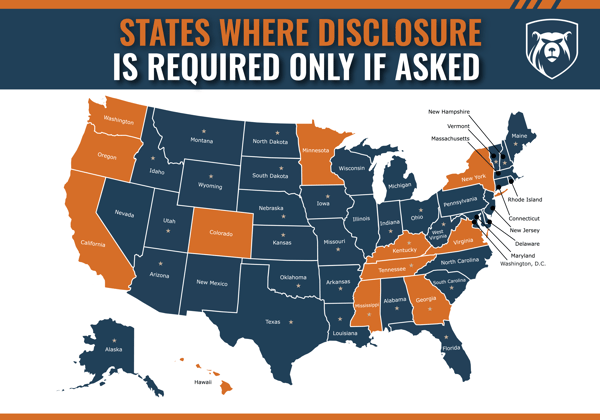
Still, if you’re asked and lie—or fail to answer—that’s on you.
States With No Duty to Inform
The following states do not have a specific legal duty to inform:
- Vermont
- Maine
- Montana
- Wyoming
- New Mexico
- Idaho
- Utah
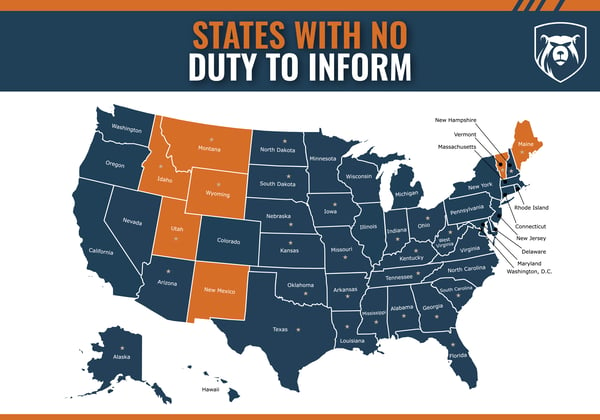
But “no legal duty” isn’t the same as “no consequences.” Officers may still expect voluntary disclosure, and failure to communicate clearly can create unnecessary tension.
Hybrid States: The Exceptions Within the Exceptions
Some states like Maine and North Dakota have split rules depending on how you’re carrying:
- If you’re carrying with a permit, you may not need to inform
- If you’re carrying without a permit (under constitutional carry), disclosure may be required
In these hybrid states, the rulebook gets even more complicated—especially if you travel across state lines. Always check before you carry.
Why Knowing Duty to Inform Laws Matters
Legal Protection
If you’re in a duty to inform state and fail to notify an officer, you could face:
- Misdemeanor or felony charges
- Permit revocation
- Hefty fines or arrest
Ignorance isn’t a valid defense—and pleading “I didn’t know” rarely ends well in court.

Officer Safety and Situational Control
Police are trained to assume everyone could be armed. Voluntarily disclosing a legal weapon (especially with hands visible and voice calm) can de-escalate tension and foster mutual respect.
Preventing Escalation
Misunderstandings can turn dangerous quickly. Saying “I have a permit and I’m legally carrying” before reaching into your glove box can stop a routine stop from becoming a viral video.
Best Practices for Handling Duty to Inform Encounters
Here’s a solid protocol for firearm carriers during a traffic stop:
- Pull over safely and turn off your vehicle
- Roll down your window and keep your hands on the steering wheel
- Before reaching for anything, say:
“Officer, I want to let you know that I’m carrying a legally concealed firearm. I have a permit.” - Wait for instructions
- Follow commands carefully and calmly
Your tone matters. Your clarity matters. And your willingness to follow the law—without attitude—goes a long way.
Common Misconceptions About Duty to Inform
Myth: Duty to inform only applies to permit holders
False. In some constitutional carry states, even those without permits are legally required to disclose.
Myth: If your state doesn’t require it, you should always inform anyway
Not necessarily. While voluntary disclosure is often a smart move, some instructors and legal experts suggest not volunteering information unless required. Why? Every encounter is different—and not all officers respond the same way.
Myth: Law enforcement can seize your gun without cause
In most cases, no. Officers typically need reasonable suspicion or probable cause to take your firearm or disarm you during a stop.
Frequently Asked Questions About Duty to Inform
What is duty to inform?
Duty to inform is a legal requirement that obligates you to notify law enforcement that you are carrying a firearm during an official encounter, depending on your state.
Which states require immediate notification?
States like Texas, Michigan, Louisiana, and Illinois require immediate notification when law enforcement initiates contact.
Do all states have duty to inform laws?
No. Some require immediate disclosure, some only require disclosure when asked, and others have no duty to inform at all.
What happens if I don’t inform in a duty to inform state?
You could face legal consequences including fines, charges, or permit revocation—even if your firearm is legally owned and carried.
What about hybrid states like Maine?
In hybrid states, disclosure is often required when carrying without a permit but may not be required when carrying under a valid permit. Always check the specific laws in your state.
Should I voluntarily disclose in a no-duty state?
It depends. Some carriers choose to disclose to reduce tension. Others wait to be asked. There’s no legal obligation in these states, so it comes down to personal risk tolerance and context.
Final Thoughts: It’s Your Responsibility to Know the Law
If you carry a firearm, the rules don’t stop at the gun range. Every state has its own legal quirks, and duty to inform laws are one of the easiest ways to accidentally trip over them.
Staying compliant doesn’t just protect your rights—it protects your life, your license, and your reputation.
So before you load your EDC and head out, ask yourself: do you know what you’re legally required to say in a traffic stop?
If not, learn it now. Because when the lights flash behind you, ignorance isn’t just a bad excuse—it might be your most dangerous move yet.