Off-Duty Officer Legal Risk: When the Badge Doesn't Protect You

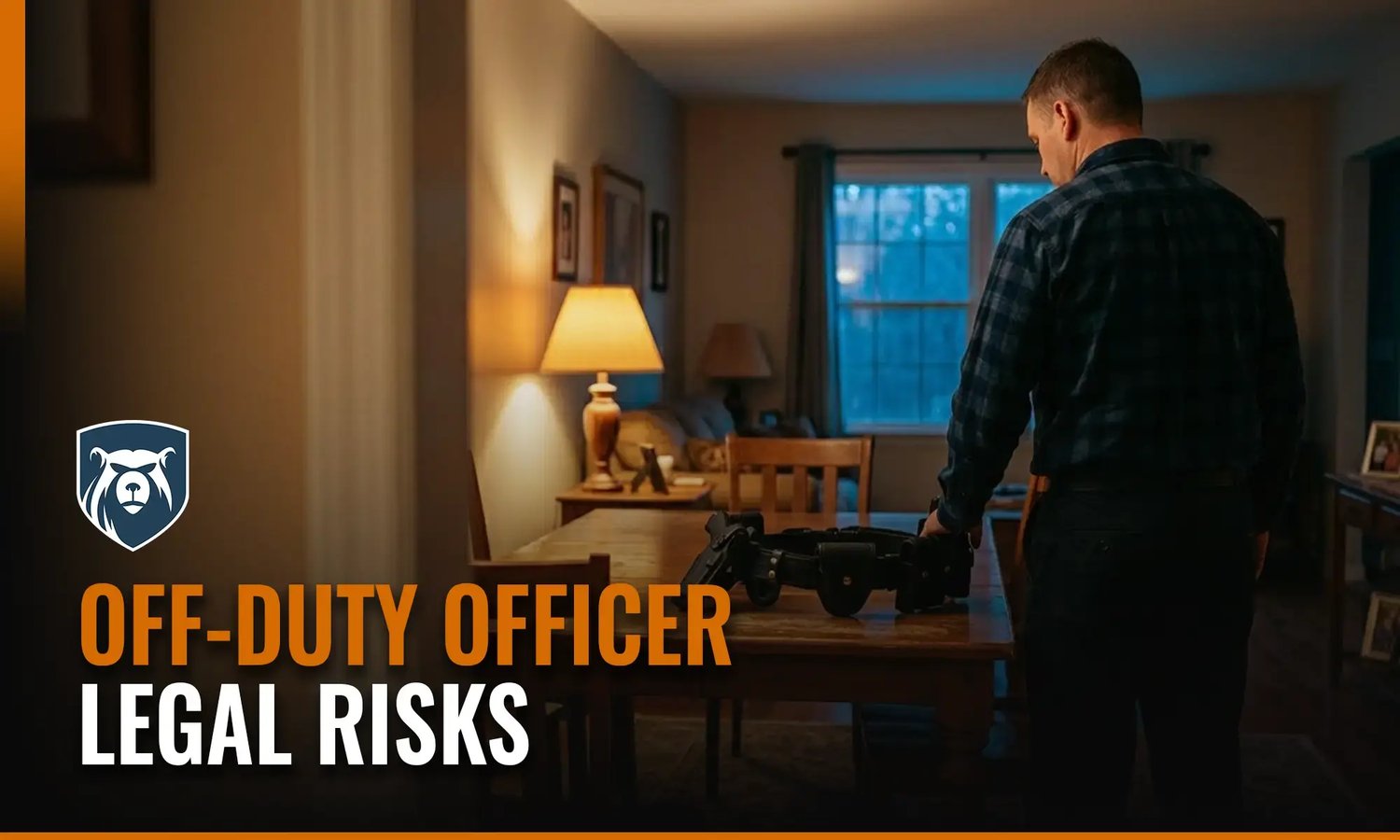
A police shooting is only the beginning. Even when the use of force was clearly justified, an officer involved shooting sets off a chain of parallel processes that can stretch on for months: an OIS investigation, an internal administrative review, possible criminal prosecution, and civil lawsuit exposure that exists independent of whatever the criminal process determines.
STAY SHARP. STAY PROTECTED.
Get use-of-force updates, legal news, and special offers for officers and security pros in your inbox. Sign up for our newsletter.
What many officers do not realize until they are living through it is how uncertain department protection can be. Coverage may be limited, conditional, or simply unavailable depending on the circumstances, and the legal process moves fast from the very first hour. Early legal guidance can shape everything that follows and with Right To Bear, you gain access to our legal protection that includes full attorney fee coverage and emergency legal help through our attorney network, including our 24/7/365 emergency attorney-answered hotline, perfect for off-duty police who find themselves in the aftermath of a self-defense incident.
Explore: Right To Bear LEO Legal Protection
The Incident Is Only the Beginning
The moment the shooting ends, the tactical response shifts into legal scrutiny. Following a police shooting, several review tracks begin running in parallel almost immediately:
- A criminal investigation, often conducted by an outside agency
- An internal administrative review by the officer's own department
- Potential civil litigation from the involved party or their family
- Public and media attention, which can begin within hours
These tracks do not run sequentially. They run at the same time, often with different timelines, different standards of proof, and different people asking questions. An officer can find themselves responding to all four simultaneously while still processing what just happened.
First 15 Minutes: Scene Control and Supervisor Notification
The initial minutes after an OIS set the tone for everything that follows.
Securing the scene involves medical response for anyone injured, preservation of evidence, and activation of body camera protocols if not already running. How the scene is handled in these first moments can become a significant factor in later review.
Supervisor and command notification happens quickly. Chain of command gets involved, separation procedures are initiated to keep involved officers apart before formal statements, and initial documentation begins.
Even in these earliest minutes, early legal considerations are already in play. Statements made informally on scene can shape the official record, and media presence may begin almost immediately in high-profile incidents.
First 24 Hours: Statements, Garrity Rights, and Firearm Seizure
OIS investigation procedures typically begin within hours, and this period involves some of the most consequential decisions an officer will make.
Administrative vs. criminal statements is one of the most important distinctions. A compelled administrative statement, given under Garrity protections, cannot be used against the officer in a criminal proceeding. A voluntary statement made outside of that protection carries very different risk. Understanding which is which, and when, matters enormously.
Firearm seizure and forensic testing follows standard protocol. The duty weapon is confiscated for evidence processing and ballistics testing, and the officer is typically reassigned, at least temporarily, while the investigation proceeds.
Stress and psychological factors cannot be ignored during this window. Sleep deprivation, isolation from colleagues, and the emotional aftermath of the incident all affect decision-making at precisely the moment when decisions carry the most weight.
See also: What Happens After an Officer-Involved Shooting?
Administrative Leave: Paid vs. Unpaid Realities
Administrative leave after an officer involved shooting is standard protocol in most departments, but what it actually means is often misunderstood.
Paid leave is the typical starting point, but public perception of paid leave as a vacation does not match the legal reality for the officer involved. The duration is uncertain, often stretching from weeks to months while the review remains ongoing. During that time, career risk accumulates quietly: promotions can be delayed, and internal discipline proceedings may run alongside the external investigation.
Internal Affairs and OIS Investigation Process
Two parallel review tracks operate during this phase. Internal Affairs evaluates the officer's actions against department policy, while an external criminal review, often conducted by another agency or a special prosecutor's office, evaluates the same actions against the criminal standard.
These are different standards. An action can be within department policy and still face criminal scrutiny, or vice versa. Possible outcomes from this phase include the officer being cleared, a finding of a policy violation with internal consequences, or the case being referred for criminal review.
See also: Does Your Department Really Protect You?
Prosecutorial Review and Charging Decision
Prosecutors evaluating a police shooting weigh the evidence against the state's use-of-force law, but they are also operating under political and public pressure that can influence timing and approach, even when it should not influence outcome.
In some jurisdictions, a grand jury may be convened to review the evidence, and officer testimony before that body carries its own considerations and risks. The indictment timeline, if charges are pursued, can create extended pretrial exposure for the officer, often while they remain on leave and under continued scrutiny.
Parallel Civil Lawsuit Exposure
Civil litigation runs independent of the criminal outcome. Wrongful death and excessive force claims can proceed even if no criminal charges are ever filed, and a criminal clearance does not end civil exposure.
Federal civil rights claims under 42 U.S.C. § 1983 raise the stakes further. These claims can create personal liability for the officer, and while qualified immunity is a significant consideration, it is not a guarantee and is litigated on a case-by-case basis. The financial risk breakdown for an officer facing a Section 1983 claim includes attorney fees, potential settlement costs, and damages exposure that can be substantial.
Media Scrutiny and Public Records
Body camera footage release can shape public narrative in ways that are difficult to control once it happens, regardless of what the footage actually shows. Public records requests, governed by transparency laws that vary by state, can bring incident details into public view well before the legal process concludes.
Social media amplification compounds all of this. Reputational consequences can affect an officer's career and personal life, and in cases that proceed to trial, public narrative can influence the jury pool itself.
The Real Cost of Defending an OIS Case
The financial reality of an OIS defense is significant. Criminal defense costs often exceed $30,000, and civil litigation expenses escalate quickly from there. Add expert witness costs, potential lost income during administrative leave or unpaid suspension, and the long-term emotional strain on the officer and their family, and the total cost of an OIS, even one that results in no charges and no civil judgment, can be substantial.
Many agencies provide limited or conditional legal coverage, and off-duty incidents in particular may not be covered at all.
Explore: Right To Bear LEO Legal Protection
Department Coverage vs. Private Legal Protection
Department-provided legal coverage can be limited in several common scenarios:
- Alleged policy violations, where the department's interests and the officer's interests may diverge
- Off-duty incidents, which may fall entirely outside the scope of department coverage
- Conflict of interest situations, where the department cannot represent the officer's individual interests
This is why private legal protection matters. Independent legal representation means the attorney works for the officer, not the department. Immediate attorney access from the first hour, combined with criminal and civil defense coverage that does not depend on departmental approval, closes the gap that department coverage often leaves open.
Where Immediate Legal Support Changes the Outcome
The difference between officers who navigate an OIS well and those who struggle often comes down to how quickly they had qualified legal support in their corner.
First-call attorney guidance in the immediate aftermath shapes how statements are handled from the very beginning. Statement preparation strategy, particularly around the distinction between compelled and voluntary statements, protects the officer's rights in both the administrative and criminal tracks.
Administrative hearing support ensures the officer is not navigating internal review alone, and civil litigation defense planning begins early rather than reactively.
Protect Yourself Before the Incident Happens
Right To Bear LEO Legal Protection includes a 24/7/365 hotline answered by real attorneys, criminal and civil legal fee coverage, administrative investigation support, off-duty incident protection, and emotional support resources. Coverage starts at $220 per year.
The first call after an officer involved shooting can shape everything that follows. Get 24/7/365 attorney access in place before you need it and know that no matter what happens, someone is looking after your legal rights.
Frequently Asked Questions
What happens immediately after an officer involved shooting?
The scene is secured, medical response is initiated, and the officer is separated from other involved personnel pending statements. Supervisor notification triggers chain of command involvement, and the duty weapon is typically seized for forensic testing. Parallel criminal, administrative, and civil review processes begin almost immediately.
Are officers automatically placed on administrative leave after a police shooting?
This is standard protocol in most departments, typically as paid leave. However, the duration is uncertain and can extend for weeks or months while the investigation remains open, and career impacts such as promotion delays can occur during this period.
Can an officer be criminally charged after an OIS investigation?
Yes. Internal Affairs and external criminal review operate as separate tracks with different standards. An officer can be found within department policy and still face criminal charges if a prosecutor determines the action did not meet the legal use-of-force standard.
Can officers be sued personally after a shooting?
Yes. Civil lawsuits, including federal civil rights claims under 42 U.S.C. § 1983, can create personal liability for the officer independent of the criminal outcome. Qualified immunity is a factor but is not a guarantee and is evaluated case by case.
See also: Can You Be Sued for Self-Defense?
Does department legal coverage apply to off-duty incidents?
Often not. Off-duty incidents frequently fall outside the scope of department-provided legal coverage, which is one of the primary reasons officers seek independent legal protection that applies regardless of duty status.
DEFENDING YOURSELF IS JUST THE BEGINNING
From the first call to the final verdict, we stand with you. Get criminal and civil defense that travels with you across state lines. Join Right To Bear.
Membership starts at only $19 month or $185/year. You don’t need to max out your credit card to get a premium service that includes an experienced attorney and 100% attorney fees for criminal defense and civil defense.