
Key Takeaways:
- High grip reduces recoil – Position the web of your hand high on the backstrap for better control and less muzzle flip.
- Two-handed grip improves stability – Wrap your support hand around your dominant hand to minimize movement and enhance accuracy.
- Smooth trigger control prevents jerking – Apply steady, controlled pressure to the trigger, similar to pressing down evenly on a car's gas pedal.
- Grip strength affects shooting performance – Strengthening hands and forearms helps manage recoil and sustain shooting endurance.
- Avoid common grip mistakes – Inconsistent hand placement and improper trigger finger positioning reduce accuracy and control.
Gripping a pistol correctly is the foundation for accurate shooting, effective recoil management, and overall firearm safety. Whether you're new to firearms or looking to refine your skills, the proper grip can significantly improve your shooting performance. For those using popular models like Glocks or Berettas, the right grip technique is essential for consistent accuracy. This guide dives into the nuances of pistol grip techniques, helping you develop the confidence and consistency needed for precision shooting.
Understanding the Basics of a Proper Pistol Grip
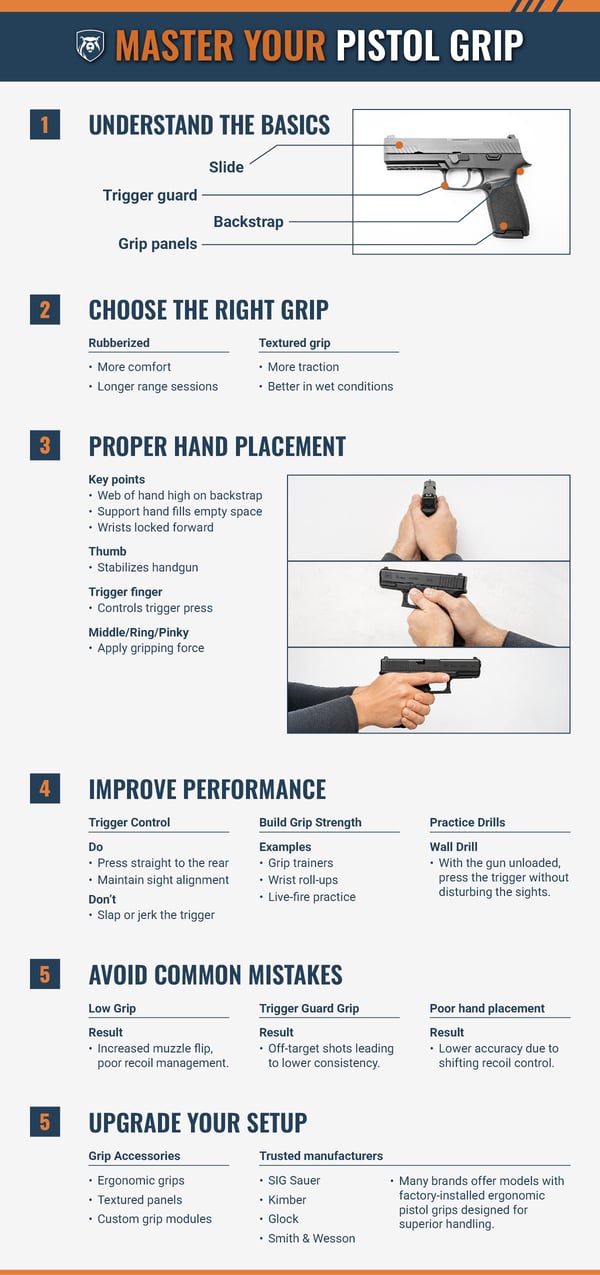
Before you begin, it's essential to familiarize yourself with the anatomy of a semi-automatic pistol. Key components like the slide, trigger guard, backstrap, and grip screws all play critical roles in your grip and shooting technique. When shopping for firearms accessories, look for enhancements like rubberized ergonomic grips that provide both comfort and control, especially during extended sessions.
Key Elements of Pistol Grip Mechanics
Proper Hand Placement
To establish a solid master grip, form an “L” shape with your dominant hand. Position the web of your hand high on the backstrap, allowing the grip to press firmly into your palm. If your pistol grip feels awkward or slippery, consider switching to a rubberized grip for improved traction. This can be particularly helpful when handling guns in humid or wet conditions.
For a two-handed grip, use your support hand to wrap around your dominant hand, filling any gaps and adding stability. This ensures the firearm stays firmly in place during recoil, making it easier to maintain control even when using a grip pistol with a shorter handle.
The Role of Each Finger
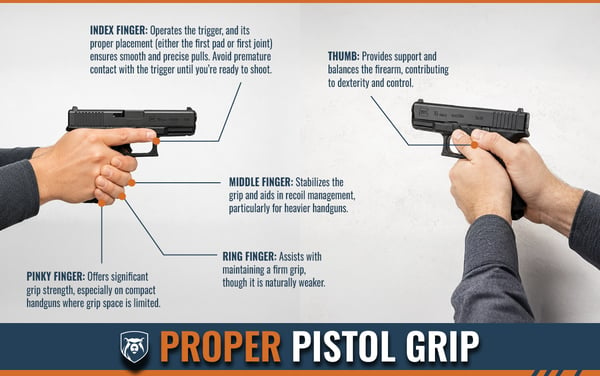
Each finger plays a unique role in achieving an effective pistol grip:
- Thumb: Provides support and balances the firearm, contributing to dexterity and control.
- Index Finger: Operates the trigger, and its proper placement (either the first pad or first joint) ensures smooth and precise pulls. Avoid premature contact with the trigger until you're ready to shoot.
- Middle Finger: Stabilizes the grip and aids in recoil management, particularly for heavier handguns.
- Ring Finger: Assists with maintaining a firm grip, though it is naturally weaker.
- Pinky Finger: Offers significant grip strength, especially on compact handguns where grip space is limited.
Finger Placement on the Trigger
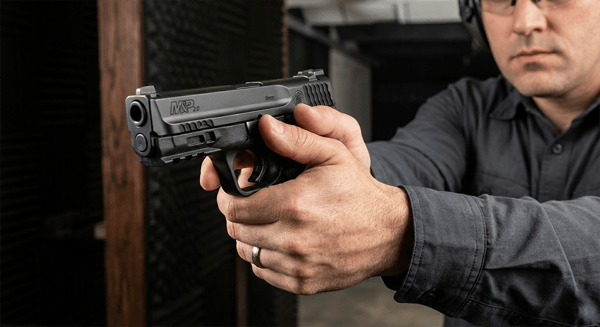
Trigger control is crucial for accurate shooting. Place your trigger finger where it feels most natural and allows a smooth pull—either on the first pad or the first joint. Avoid jerking the trigger, as this can pull your shot off target. Avoid suddenly snatching the trigger from its starting position all the way to the ‘bang’ of the gun and instead place your finger on the trigger and add steady pressure like you would apply even pressure on the gas pedal of your car. Smooth, consistent pressure is key to maintaining sight alignment.
Building Grip Strength for Better Performance
Consistency Is Key
A consistent grip prevents unnecessary adjustments between shots, which can lead to inaccuracies. Hold the pistol firmly but not so tightly that your hand trembles or tires quickly. Whether you're using a Glock, a Kimber, or another high-recoil handgun, maintaining grip stability is essential. The support hand should provide about 75% of the grip pressure, contributing to better recoil control and faster follow-up shots.
Strengthen Your Hands and Forearms
Incorporate grip-strengthening exercises, such as grip trainers or wrist roll-ups, to improve stability. Strong forearms also play a vital role in managing recoil and maintaining control during rapid fire. Regular practice can also help prevent fatigue, especially during long shooting sessions.
Practical Drills to Hone Your Grip
The Wall Drill
The wall drill is an excellent dry-fire exercise for improving trigger control and sight alignment. Follow these steps:
- Unload your firearm and triple-check for safety.
- Stand with the muzzle close to a plain wall.
- Focus on the front sight and operate the trigger without disturbing the sight alignment.
- Repeat this process in sets of 10 to build muscle memory and discipline.
Common Mistakes to Avoid
Trigger Guard Grip
Avoid wrapping your support hand’s index finger around the trigger guard. While some shooters believe it adds control, it often causes lateral movement that pulls your shots off target.
Inconsistent Grip
Ensure your grip doesn’t shift between shots, as this can disrupt your accuracy. If necessary, adjust the pressure and finger positioning to maintain consistency.
Low Hand Placement
A low grip on the backstrap increases muzzle flip, reducing control and precision. Always aim for a high grip, where the web of your hand rests firmly under the beavertail for optimal recoil management.
Checklist for Mastering Your Pistol Grip
- Understand the Basics of a Proper Pistol Grip
Familiarize yourself with the key components of the pistol: the slide, trigger guard, backstrap, and grip screws. - Select the Right Grip Type
Consider whether you need rubberized ergonomic grips or textured panels for added control and comfort. These are especially helpful for extended practice sessions or in varying weather conditions. - Ensure Proper Hand Placement
- Position the web of your hand high on the backstrap for reduced recoil.
- Use your support hand to close any gaps for added stability.
- Master Finger Roles
Each finger plays a critical part: - Thumb: Balances and stabilizes.
- Trigger finger: Operates the trigger with precise control.
- Other fingers: Secure the pistol frame to minimize movement during recoil.
- Refine Trigger Control
Maintain sight alignment by applying smooth and straight pressure on the trigger without jerking. - Strengthen Your Grip and Forearms
Regular shooting practice, combined with grip exercises (e.g., wrist roll-ups and grip trainers), can help you manage recoil better and sustain performance in long sessions. - Practice Essential Drills
Incorporate dry-fire drills like the wall drill to improve trigger control without distractions. - Avoid Common Mistakes
- Trigger guard grip: Incorrect hand positioning can lead to off-target shots.
- Inconsistent hand placement: Causes accuracy issues due to shifting recoil control.
- Low grip: Increases muzzle flip, making recoil management difficult.
- Evaluate Grip Accessories
Shop for custom firearms accessories or visit a shop to test different aftermarket grips that fit your hand size and shooting needs. - Consider Trusted Brands
Leading manufacturers like Sig, Kimber, Glock, and Smith & Wesson offer models with factory-installed ergonomic pistol grips designed for superior handling.
But skill is only half of carrying responsibly. The other half is knowing where you stand legally if you ever have to use what you've practiced, which is what a membership that includes CCW insurance is built to cover.
Frequently Asked Questions
How can I perfect my pistol grip?
To master your pistol grip, ensure your dominant hand wraps around the handle with your fingers firmly under the trigger guard. Your support hand should cover any exposed grip surface, providing additional stability. The thumbs should rest parallel along the frame for better control during recoil. For an ideal handgun grip, it’s essential to find a balance between comfort and control, which may require grip adjustments or the use of aftermarket enhancements.
Are ergonomic pistol grips better for control?
Yes, ergonomic pistol grips are designed to fit the natural shape of your hand, reducing fatigue and improving control. These grips can enhance your grip experience, particularly during extended shooting sessions. Many firearm products offer customizable ergonomic options to accommodate different hand sizes and shooting styles.
What are the benefits of rubberized pistol grips?
Rubberized pistol grips offer improved traction, especially in wet or sweaty conditions. The rubberized ergonomic design helps maintain consistent control, minimizing slippage without requiring an overly tight grip. This feature is particularly useful for both competitive shooters and those carrying concealed, where grip reliability is crucial in all situations.
How does finger placement affect trigger control?
Proper placement of the trigger finger is crucial for accuracy. The pad of your finger should rest on the trigger, allowing a smooth, straight pull without disturbing your sight alignment. For concealed carry, mastering trigger control ensures safety and reduces the risk of unintended discharge during high-stress situations.
Which brands offer reliable ergonomic pistols?
Brands like Sig, Kimber, Glock, Smith & Wesson, and Beretta are known for producing ergonomic pistols with high-quality grips and improved recoil control, enhancing the overall shooting experience. Many of these brands also produce firearm products specifically designed for concealed carry, offering lightweight, compact models with enhanced ergonomics.
Should I shop for aftermarket grips to improve control?
If your pistol's factory grip doesn’t fit your hand well, consider visiting a local shop to explore aftermarket options. Custom grips can provide better ergonomics, texture, and comfort tailored to your needs. High-quality aftermarket products can be invaluable for both comfort and control, particularly if you frequently train or carry concealed.
What are the essentials for an effective concealed carry setup?
When selecting a concealed carry setup, it's crucial to choose a firearm that balances comfort, concealability, and control. Products such as slim-profile holsters, compact firearms, and magazine extensions can greatly enhance your ability to carry discreetly without compromising on performance or safety. Additionally, practicing your draw and maintaining consistent grip control is vital to effective concealed carry.
Final Thoughts: The Foundation of Shooting Mastery
Mastering the art of pistol grip is not just about holding a gun—it’s about building the foundation for precision, safety, and confidence. By understanding the role of each finger, practicing consistent grip techniques, and strengthening your hands, you can elevate your shooting performance. Whether you're looking to buy your first firearm or improve with your current guns, a well-mastered grip is key to success.
Why Trained Shooters Still Carry Legal Protection
But skill is only half of carrying responsibly. The other half is knowing where you stand legally if you ever have to use what you've practiced, which is what a self-defense membership plan is built to cover.