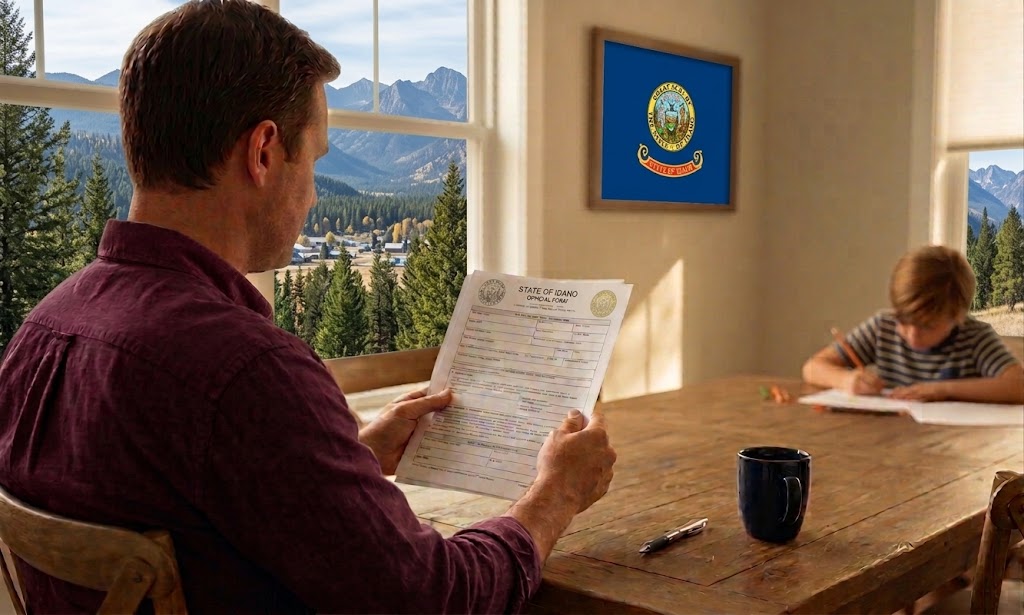
Idaho is a constitutional carry state, which means eligible people can generally carry a concealed weapon without a concealed weapons license. For concealed handguns, Idaho law generally allows eligible U.S. citizens and current members of the U.S. Armed Forces who are at least 18 years old to carry without a license, provided they are not otherwise disqualified under Idaho law.
Want more content like this?
Stay connected with the latest news, updates, and special offers. Join our community by signing up for our newsletter today!
So why get a license?
An Idaho concealed weapons license (cwl) can provide benefits beyond permitless carry, including reciprocity in other states and, for qualifying licenses, an alternative to the federal NICS background check when purchasing a firearm from a licensed dealer.
Idaho issues two types of concealed weapons licenses: a standard license and an enhanced license. The application process and requirements differ between them.
This guide walks you through how to get an Idaho concealed weapons license, what training you need, how much it costs, and why you might still want one even though Idaho allows permitless carry.
See our Full guide on: How to Get a Concealed Carry Permit
Want more content like this?
Stay connected with the latest news, updates, and special offers. Join our community by signing up for our newsletter today!
Overview: Steps to Get an Idaho Concealed Weapons License
The basic process is:
- Determine whether you qualify for an Idaho concealed weapons license
- Decide whether you want a standard or enhanced license
- Complete any required training or demonstrate firearm familiarity
- Gather the required information and documentation
- Submit your application in person to a county sheriff
- Submit fingerprints for the required background checks
- Pay the applicable fees
- Wait for the sheriff to process your application
Idaho's Attorney General says applicants must apply in person to a county sheriff. If you are an Idaho resident, contact the sheriff where you reside. If you are a nonresident, contact the sheriff where you intend to apply for the current application procedure.
Idaho concealed weapons licenses are valid for five years from the date of issue.
Key point
You do not need an Idaho concealed weapons license simply to carry a concealed handgun if you qualify for Idaho's permitless-carry law. A license can still be useful if you travel to states that recognize Idaho licenses or if you want a qualifying license that can be used as an alternative to a NICS background check.
Who Can Get an Idaho Concealed Carry Permit
Idaho's permitless-carry rules and its license requirements are not identical, so it is important to distinguish between them.
Permitless concealed carry
Under Idaho law, an eligible person may generally carry a concealed weapon without a license if the person:
- Is at least 18 years old
- Is a U.S. citizen or a current member of the U.S. Armed Forces
- Is not otherwise disqualified under Idaho law from obtaining a concealed weapons license
Idaho law has additional requirements for people under 18.
Getting a concealed weapons license
Idaho's concealed weapons license laws contain specific eligibility requirements and disqualifiers. The Idaho Attorney General directs applicants to Idaho Code for the complete list of circumstances that can make someone ineligible.
Because firearm eligibility can depend on the details of a person's criminal, court, or other history, anyone with a potentially disqualifying record should review the applicable Idaho and federal laws before applying.
Enhanced license requirements
The enhanced concealed weapons license has additional requirements.
Applicants must generally:
- Be over 21 years old
- Have been a legal resident of Idaho for at least six consecutive months before applying, or hold a current concealed weapons license or permit issued by their state of residence
- Complete a qualifying handgun course within the 12 months immediately preceding the application
- Submit the required training certificate
- Meet the applicable state and federal eligibility requirements
The enhanced-license training has specific statutory requirements that are different from the standard license.
Training Requirements
One of the most important differences between Idaho's standard and enhanced licenses is the training requirement.
For Standard Concealed Weapons Licenses
Idaho does not require every applicant to complete a particular eight-hour concealed-carry course for a standard license.
Instead, a county sheriff may require an applicant to demonstrate familiarity with a firearm.
The Idaho Attorney General lists several ways an applicant can establish that familiarity, including:
- An approved hunter education or hunter safety course
- An NRA firearms safety, training, or hunter education course
- A qualifying firearms safety or training course offered by a law enforcement agency, school, college, university, or firearms training school
- A qualifying law-enforcement or security firearms course
- Equivalent firearm experience through organized shooting competition or military service
- A current Idaho concealed weapons license
- A firearms training or safety course conducted by a state-certified or NRA-certified firearms instructor
- Other training the sheriff considers appropriate
The sheriff must accept qualifying evidence listed in Idaho law.
There is no separate statewide firearms test required for the standard license.
For Enhanced Concealed Weapons Licenses
The enhanced license has a specific training standard.
The qualifying course must:
- Be at least eight hours long
- Be taught face-to-face rather than electronically
- Be taught by a qualifying certified instructor
- Include instruction on Idaho firearms and deadly-force law
- Include instruction on the basic concepts of safe and responsible handgun use
- Include instruction on self-defense principles
- Include live-fire training
- Include firing at least 98 rounds by the student
The legal portion of the course must also be taught by a qualifying Idaho State Bar member or law enforcement officer meeting the statutory requirements.
The qualifying course must have been completed within the 12 months immediately before the enhanced-license application.
Standard vs. Enhanced
If your primary reason for getting an Idaho license is travel and reciprocity, pay close attention to whether the state you plan to visit recognizes Idaho's standard license, enhanced license, or both.
Reciprocity can vary by state and can change over time. Idaho State Police maintains the state's current reciprocity information.
Cost and Fees
Idaho concealed weapons license fees
The Idaho Attorney General currently lists:
- Original license: $20
- Renewal: $15
A sheriff may collect additional fees to cover fingerprint processing and license materials. As a result, the amount you actually pay can be higher than the statutory license fee and can vary by county.
Additional costs to factor in
Depending on your circumstances, you may also have costs associated with:
- Firearms training
- Fingerprinting
- Required license materials
- Enhanced-license training
Because these costs can vary by county and training provider, check with the sheriff's office where you plan to apply for the current total.
License validity
An Idaho concealed weapons license is valid for five years from the date of issue.
Where and How to Apply
Where do you apply?
The Idaho Attorney General states that applicants must apply in person to a county sheriff.
Idaho residents should contact the sheriff in the county where they reside.
Nonresidents should contact the county sheriff where they intend to apply for instructions on the current application process.
Idaho State Police also provides the statewide concealed weapons license application and identifies Idaho sheriffs as the agencies responsible for issuing concealed weapons licenses.
What to expect
Your county sheriff will provide the current application instructions and tell you what documentation, fingerprints, fees, and other materials are required.
County procedures can differ, so do not assume that the application process is identical in every Idaho county.
Required Documents
The exact materials requested can vary depending on the type of license and county, but applicants should be prepared to provide information required by the Idaho concealed weapons license application.
For an original license, fingerprints are required as part of the background-check process.
For an enhanced license, you must also provide the qualifying handgun-course certificate when you apply.
Fingerprinting and background checks
For an original license, the sheriff submits the applicant's fingerprints to Idaho State Police for the required records checks.
The statutory process includes a national fingerprint-based records check, an inquiry through NICS, and applicable state database checks. Additional immigration-related checks may apply to applicants who are not U.S. citizens.
The sheriff cannot issue the license until the required records-check results have been received and reviewed.
Processing Timeline
Idaho law establishes a processing period of up to 90 days for an enhanced concealed weapons license after the application is filed, assuming the applicant meets the statutory requirements.
The background-check process itself includes multiple records checks, and Idaho State Police is required to return the results of those checks to the sheriff within the statutory period described in Idaho law.
Because county procedures and individual background checks can differ, applicants should contact the issuing sheriff if they have questions about the status of an application.
Renewal
Idaho concealed weapons licenses are valid for five years.
The Idaho Attorney General currently lists a $15 renewal fee, although the sheriff may collect additional fees for fingerprint processing and license materials.
If your license is approaching expiration, contact the issuing sheriff for the current renewal procedure and documentation requirements.
Do not assume that renewal requirements are identical to those for an original license. County procedures and the type of license you hold can affect what you need to submit.
If you want to upgrade to an enhanced license, you must meet the enhanced-license eligibility and training requirements, including completion of the qualifying eight-hour course.
Why Get an Idaho Concealed Carry Permit Under Constitutional Carry?
Idaho allows eligible people to carry concealed without a license, so getting a license is optional for many people.
So why get one?
Reciprocity across state lines
The biggest reason for many license holders is travel.
Idaho State Police maintains reciprocity information showing which states recognize Idaho concealed weapons licenses. Idaho also recognizes concealed weapons licenses issued by other states.
However, reciprocity is state-specific. A state may recognize Idaho's standard license, enhanced license, or impose other conditions.
If you plan to travel while armed, check the destination state's current laws before carrying there.
See also: RIGHT TO BEAR CONCEALED CARRY RECIPROCITY MAP
Firearm purchase convenience
A qualifying Idaho concealed weapons license can serve as an alternative to a NICS background check under federal law.
The ATF's current Brady Permit Chart lists both Idaho's Basic Concealed Weapons License and Enhanced Concealed Weapons License as qualifying alternatives to a NICS check.
There are important limitations.
The FFL must verify that the permit qualifies under federal law, and federal and state requirements still apply. An FFL is also not required to accept an alternative permit instead of conducting a NICS check.
So a concealed weapons license should not be described as a blanket exemption from firearm waiting periods or other purchase requirements.
A state-issued license
A concealed weapons license gives you a state-issued credential showing that you have gone through the state's licensing process.
That can be useful when traveling or when a state requires a license to carry concealed.
However, possessing a license does not override other state or federal restrictions. Idaho itself identifies locations where carrying a concealed weapon remains prohibited even with a license.
Nonresident considerations
Nonresidents should pay particular attention to the distinction between Idaho's permitless-carry rules and its licensing requirements.
Idaho State Police states that nonresidents carrying concealed in Idaho must possess a valid state-issued concealed weapons license or permit from the state where it was issued.
If you are considering an Idaho license as a nonresident, contact an Idaho sheriff before applying to confirm the current process and which license you qualify for.
Frequently Asked Questions
Do you need a concealed carry permit in Idaho?
No. Eligible people can generally carry a concealed weapon without a license under Idaho law. For concealed handguns, Idaho generally allows eligible U.S. citizens and current members of the U.S. Armed Forces who are at least 18 years old to carry without a license, subject to Idaho's eligibility requirements and restrictions.
How much does an Idaho concealed carry permit cost?
The Idaho Attorney General lists the statutory fee as $20 for an original license and $15 for renewal. Sheriffs may collect additional fees for fingerprint processing and license materials, so the total amount can be higher and may vary by county.
How long is an Idaho concealed carry permit valid?
An Idaho concealed weapons license is valid for five years from the date of issue.
Does Idaho require concealed carry training?
Not necessarily for a standard license. A sheriff may require an applicant to demonstrate familiarity with a firearm, and Idaho law recognizes several ways to establish that familiarity. The enhanced license has a specific eight-hour qualifying handgun-course requirement.
What is the difference between an Idaho standard and enhanced concealed weapons license?
The enhanced license has additional eligibility and training requirements. Enhanced applicants must generally be over 21, meet the applicable Idaho residency or home-state permit requirement, and complete a qualifying handgun course within the preceding 12 months.
Does Idaho honor out-of-state concealed carry permits?
Yes. Idaho State Police states that Idaho acknowledges the validity of concealed weapons licenses and permits issued by other states. Nonresidents carrying concealed in Idaho must possess a valid state-issued license or permit from the state where it was issued.
Can a nonresident get an Idaho concealed carry permit?
Potentially, but the requirements depend on the type of license. Nonresidents should contact an Idaho county sheriff before applying. The enhanced license, in particular, has a specific requirement involving Idaho residency or possession of a current concealed weapons license or permit from the applicant's state of residence.
Can an Idaho concealed weapons license replace a NICS check?
A qualifying Idaho Basic or Enhanced Concealed Weapons License can serve as an alternative to a NICS background check under federal law. The ATF currently lists both licenses as qualifying alternatives. However, the FFL must verify the permit and is not required to accept it instead of conducting a NICS check.
Where can you apply for an Idaho concealed weapons license?
The Idaho Attorney General states that you must apply in person to a county sheriff. Idaho residents should contact the sheriff where they reside. Nonresidents should contact the sheriff where they intend to apply.
Where can you not carry a concealed weapon in Idaho?
Even with a concealed weapons license, Idaho law restricts carrying in certain locations, including courthouses, correctional facilities, jails, and schools, subject to statutory exceptions. Federal law also restricts firearms in certain locations, and private businesses may prohibit weapons on their property.
Always verify the current law before carrying a firearm because location-specific restrictions and reciprocity rules can change.
ONE WRONG MOMENT SHOULDN'T COST YOU EVERYTHING
Carry with confidence. Right To Bear backs you with 24/7 attorney-answered support and full legal defense — no caps, no deductibles. Become a member today.