For more than three decades, if you lost your federal firearms rights, the law technically gave you a way to get them back, and Congress made sure that path led nowhere.
That changed this week. The Department of Justice has issued a final rule that, for the first time since 1992, actually processes applications from people seeking to restore their Second Amendment rights under federal law.
A Right That Existed on Paper Only
Buried in the Gun Control Act of 1968 is a provision, 18 U.S.C. 925(c), that lets someone who's federally prohibited from owning a firearm apply to the Attorney General for relief. The idea makes sense on its face. Not everyone who loses their firearms rights, whether through a decades-old felony, a mental health commitment, or another disqualifying event, poses an ongoing danger to anyone. Congress built in a mechanism for the government to say so and restore those rights.
Then, in 1992, Congress quietly defunded the whole thing. Lawmakers didn't repeal the law. They just barred the ATF, which had been running the program, from spending a single dollar processing applications.
The stated reason was that ATF agents were burning tens of thousands of hours a year investigating these requests, hours Congress decided would be better spent chasing violent crime.
Whatever the merits of that tradeoff in 1992, the practical result was that Section 925(c) became a right that existed in the statute books and nowhere else. For 30 years, the only real avenue left for someone to get their federal firearms rights back was a presidential pardon, which is about as reliable a remedy as winning the lottery.
What Did The Final Rule of Firearm Restoration Actually Do?
The Department of Justice didn't wait for Congress to fix this. Instead, it built a new process from scratch, one that doesn't run through the ATF at all. The Attorney General will now personally oversee applications for relief, and starting 30 days after this rule is published in the Federal Register, the Department will begin accepting them.
The new process leans heavily on presumptive disqualifications, meaning entire categories of applicants start from a position where their application will likely be denied unless they can show extraordinary circumstances.
Anyone with a conviction for a genuinely violent offense are presumptively barred for good, like:
- Homicide
- Sexual assault
- Kidnapping
- Domestic violence
- Armed robbery is
Others, people with drug trafficking convictions, misdemeanor domestic violence convictions, or nonviolent firearms and explosives offenses, face a 10-year waiting period after completing their sentence before they can even apply with a reasonable shot.
A broader catch-all category imposes a 5-year wait for other felony convictions.
That structure reflects a real, and reasonable, tension the Department was trying to resolve. On one hand, Congress created this remedy because it recognized that not every prohibited person is dangerous forever.
On the other, the government has an obligation not to hand firearms back to people who are likely to misuse them. The presumptive disqualification system is the Department's attempt to sort the two groups efficiently, rather than conducting a resource-draining, ATF-style investigation into every single applicant regardless of how obviously disqualifying their history is.
What Is The Final Rule Marijuana Carve-Out?
The final rule specifically excludes marijuana use and addiction from the drug-related disqualification categories that otherwise apply to unlawful drug users. This follows directly from the Supreme Court's 2026 decision in United States v. Hemani, where the Court found that regular marijuana use alone didn't establish that a defendant posed a danger to himself or others, and that the federal prohibition on gun ownership by drug users couldn't constitutionally be applied to him on that basis.
See also: Second amendment court cases
The Department went further than Hemani technically required, excluding not just marijuana users but marijuana addicts too, on the practical grounds that distinguishing between the two would be nearly impossible to administer fairly. Given that nearly two-thirds of states have legalized marijuana in some form, this single change likely affects more potential applicants than almost any other provision in the rule.
What Is The Cost of Firearm Rights Restoration?
The Department estimates roughly 330,000 people will apply in the first year, drawing that figure from three years of NICS background check denial data rather than the original, and widely criticized, estimate of 1 million applicants pulled from an unrelated ATF dataset.
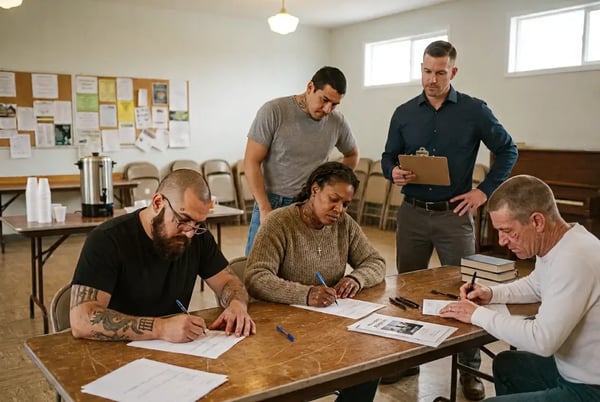
Applicants will pay a $30 fee (indigent applicants can request a waiver), submit fingerprints, gather court and arrest records, and secure three character references who must attest under penalty of perjury to the applicant's conduct and reputation.
All told, the Department pegs the first-year cost to applicants at roughly $59.8 million, plus another $14.5 million in processing costs to the government itself.
Why This Matters Even If You've Never Lost Your Rights
If you've never had a disqualifying conviction, this rule might seem irrelevant to you. It isn't, for two reasons.
First, it's a genuine test case for how the federal government balances individual Second Amendment rights against public safety when it has real discretion to draw the line, rather than a court imposing one on it. The presumptive disqualification framework, the categories chosen, the waiting periods, the extraordinary-circumstances exception, all of it reflects a considered judgment about where that balance sits, and it will likely influence how courts and other agencies think about similar restoration questions going forward.
Second, an estimated 20 million adults nationwide currently carry some form of federal firearms disability. For the first time in three decades, a meaningful number of them have an actual, functioning path back to full Second Amendment rights, one grounded in individualized review rather than a blanket, permanent ban regardless of how long ago the disqualifying conduct occurred or how thoroughly someone has rebuilt their life since.
Not everyone will agree this rule strikes the right balance. Domestic violence advocacy groups pushed hard during the comment period for permanent, rather than time-limited, disqualification for domestic violence offenders, arguing that the risk of reoffending doesn't fade the way it does for other violent crimes, a position the Department only partially accommodated.
Gun rights advocates, on the other end, argued that the presumptive disqualification system itself goes beyond what the statute allows and that individualized review should govern every case from the outset.
Both sides made their case in the record, and both will likely keep making it as the program gets underway. Whichever side you land on, this is the first time in a generation that the argument has had somewhere real to go.