What Is Target Hardening? Real-World Ways to Deter Threats Before They Start

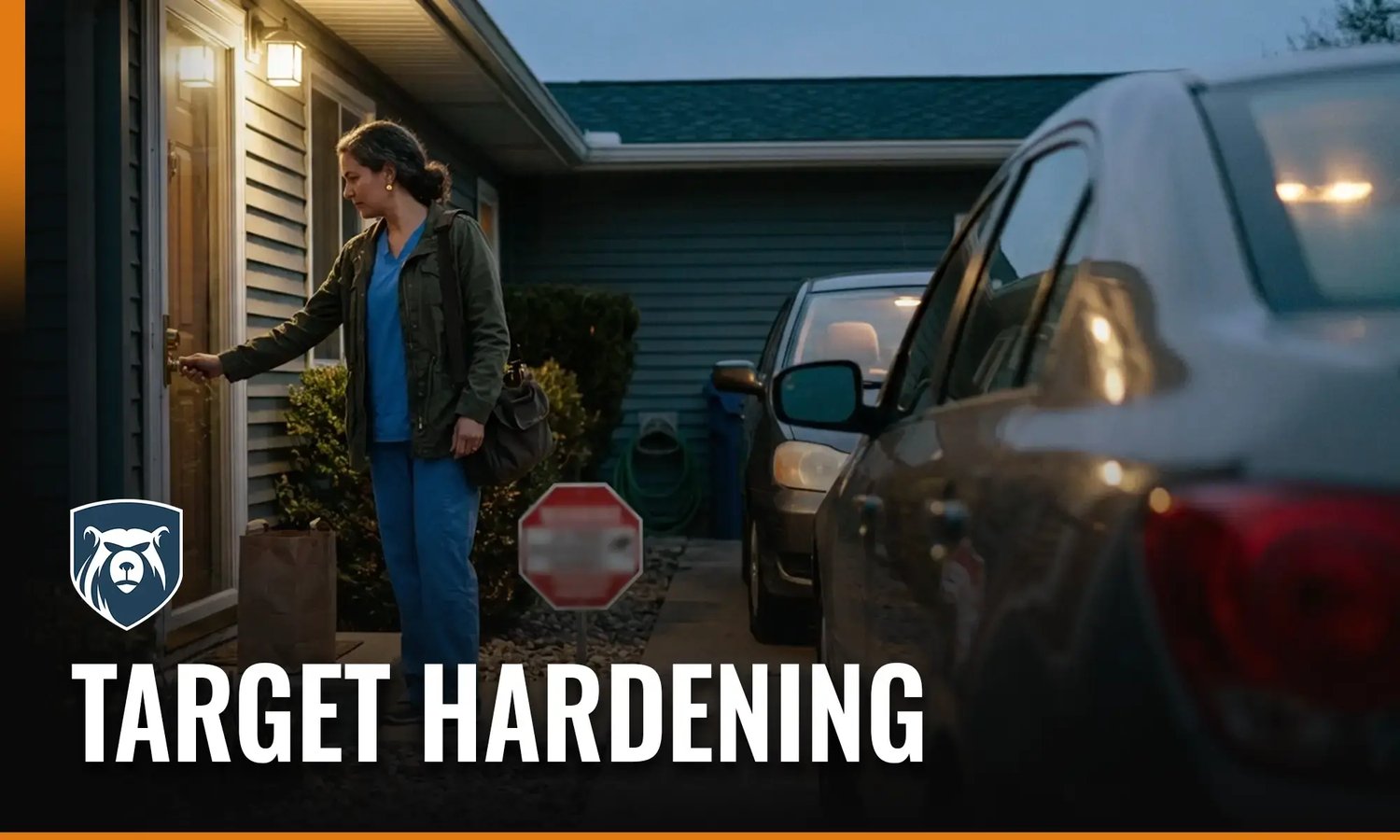
Target Hardening: How to Make Your Home and Life Safer
Target hardening is a security strategy focused on making a person, place, or asset less attractive to criminals by increasing the effort required to commit a crime and the likelihood of detection. The goal is deterrence before confrontation. Rather than reacting to violence or theft after it occurs, target hardening emphasizes prevention.
In 2026, concerns about burglary, car theft, public safety incidents, and opportunistic crime remain high in many areas. Response times vary by region, and criminals often select targets based on convenience and visibility. Practical target hardening measures shift that equation. They increase friction for offenders and reduce the probability that your home, business, or person becomes the easiest option.
Explore: Right To Bear Family protection membership
You Locks won't Change
The law will. Forearm law updates from all 50 states.
What Is Target Hardening?
Target hardening is a term commonly used by law enforcement, military planners, and security professionals. It refers to strengthening security measures around buildings, infrastructure, or individuals in order to deter attack or reduce theft risk.
At its core, target hardening operates on a simple principle: criminals prefer soft targets. A soft target is easy to access, poorly lit, predictable, and unlikely to resist. A hardened target is visible, structured, monitored, and prepared.
No system can guarantee total safety. However, layered security significantly lowers the probability of victimization. Each added layer increases time, complexity, and exposure for an offender. Many crimes are crimes of opportunity. Remove the opportunity and you often remove the crime.
Why Target Hardening Matters in 2026
Modern crime prevention research consistently supports deterrence-based strategies.
Crime deterrence: Criminals frequently choose the path of least resistance. Homes and individuals that appear alert, secured, and monitored are more likely to be bypassed.
Peace of mind: Visible security measures reduce anxiety and increase perceived control. Knowing that entry points are reinforced and exterior areas are illuminated changes how residents experience their own property.
Preparedness: Layered defenses reduce dependence on immediate third-party response. While law enforcement remains essential, prevention reduces the need for emergency intervention.
Scalability: Target hardening strategies apply across environments. Homes, apartments, workplaces, schools, houses of worship, and small businesses can all implement scaled security improvements.
Research continues to show that households using multiple deterrents such as reinforced locks, visible cameras, and alarm systems are significantly less likely to experience burglary compared to homes with no security features.
Target Hardening Your Home
Your home is often your most valuable physical asset. Strengthening it begins with controlling access and increasing visibility.
1. Secure Entry Points
Doors: Install solid core or metal exterior doors. Reinforce door frames and strike plates with longer screws anchored into wall studs. Use high-quality deadbolts rather than basic knob locks. Smart locks add remote access control and activity monitoring.
Windows: Ensure all windows have functional locking mechanisms. Laminated or tempered glass increases resistance to forced entry. Security window film helps hold shattered glass together, slowing entry attempts.
Garage doors: Garages are frequently overlooked. Use reinforced locking mechanisms and consider smart garage openers that notify you of activity. Disable emergency release access from the outside unless properly shielded.
See Also: Home Defense: A Complete Guide for Gun Owners
2. Improve Outdoor Lighting
Motion-activated lighting: Lights that activate upon movement increase perceived risk for intruders. Sudden illumination draws attention and removes concealment.
Perimeter lighting: Consistent lighting around driveways, walkways, and entry points reduces shadows and hiding areas. Criminals prefer darkness. Remove it.
3. Install Alarm Systems
Modern security systems integrate door sensors, motion detectors, glass-break sensors, and monitoring services. Many systems provide smartphone alerts, remote camera access, and professional monitoring options. Even visible alarm signage alone can serve as a deterrent.
4. Use Security Cameras
Visible surveillance cameras significantly increase perceived risk. Systems that allow remote viewing add control while traveling. Placement matters. Cover primary entrances, driveway access, and backyard gates.
Clear signage indicating video surveillance reinforces deterrence value.
5. Maintain Your Yard
Landscaping affects security.
Trim shrubs and trees to eliminate hiding spots near doors and windows. Keep sightlines open from the street to the front door. Consider thorny shrubs beneath accessible windows to create natural barriers.
Fencing can create defined boundaries. Ensure gates are lockable and maintained. A defined perimeter communicates ownership and attention.
6. Know Your Neighbors
Community awareness amplifies security.
Join or establish a neighborhood watch program. Inform trusted neighbors when traveling. Exchange contact information. Strong community ties increase collective visibility, and visibility discourages criminal activity.
Target Hardening Yourself
Personal security is as important as property security. Target hardening applies to daily behavior and awareness.
1. Stay Aware of Your Surroundings
Situational awareness reduces vulnerability.
Keep your head up in public spaces. Limit phone distraction while walking. Identify exits when entering buildings. Notice unusual behavior. Awareness alone often deters opportunistic crime.
2. Use Technology Strategically
Maintain accessible emergency contacts. Use location-sharing features with trusted individuals when appropriate. Safety applications with panic alert functions can provide immediate notification to selected contacts. Smart technology increases response speed and reduces isolation.
3. Trust Your Instincts
If a situation feels wrong, create distance. Leave early rather than late. Predators often test boundaries subtly. Acting decisively at the first sign of discomfort reduces risk.
4. Learn Self-Defense
Self-defense training builds confidence and improves reaction under stress. Training enhances awareness, balance, boundary setting, and escape techniques. Regular practice increases competence and calmness during confrontation.
Safety in Different Situations
At School or Work
- Identify emergency exits and safe rooms
- Travel in groups when possible
- Report suspicious behavior early
Walking Alone
- Choose well-lit, populated routes
- Avoid isolated shortcuts at night
- Carry bags in ways that reduce snatch risk
Public Transportation
- Sit near drivers or conductors
- Keep valuables secured and discreet
- Stay alert during boarding and exiting
Handling Confrontations
Remain calm. Controlled breathing supports clearer thinking.
Use assertive communication. A firm voice and direct eye contact can discourage escalation. If danger increases, prioritize escape and seek assistance immediately.
Building Confidence Through Preparation
Confidence grows from preparation. Practice self-defense skills regularly. Reinforce positive self-talk. Remind yourself that awareness and planning are strengths, not paranoia.
Prepared individuals project attentiveness. That projection alone can deter targeting.
The Importance of Community
Security multiplies when communities cooperate.
Participate in safety programs and local initiatives. Support neighbors. Share information about suspicious activity. Social cohesion increases collective resilience and reduces anonymity for offenders.
Emergency Preparedness
Emergencies demand clarity.
Know basic first aid. Understand fire evacuation procedures. Develop a household emergency plan that includes:
- Important contact numbers
- Designated meeting points
- Clear evacuation routes
Preparedness reduces panic and improves coordinated response.
Determine. Deter. Defend.
Target hardening is not about fear. It is about increasing friction for anyone who might look for an easy opportunity.
When you reinforce entry points, illuminate dark areas, maintain awareness, and build community connections, you shift the risk calculation away from yourself. Criminals typically seek convenience, not confrontation. The more visible and structured your environment becomes, the less appealing it is as a target.
No single measure guarantees safety, but layered preparation stacks the odds in your favor. Strong locks, smart technology, awareness, training, and community coordination work together to create deterrence before escalation. In uncertain environments, proactive protection provides both practical security and psychological confidence.
The goal is simple: reduce vulnerability, increase resilience, and make threats less likely to begin. Right To Bear Family protection membership options can also help extend these resources and legal support to eligible family members.
FAQ's:
What is target hardening and what are its basic principles?
Target hardening is the use of physical, procedural, and technological security measures to make a person, property, or facility harder to attack or access. Common principles include increasing security, reducing vulnerabilities, controlling access, and deterring potential offenders.
What is the difference between target hardening and CPTED (Crime Prevention Through Environmental Design)?
Target hardening focuses on strengthening a specific target against crime, such as adding stronger locks, security film, or access controls. CPTED focuses on designing the surrounding environment to discourage crime through visibility, natural surveillance, territorial boundaries, and controlled access.
How does target hardening reduce the risk of burglary?
Target hardening reduces burglary risk by making unauthorized entry more difficult, time-consuming, and noticeable. Measures such as reinforced doors, window locks, lighting, alarms, and cameras can increase the effort and risk required for a burglar to enter.
What is the difference between target hardening and soft targets?
Target hardening makes a target more difficult to attack or access. A soft target has limited security measures and is therefore easier for an offender to access or exploit.
What target hardening techniques can be used for cybersecurity and network defense?
Cybersecurity target hardening can include strong authentication, access controls, encryption, firewalls, network segmentation, security updates, endpoint protection, and regular vulnerability testing. The goal is to reduce exploitable weaknesses and limit unauthorized access.
What should be included in a target hardening checklist for small business owners?
A small-business target hardening checklist should cover doors and windows, lighting, cameras, alarms, access control, employee procedures, cybersecurity, emergency communication, and regular security assessments.
What are some simple target hardening examples for residential homes?
Common examples include reinforced exterior doors, deadbolts, window locks, security lighting, cameras, alarm systems, doorbell cameras, and trimmed landscaping that improves visibility around the property.
Does target hardening cause crime displacement?
Target hardening can sometimes contribute to crime displacement if offenders simply move to easier targets. However, research on situational crime prevention suggests that displacement is not always complete and that effective security measures can reduce overall opportunities for crime.
Why is target hardening considered a proactive security measure?
Target hardening is proactive because it addresses vulnerabilities before a crime occurs. Instead of relying only on police response or emergency measures, it increases the effort and risk required to commit a crime.
What is the difference between physical security and digital target hardening tools?
Physical target hardening protects people, buildings, and physical assets using measures such as locks, barriers, lighting, and cameras. Digital target hardening protects systems and data using tools such as authentication, encryption, firewalls, and access controls.
What are effective target hardening strategies for schools and public buildings?
Effective strategies include controlled entry points, secure doors, access-control systems, surveillance cameras, adequate lighting, visitor management, emergency communication systems, and procedures for identifying and responding to security threats.
How can homeowners implement target hardening on a budget?
Homeowners can start with low-cost measures such as stronger door hardware, window locks, exterior lighting, visible address numbers, trimmed landscaping, and basic security cameras. Prioritizing the property's most vulnerable entry points can provide the greatest benefit for the money.
You can't Install this one
Every other layer is hardware. This one is 24/7 attorney-answered support.