
New ATF Rules Poised to Radically Change Gun Regulation
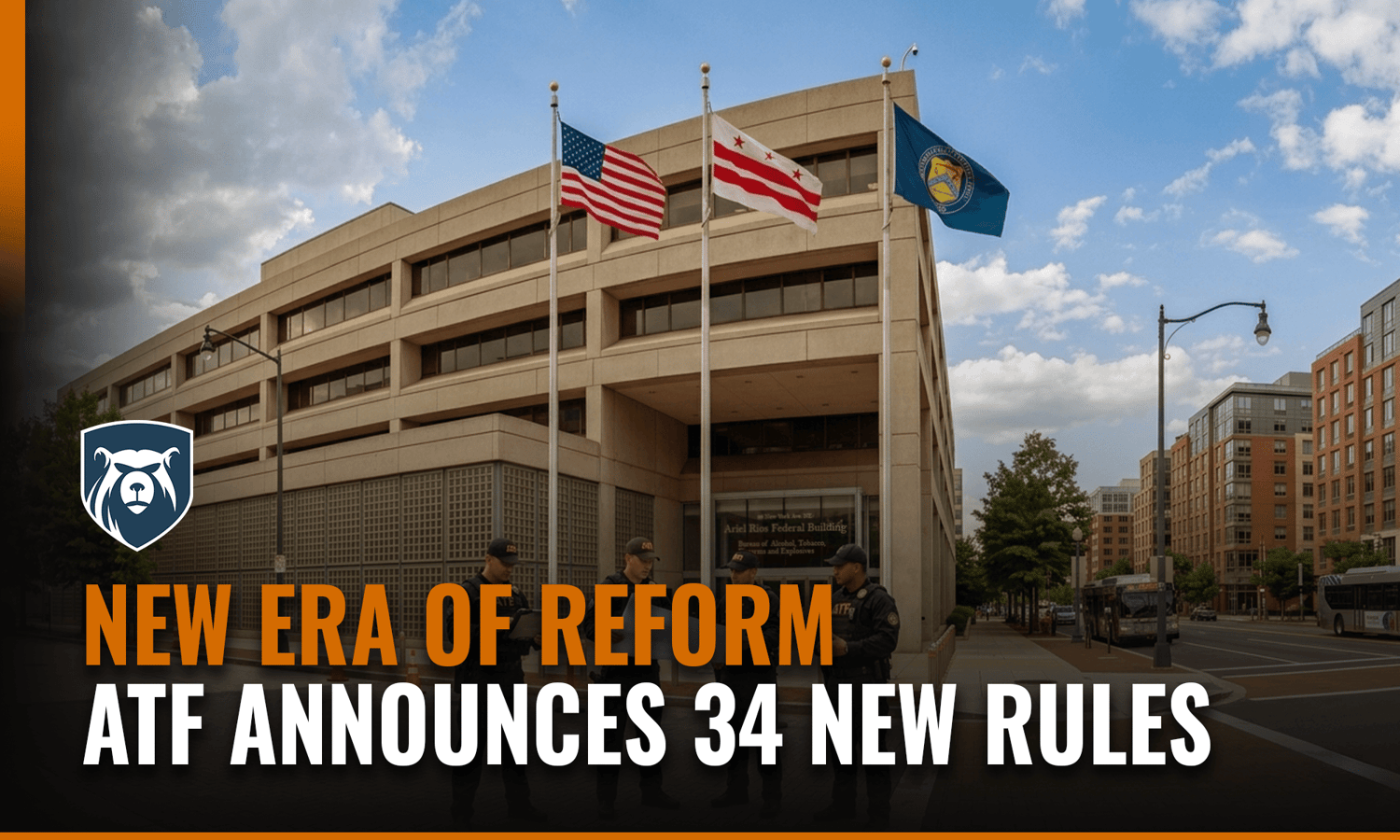
The Bureau of Alcohol, Tobacco, Firearms and Explosives has announced a 34 rule change package that will radically change the makeup of gun law. The ATF is calling this a “New Era of Reform,” and on paper, that signals a meaningful shift in tone. Instead of expanding enforcement through aggressive reinterpretations, the agency is now emphasizing statutory limits, modernization, and reduced burdens.
For gun owners, dealers, and manufacturers, that sounds like long-overdue course correction. The reality is more complicated, and the details will matter far more than the headlines.
Right now, we are looking at summaries, not final regulatory text. That gap creates both opportunity and danger. Some proposals appear to unwind prior overreach, while others quietly reinforce enforcement authority in new ways. The difference between progress and exposure may come down to a few lines of language that have not yet been published.
STAY READY. STAY INFORMED.
Get self-defense law updates, safety tips, and member stories delivered straight to your inbox. Sign up for the Right To Bear newsletter.
Understanding the “New Era of Reform”
At a high level, the ATF has grouped 34 actions into five categories: repeal, modernization, burden reduction, clarification, and alignment. It is a sweeping reset that touches nearly every corner of federal firearms regulation.
The Repeal Category: Rolling Back Overreach, Not Eliminating It
The repeal category includes some of the most controversial policies from recent years:
- The stabilizing brace rule is on track to be rescinded after widespread court challenges
- The definition of who is “engaged in the business” as a dealer is being scaled back, though not eliminated
- Bump stocks are being removed from the regulatory definition of machine guns following the Supreme Court’s decision in Garland v. Cargill
- Outdated requirements like Youth Handgun Safety Act notices for dealers may be eliminated
These moves suggest a retreat from regulatory expansion that attempted to redefine criminal liability through agency interpretation. That is significant but it is not absolute. The underlying statutory framework remains in place, and partial rollbacks can still leave room for enforcement ambiguity.
Modernization: Efficiency With New Risks
The modernization category is where many businesses will feel immediate operational impact.
Key proposals include:
- A streamlined and more digital Form 4473 process
- Expanded use of electronic recordkeeping for Federal Firearms Licensees
- Defined record retention periods instead of indefinite storage
- Replacement of paper license verification with the ATF’s eZ Check system
This is long overdue. Firearms compliance should not be stuck in a paper-based system from decades ago, but modernization is not just convenience. It creates new expectations, new audit capabilities, and new compliance risks.
For example:
- Digital records are easier to review and flag during inspections
- Defined retention periods create strict timelines that must be followed precisely
- Automated systems reduce human error but increase accountability for system accuracy
Reducing Burdens: Practical Relief With Real Stakes
The burden reduction category offers some of the most practical changes, particularly for NFA-regulated items.
Among the highlights:
- No prior approval required for temporary transport of NFA firearms
- Joint registration options for spouses without requiring a trust
- Elimination of CLEO notification requirements
- Simplified transport protections under federal law
- Clarified tax obligations for Special Occupational Taxpayers
These changes address real-world friction points that have frustrated lawful owners for years. They reduce paperwork and eliminate steps that provide little public safety value.
But even here, caution is necessary.
When processes become simpler:
- More people participate
- Enforcement shifts toward verifying proper use of simplified rules
- Mistakes become less defensible
Fewer hoops does not mean lower stakes. If anything, it increases the expectation that you get it right. If you own or plan to acquire regulated items, always do your own research or ask a professional to make sure you are approaching these changes correctly.
Clarifications That Could Expand Enforcement
The clarification category may be the most underestimated and the most important.
Several proposals directly affect how the law is interpreted and enforced:
- Clearer definitions of straw purchases
- Updated mental health terminology tied to firearm prohibitions
- Refined standards for Brady Act background check exceptions
- A formal definition of “willfully” violating the law
That last point deserves special attention. Under the proposed standard, a person may be considered to act willfully if they know their conduct is unlawful, even if they do not know the exact statute they are violating.
That has real consequences:
- It lowers the threshold for proving violations in licensing actions
- It increases exposure for businesses operating in gray areas
- It places greater emphasis on proactive compliance rather than reactive correction
If the ATF is serious about reform, how this standard is applied will matter as much as how it is written. For now, it is a clear signal that ignorance of regulatory detail will offer less protection than many assume.
Alignment: Quiet Changes That Matter
The alignment category focuses on bringing ATF regulations in line with court decisions, congressional statutes, and other federal agencies.
This includes:
- Codifying existing background check practices for NFA applications
- Updating export control references to reflect agency jurisdiction changes
- Aligning import restrictions with State Department lists
- Clarifying terminology across defense and firearms regulations
These updates may seem technical, but they reduce conflicts between overlapping regulatory systems. That can create more predictability, but only if you understand how the systems interact.
What Comes Next
The broader takeaway is this: this is not deregulation. It is recalibration.
Some rules are being rolled back. Others are being reinforced. Many are being rewritten in ways that will only become clear after full publication.
If you are affected by federal firearms regulations, focus on three priorities right now:
- Identify where your current practices rely on rules that may change
- Review areas where definitions or enforcement standards are being clarified
- Prepare to adjust quickly once final language is released
Each of these steps carries legal implications. Each benefits from experienced review.
This reform package represents real movement, but it is not a finish line. It is a transition point. Those who prepare now will have options. Those who wait may find themselves reacting under pressure.
Rules never just stand still but are always on the move.
One thing the ATF understands is that we’re living in an era of recalibration across the board. New legal changes are in the wind for almost every facet of American life and the Second Amendment is changing, perhaps, the most rapidly of all of them.
Our Take
At Right To Bear, we make it a policy to keep an eye turned to these changes for our members and the American public. It is these rules that will truly affect the daily life of constitutional defenders who are looking to defend themselves. The rough tides of regulatory change can bring greater scrutiny, even when the rules seem like they are changing for the better. Politicians will have their say, they just can’t help themselves, and the interpretation of these news rules is not set.
We will keep a sharp eye on these new developments, and we advise everyone reading this to do the same. For now, the overall objective of these new 34 Rules seems like a positive development, but until it is all said and done, it is up to every American to stay informed and let your voice be heard.
Stay active, stay safe and always be on your guard with Right To Bear.
PURE PEACE OF MIND STARTS HERE
Protect your freedom with steadfast legal defense built for everyday carriers. Become a Right To Bear member today.