What Is Jugging? The Crime, How It Works, and How to Protect Yourself

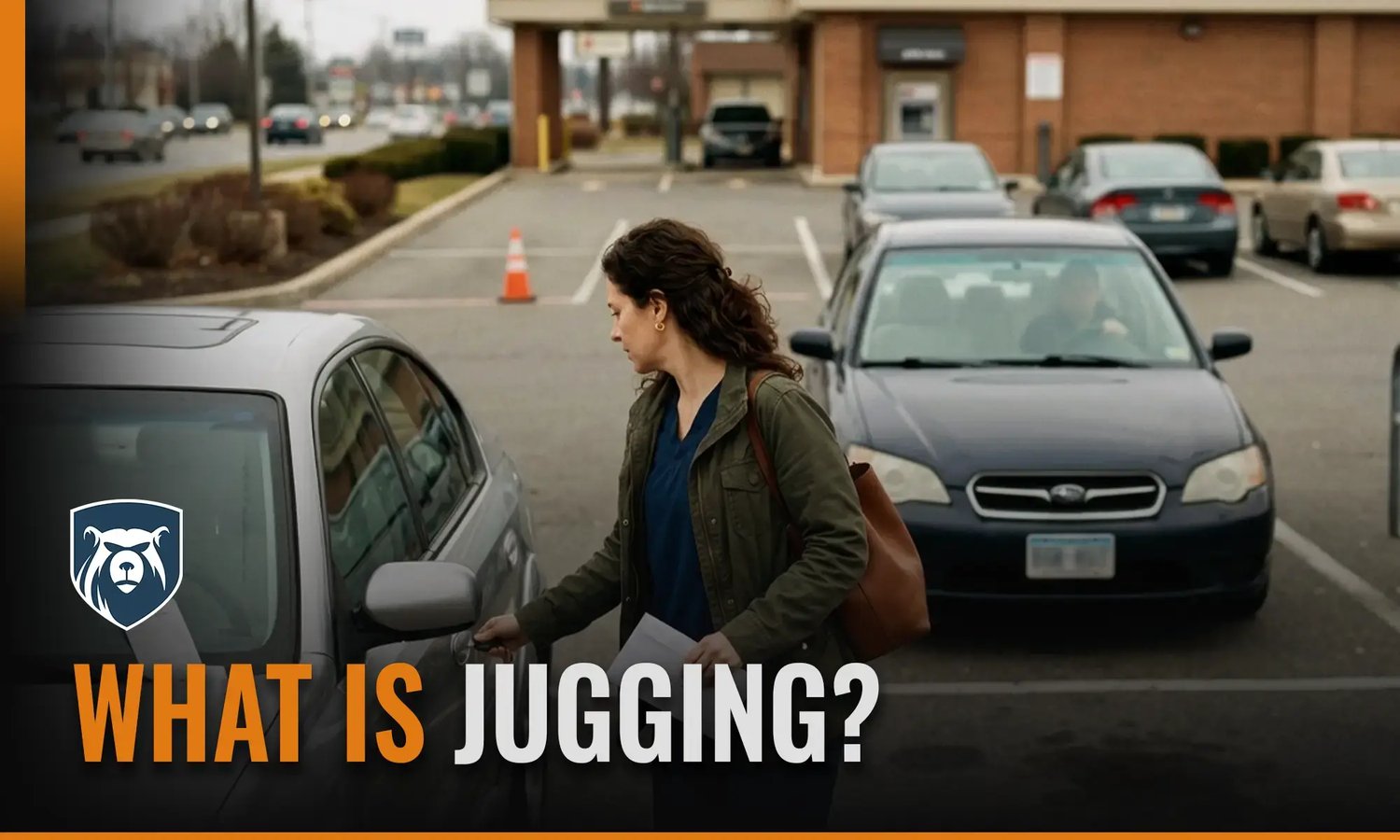
- Jugging is a targeted theft in which criminals watch someone handle cash at a bank, ATM, or similar location, follow that person, and steal the money at a second stop or in the parking lot.
- If you think you are being followed after leaving a bank, do not drive home. Call 911, keep moving, and head to a police station or a crowded, well-lit public place.
- Texas now has a specific jugging law, but even where the crime is charged under other statutes, the pattern is recognized by federal investigators and prosecutors as a serious public-safety issue.
You leave the bank with cash in hand. Someone in the parking lot watches you get in your car. They're not interested in the bank — they're interested in you, and where you go next. That's jugging: one of the fastest-spreading theft trends in the country, and one most people have never heard of until it happens to them.
Want more content like this?
Stay connected with the latest news, updates, and special offers. Join our community by signing up for our newsletter today!
Jugging at a Glance
|
Question |
Answer |
|---|---|
|
What is it? |
A theft tactic where a suspect watches someone leave a bank, ATM, or store with cash or valuables, then follows and robs them at the next stop |
|
Also called |
Bank jugging (its most common form) |
|
Who's typically targeted? |
Anyone seen leaving a financial institution with a visible cash bag, envelope, or large withdrawal |
|
Where does it usually happen? |
The victim's next stop after the bank — a parking lot, a store, or their own home |
|
Is a weapon usually involved? |
Sometimes. Cases range from smash-and-grab vehicle break-ins with no confrontation to armed robbery |
|
Who tracks it? |
Local police departments and the FBI, which has issued a nationwide bulletin on the trend |
What Is Jugging?
Jugging is a theft technique, not a single legal charge. A suspect — often working with a partner or a small group — watches a bank, credit union, or ATM for someone withdrawing a large amount of cash. Rather than risk robbing someone in view of security cameras and bank staff, they follow the victim to their next stop and rob them there: in a parking lot, at a second errand, or even at their home.
The term reportedly comes from an older slang use of "jugging" — cooking or stewing something slowly in a covered pot — repurposed by thieves to describe patiently watching and waiting for a target.
What Is Bank Jugging?
Bank jugging is the classic, most common form of jugging, and the two terms are often used interchangeably. It specifically describes suspects staking out a bank or ATM, identifying a customer who withdrew a large sum, and following that person to rob them once they're away from the bank's security. Some departments — including police in Lakewood, Colorado — define jugging this way specifically: watching a financial institution, then following the victim to commit the robbery at the next location.
What Is Gun Jugging?
"Gun jugging" is a related but distinct term worth its own explanation: it refers to jugging incidents where the suspects are armed, or where a firearm is used to force compliance during the robbery. Not every jugging incident involves a gun — many are smash-and-grab vehicle break-ins with no confrontation at all — but cases involving a firearm raise the stakes considerably, both legally and for personal safety.
If you carry for self-defense, understanding how these encounters typically unfold (surprise, close range, a demand rather than a warning) matters more than the general jugging pattern alone.
How Jugging Works: Real Cases & Patterns
This isn't a hypothetical crime trend — it's active and well-documented across the country:
- Denver, Colorado (Dec. 2024): Two men flew in from Houston and committed four jugging thefts in a two-week span, stealing a total of $47,200 from Colorado bank customers, including a single incident where $15,000 in cash was taken from a vehicle in a Walmart parking lot. One of the men was later sentenced to 19 years in prison.
- Midlothian, Texas (July 2024): A group linked to a Houston-based organization known as the "Hiram Clarke Money Team" robbed an ATM technician at gunpoint, taking approximately $247,000. One defendant pleaded guilty in 2025 to federal robbery charges.
- Austin, Texas: The Austin Police Department reported at least 62 jugging incidents in a single year at Bank of America, Wells Fargo, and Chase locations alone.
- Osceola County, Florida (2025): The Sheriff's Office investigated seven jugging cases in a single year, ranging from vehicle break-ins to cases with suspected gang involvement.
- Fairfax County, Virginia: Police recorded at least 10 jugging incidents in a roughly year-long span.
The pattern holds across every one of these cases: suspects rarely act at the bank itself. They wait for the second location, where there's no security camera and no teller watching.
Warning Signs: How to Spot Jugging Before It Happens
- Someone sitting in a parked car near a bank entrance or ATM for an extended period, especially if they start their engine as you leave
- A vehicle that pulls out of the bank's parking lot around the same time you do and stays behind you through multiple turns
- Anyone paying unusual attention to you specifically while you're at the teller window or ATM, rather than conducting their own business
- Being approached by someone asking questions that seem designed to find out where you're headed next
None of these alone confirms you're being followed — but two or more together, especially right after a large cash withdrawal, are worth taking seriously.
How to Protect Yourself From Jugging
- Minimize how long cash is visible. Put money away before you leave the teller window or ATM, not once you're back at your car.
- Vary your route and your stop. If you think you're being followed, don't drive straight home — go to a police station, a fire station, or another populated, well-lit public place.
- Don't linger in the parking lot. Get in your vehicle and leave immediately rather than checking your phone or organizing your bag.
- Use the drive-through or night deposit when possible, especially for large transactions, to reduce the time you're visible on foot.
- Trust the pattern, not just a single red flag. A car that left the bank when you did and is still behind you three turns later is worth acting on, not dismissing.
- If you're confronted, prioritize your safety over the cash. Every documented case above ended with a monetary loss; very few ended with serious injury, because victims complied. No amount of cash is worth escalating a confrontation.
Explore the Right To Bear Family Plan
Jugging vs. Carjacking: How They're Different
The two get confused often, but they're distinct crimes. Jugging is surveillance-based: a suspect identifies a victim with cash before the crime and follows them to a second location to steal money or valuables. Carjacking is the forcible theft of the vehicle itself, typically through direct confrontation with no prior surveillance — the target is the car, not a cash withdrawal. A jugging incident can turn into a carjacking if the suspects escalate, but they're legally and tactically different scenarios.
Frequently Asked Questions About Jugging
What is jugging?
Jugging is a theft tactic where criminals watch bank customers or other people withdraw cash, then follow them to another location to steal the money. If you're asking what is jugging, it is essentially a surveillance-based crime that relies on identifying a target, following them, and waiting for an opportunity to act. Jugging is different from a random theft because the victim is typically selected before the crime occurs.
What is bank jugging?
Bank jugging is a form of jugging that specifically targets people leaving a bank, credit union, or ATM. Criminals may watch customers in bank parking areas, look for people carrying cash or deposit bags, and then follow them to another location. The goal is usually to steal money after the victim has left the financial institution.
How does jugging work?
Jugging generally begins when a criminal watches someone make a cash withdrawal or conduct another financial transaction. The suspect may identify the target, follow their vehicle, and wait for an opportunity to steal the money. The attempt may happen in a parking lot, at another business, or at the victim's home.
What are common signs of bank jugging?
Warning signs can include someone sitting in a vehicle near a bank, ATM, or bank parking lot without an obvious reason; someone paying unusual attention to customers; or a vehicle that appears to follow you after leaving the bank. Criminals may also watch for people carrying bank envelopes, deposit bags, or other visible signs of a recent cash transaction.
How can I prevent bank jugging?
Effective bank jugging prevention starts with reducing the opportunity for criminals to identify you as a target. Keep cash and deposit bags out of sight, avoid displaying large amounts of money, vary your banking routine when possible, and leave the parking area promptly after completing your transaction. Stay aware of your surroundings and trust your instincts if something feels wrong.
Can jugging happen at a credit union?
Yes. Credit union customers can be targeted in the same way as bank customers. Criminals may watch people entering or leaving financial institutions, including banks and credit unions, and look for signs that someone is carrying cash. The same safety precautions apply regardless of which financial institution you use.
Can businesses be targeted by jugging?
Yes. Small businesses and their employees can be attractive targets because they may regularly handle larger amounts of cash, deposit bags, or other financial materials. Businesses can reduce their risk by varying banking routines, limiting the amount of cash employees carry, and using secure banking and financial services when available.
What should I do if I think I am being followed after leaving a bank?
Do not drive home or confront the person following you. Continue driving and go to a police station, fire station, or another busy, well-lit public location, then contact law enforcement. If possible, provide the vehicle description and direction of travel. Bank customers who notice suspicious behavior while still at the financial institution should also notify bank or credit union staff.
How can I protect my personal and financial information?
Jugging primarily involves physical theft, but protecting your personal and financial information is also part of good banking safety. Avoid displaying account information or receipts in public, protect your PIN, monitor checking and other accounts, and use secure online banking services when possible. Using credit cards or digital payment methods can also reduce the amount of cash you need to carry.
Is jugging a criminal offense?
Jugging describes a criminal method rather than one specific offense in every jurisdiction. Depending on what happens, the criminal act may involve theft, robbery, burglary, or other offenses. In Texas, jugging is now specifically addressed under state law, although the conduct can still involve additional criminal charges depending on the circumstances.
What does jugging mean?
The word “jugging” refers to a theft method based on watching, following, and targeting someone after a cash transaction. The term is commonly associated with bank jugging, but the tactic can occur anywhere criminals can observe someone handling money. Understanding what the term means can help bank customers and business owners recognize the risk before a crime occurs.
DEFENDING YOURSELF IS JUST THE BEGINNING
From the first call to the final verdict, we stand with you. Get criminal and civil defense that travels with you across state lines. Join Right To Bear.