

At face value, it can feel like a strange situation. You purchased a firearm for protection, yet the moment you leave your home state, you are faced with a maze of unfamiliar laws that can quickly turn a routine trip into a legal risk.
That is where preparation and the right support system matter. With tools like a Right To Bear membership, you can travel with added confidence knowing you have access to legal guidance, education, and protection if something goes wrong. Whether you are planning a road trip or boarding a flight, having reliable backup can make all the difference when laws get complicated.
What Is Concealed Carry Reciprocity, and Why It Matters
Concealed carry reciprocity refers to whether one state recognizes a concealed carry permit issued by another. These agreements vary widely across the country.
Some states:
- Recognize most out of state permits
- Recognize only certain states’ permits
- Do not recognize outside permits at all
For travelers, this means your ability to legally carry depends on:
- Your home state permit
- Your destination
- Every state you pass through
Misunderstanding reciprocity laws can result in fines, firearm confiscation, or even criminal charges. Staying informed is not optional. It is essential.
Preparing to Travel with a Firearm
Before heading out, take time to understand both federal protections and state specific rules. The two most common travel scenarios are driving across state lines and flying.
Start with the basics:
- Review federal transport protections under the Firearm Owners Protection Act
- Check reciprocity laws for every state on your route
- Confirm airline or carrier policies
- Understand local restrictions at your destination
Having access to educational resources can simplify this process. A Right To Bear membership includes a growing library of self defense and firearm law content, helping you stay informed before you ever leave home.
Firearms in Public Transportation
Public transportation systems often have strict firearm policies. Many prohibit firearms entirely, even for lawful carriers.
Examples include:
- Long distance bus companies that ban firearms
- City transit systems with limited or conditional allowances
Before using public transportation:
- Check the carrier’s official policy
- Plan for secure storage if needed
- Avoid assumptions about legality
When rules are unclear, having access to knowledgeable guidance matters. Right To Bear members can speak with qualified attorneys for non emergency legal questions, helping clarify gray areas before travel.
Air Travel
Flying with a firearm is legal under federal law, but strict procedures apply.
To comply:
- Firearms must be unloaded
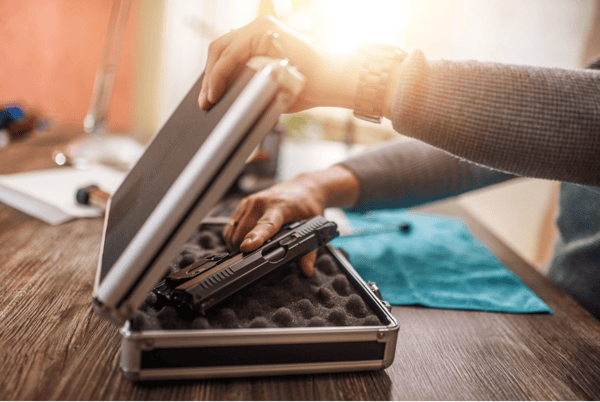
- Store them in a locked, hard sided case
- Declare them at check in
- Properly store ammunition in approved containers
Airlines may impose additional requirements, so always check in advance. Also remember that once you land, local laws apply immediately.
If something goes wrong during your travels, Right To Bear provides access to a 24/7 attorney answered hotline so you are not left guessing in a stressful situation.
Private Vehicles
Traveling by car offers flexibility, but laws still vary significantly by state.
You may encounter:
- Permitless carry states
- States requiring firearms to be unloaded and secured
- Laws requiring separation of firearm and ammunition
- Duty to inform requirements during traffic stops
Federal protections may apply in limited circumstances, but they are often misunderstood and do not override all state laws.
For frequent travelers, Right To Bear offers optional multi state protection, extending legal support across all 50 states so you are covered wherever your trip takes you.
See Also: Concealed Carry in Vehicles
Passenger Trains
Train travel has its own rules. For example, Amtrak allows firearm transport only under strict conditions.
Requirements typically include:
- Advance declaration, often 24 hours before departure
- Locked, hard sided storage
- Proper ammunition containment
Not all routes allow checked baggage, so confirm before booking.
Cruise Ships
Firearms are not permitted on cruise ships. There are no general exceptions.
If your trip includes a cruise:
- Arrange off site storage ahead of time
- Do not bring firearms to the port without a plan

Hotels and Lodging
Firearm policies vary between hotels. Many allow firearms, but some impose storage requirements.
Before your stay:
- Call ahead and confirm policies
- Ask about any restrictions
For added safety:
- Use a portable gun safe
- Keep firearms secured when not in use
Portable Gun Storage Devices
A reliable storage solution helps you stay compliant across different states and travel scenarios.
Common options include:
- Portable gun safes with biometric or combination locks
- Cable locks to render firearms inoperable
- Vehicle mounted lockboxes
Using proper storage is not just about safety. It can also help you meet legal requirements in stricter jurisdictions.
International Travel with Firearms
Traveling internationally with a firearm is significantly more complex than domestic travel.
Before traveling abroad:
- Contact the destination country’s embassy
- Review airline and customs requirements
- Obtain all required documentation
Many countries have strict firearm bans, and violations can carry severe penalties.
Documents You Should Carry
When traveling with a firearm, proper documentation is essential.
Bring:
- Your concealed carry permit
- Copies of relevant federal transport laws
- A reciprocity reference map
- Proof of firearm ownership
Having these documents available can help resolve issues quickly if questions arise.
Travel Smart, Travel Safe
Traveling with a firearm does not have to be stressful, but it does require preparation. Laws change, enforcement varies, and simple mistakes can have serious consequences.
That is why many responsible gun owners choose to back themselves with a Right To Bear membership. With benefits like a 24/7 Emergency attorney hotline, 100% attorney fee coverage for criminal and civil defense, and access to training and legal education, it provides an added layer of protection before, during, and after a self defense incident.
If you want peace of mind every time you travel, sign up and get protected with a Right To Bear membership today.