Kansas Gun Laws (2026): Concealed Carry, Open Carry, Permits, and Where You Can Carry

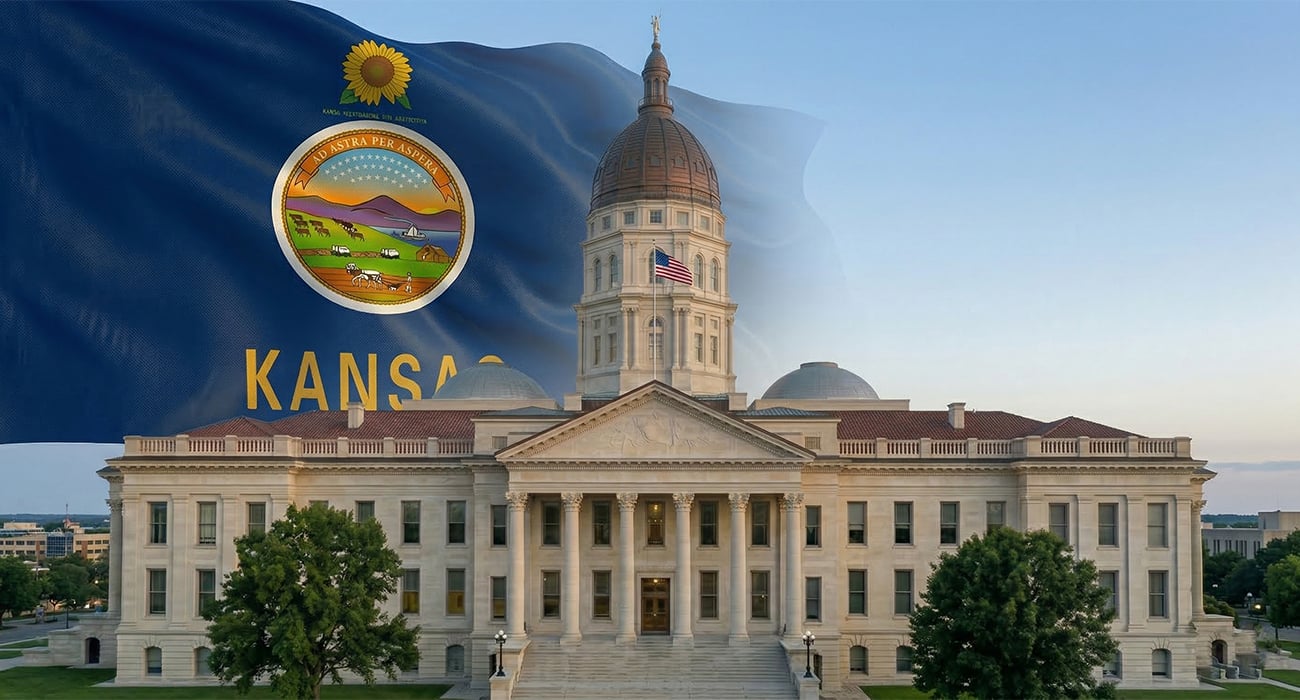
Kansas is a Constitutional Carry (permitless carry) state with robust protections for gun owners, including "Stand Your Ground" and "Castle Doctrine" laws. While the state generally allows eligible adults to carry without a license, specific age distinctions apply to permitless carry versus permitted carry.
Quick Summary
|
Feature |
Status |
Notes |
|
Permitless Carry? |
Yes |
Legal for residents and non-residents 21+. |
|
Open Carry? |
Yes |
Legal for 18+ without a permit. |
|
Concealed Carry? |
Yes |
Permitless for 21+; Provisional license available for 18–20. |
|
Minimum Age to Carry |
18 |
Open carry (18+); Concealed (21+ permitless, 18+ with provisional permit). |
|
Reciprocity |
Universal |
Kansas recognizes valid permits from all 50 states. |
|
No |
You are not required to inform police you are armed unless asked. |
|
|
Vehicle Carry |
Permissive |
Loaded/unloaded, concealed/open allowed for eligible persons. |
|
"No Weapons" Signs |
Trespass Only |
Signs do not have criminal force of law on private property (unless you refuse to leave). |
|
Background Checks |
Federal Only |
Required for dealer sales; no background check for private sales. |
|
Red Flag Laws |
No |
Kansas does not have a Red Flag law. |
Want more content like this?
Stay connected with the latest news, updates, and special offers. Join our community by signing up for our newsletter today!
What Changed Recently (2025–2026)
-
Eligibility Clean-up (HB 2052): Recent legislative updates (2025) clarified cross-references in the Personal and Family Protection Act, ensuring state prohibitors align closely with federal disqualifiers (e.g., felony convictions, domestic violence).
-
18–20 Year Olds: While "Constitutional Carry" remains 21+, remember that 18–20 year olds can now obtain a Provisional CCHL (Concealed Carry Handgun License) to carry concealed legally. Many older guides fail to mention this distinction.
Carry Rules
Open Carry
Open carry is legal in Kansas for anyone 18 years or older who is not prohibited from possessing a firearm.
-
Permit Required? No.
-
Location: Statewide, except in specifically prohibited areas (schools, courthouses, etc.).
-
Local Preemption: Cities and counties cannot ban open carry, though they can regulate the "manner" of carry in specific strict contexts (rare).
Concealed Carry
Kansas operates under a two-tiered system based on age:
-
Permitless (Constitutional) Carry: Any person 21 or older who can legally own a firearm may carry concealed without a license. This applies to both residents and non-residents.
-
Provisional Carry (18–20): Individuals aged 18 to 20 must obtain a Provisional Concealed Carry Handgun License (CCHL) to carry concealed. You cannot carry concealed without a permit if you are under 21.
Why Someone Might Still Get a Permit
Even with permitless carry, obtaining a Kansas CCHL is recommended for:
-
Reciprocity: To carry in states that do not honor permitless carry (e.g., reciprocity with roughly 39+ states).
-
School Zones: To legally carry within 1,000 feet of a K-12 school under the Federal Gun-Free School Zones Act (permitless carry does not exempt you from this federal buffer zone).
-
NICS Exemption: A valid Kansas CCHL qualifies as an alternative to the NICS background check when buying a gun from a dealer.
Permits (CCHL)
Kansas is a "Shall Issue" state. If you meet the requirements, the Attorney General must issue the license.
Resident vs. Non-Resident Eligibility
-
Residents: Standard CCHL (21+) and Provisional CCHL (18–20).
-
Non-Residents: Kansas does not issue non-resident permits, except to active-duty military and their dependents stationed in Kansas. However, Kansas honors all valid non-resident permits from other states.
Training Requirements
Applicants must complete an 8-hour handgun safety and training course approved by the Attorney General.
-
Content: Safe storage, actual firing, and instruction on Kansas self-defense laws.
-
Exemptions: Available for law enforcement and certain military personnel.
Cost & Processing
-
Fees: Roughly $100–$132 total (varies slightly by county sheriff fees + state fee).
-
Processing Time: By law, the license must be issued or denied within 90 days.
-
Validity: 4 years.
Where You Can and Can’t Carry
Prohibited Places (The "No-Go" List)
Even with permitless carry, you generally cannot carry in:
-
K-12 Schools: Inside buildings and on grounds (unless you have a CCHL and specific authorization, or stay in your vehicle).
-
Federal Law Warning: Without a Kansas permit, driving within 1,000 feet of a school is technically a federal crime, though enforcement varies.
-
Courthouses: specifically confined to courtrooms or buildings with adequate security measures (metal detectors/guards).
-
State/Municipal Buildings: Only if they have "adequate security measures" (guards/detectors) AND posted signage. If there is no security, carry is generally allowed.
-
College Campuses: Public universities in Kansas generally allow concealed carry (campus carry) unless a specific building has adequate security measures (e.g., stadiums on game day).
-
Federal Property: Post offices, VA facilities, military bases, IRS offices, etc. (Federal law always applies).
Private Property & Signage Rules
-
Do signs have the force of law? No, not criminally.
-
The Consequence: If you carry past a "No Guns" sign in a private business (e.g., a grocery store or movie theater), it is not a gun crime. However, if asked to leave, you must leave.
-
Trespassing: Refusing to leave after being asked converts the situation into Criminal Trespass.
Vehicle Carry
-
Permitless: Legal for anyone eligible to carry (21+ concealed, 18+ open).
-
Status: The firearm can be loaded or unloaded, and located anywhere in the vehicle (on your person, glove box, under seat).
-
Traffic Stops: You are not required to declare the firearm unless the officer asks.
Buying, Owning, and Transporting Firearms
Dealer vs. Private Sales
-
Dealer Sales: Must pass a federal NICS background check.
-
Private Sales: No background check required under Kansas state law. You must not knowingly sell to a prohibited person.
-
Waiting Period: None.
-
Registration: None.
Magazine & Ammunition Restrictions
-
Magazine Limits: None.
-
Ammo Types: Kansas prohibits possessing "plastic-coated handgun ammunition" designed to penetrate armor, but standard hollow-points and FMJ are legal.
Federal Prohibited Persons (The "Federal Floor")
Regardless of Kansas state law, you are prohibited from possessing firearms under Federal Law (18 U.S.C. § 922) if you:
-
Are a convicted felon (punishable by >1 year).
-
Are a fugitive from justice.
-
Are an unlawful user of any controlled substance (including marijuana, regardless of state status).
-
Have been adjudicated as a "mental defective" or committed to a mental institution.
-
Are subject to a qualifying domestic violence restraining order.
-
Have been convicted of a misdemeanor crime of domestic violence.
Self-Defense Law Basics
Kansas has strong self-defense protections codified in statute.
Stand Your Ground
Yes. Kansas law (K.S.A. 21-5222) states that a person who is not engaged in an unlawful activity and is in a place where they have a right to be has no duty to retreat before using force.
Castle Doctrine
Yes. The law presumes that a person using deadly force against an intruder who is unlawfully and forcefully entering a dwelling, vehicle, or place of business held a "reasonable belief" that deadly force was necessary.
Civil Immunity
Kansas provides immunity from criminal prosecution and civil liability for the justified use of force.
-
Pre-Trial Hearing: If charged, a defendant can request a probable cause hearing where the state must prove the use of force was not justified. If the state fails, the case is dismissed before trial.
Reciprocity and Travel
Reciprocity Posture: Universal Recognition
Kansas is one of the most permissive states for visitors.
-
Permits Honored: Kansas recognizes valid concealed carry licenses from all 50 states and DC.
Permitless Visitors: If you are a non-resident aged 21+ who can legally possess a firearm, you can carry concealed in Kansas without any permit.
Interstate Safe Passage
If you are traveling through Kansas to another state:
-
Federal law (18 U.S.C. § 926A) protects you if the gun is unloaded and locked in the trunk (or a locked container, not the glove box) and you are legal at your origin and destination.
-
Note: Since Kansas allows permitless vehicle carry for eligible persons, you rarely need to rely on the strict federal "locked and unloaded" rule while within Kansas borders, unless you are ineligible for permitless carry (e.g., under 21 without a permit).
SEE ALSO: RIGHT TO BEAR CONCEALED CARRY RECIPROCITY MAP
National Parks
-
Allowed: You can carry in National Parks located in Kansas (e.g., Tallgrass Prairie) in accordance with state law.
-
Prohibited: You cannot enter federal buildings within the park (Visitor Centers, Ranger Stations, restrooms with federal signage).
FAQs
Can I carry a gun in my car without a permit in Kansas?
Yes, if you are 21 or older and legally eligible to own a firearm. If you are 18–20, you may carry openly, but generally need a provisional license to carry concealed (including within a vehicle).
Do I have to tell the police I have a gun?
No. Kansas is not a "duty to inform" state. You only need to disclose possession if the officer specifically asks you.
Can I carry in a restaurant that serves alcohol?
Yes, unless the establishment is posted with a "No Guns" sign. However, it is illegal to carry while under the influence of alcohol or drugs.
Is it legal to own a suppressor (silencer) in Kansas?
Yes. Kansas law allows suppressors. You must still comply with federal NFA regulations (tax stamp, registration, wait time).
Can I carry on the University of Kansas (KU) or Kansas State (K-State) campus?
Generally, yes. Public universities in Kansas permit concealed carry in campus buildings unless the specific building has adequate security measures (guards and metal detectors).
What if I am 19 years old? Can I carry concealed?
Only if you obtain a Provisional CCHL. You cannot carry concealed under the "Constitutional Carry" rule until you turn 21.
Does Kansas have a magazine capacity limit?
No. You can carry magazines of any capacity.
PURE PEACE OF MIND STARTS HERE
Protect your freedom with steadfast legal defense built for everyday carriers. Become a Right To Bear member today.